Blogger Themes

Showing posts with label France. Show all posts

Sunday, 9 September 2012

Using magnetism to understand superconductivity

Engineerblogger
Sept 10, 2012

 
© Brookhaven National Laboratory

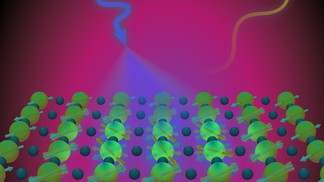
EPFL research in atomic scale magnetism could play a role in the development of new materials that could permit lossless electricity transmission.

Might it one day be possible to transmit electricity from an offshore wind turbine to land-based users without any loss of current? Materials known as “high temperature” superconductors (even though they must be maintained at -140°C!), which can conduct electricity without any losses, were supposed to make this dream a reality. But over the past twenty-five years, scientists have not been able to make any progress in this area. Research being done in collaboration between Brookhaven National Laboratory (BNL) and EPFL’s Laboratory for Quantum Magnetism (LQM) could change that. Their study of magnetism at extremely small scales could give physicists a tool to use in their search for new superconducting materials.

Studying a superthin layer

There are some ceramics that are excellent insulators at room temperature but that become perfect conductors when submersed in liquid nitrogen. However, this phenomenon, known as “high temperature” superconductivity, is not at all well understood by physicists. They theorize that at these temperatures, the collective quantum magnetic properties of the atoms in the material might come into play. But studying the magnetic properties of these materials at this minuscule scale would require years of effort.

Mark Dean, John Hill and Ivan Bozovic from Brookhaven National Laboratory (BNL), Thorsten Schmitt from Switzerland’s Paul Scherrer Institut (PSI), and Bastien Dalla Piazza and Henrik Ronnow from EPFL have unveiled the phenomena at work at this atomic scale. Using a unique device, the Brookhaven team created a layer just a single atom thick. Then, despite the material’s extreme thinness, the PSI scientists were able to use an ultrasensitive instrument to measure the magnetic dynamics of the atoms. And then EPFL provided the final piece of the puzzle, with mathematical models to analyze the measurements.

A long-awaited research tool


“We now have a kind of flashlight that will show us what direction we should take in our search,” explains Ronnow. Without understanding how these superconducting properties occurred at these temperatures, researchers were probing in the dark, using trial and error, to explore promising new materials. By combining these results with other recent work done by LQM researcher Nikolai Tsyrulin, the EPFL team has provided a new method to help physicists in their search for new superconductors. It’s a long-awaited step forward in the field; the Nobel Prize recognizing the discovery of high temperature superconductivity was awarded more than 25 years ago.

Promises for the future

Electrical resistance in traditional power lines leads to energy losses on the order of 3% in the electricity grid. At the scale of an entire country, this translates into several thousand gigawatts, which, in Switzerland’s case, would be the equivalent of the electricity consumption of a city the size of Geneva. “The energy challenges we face are significant; being able to use superconductivity won’t solve all of them, but it would nonetheless enable huge energy savings,” Ronnow adds.

Source: EPFL

Additional Information: 
Related Article:

Saturday, 9 June 2012

A solar sandwich to power future buildings

Engineerblogger
June 9, 2012


© Silly Little Man / Flickr under creative commons license

All in one: A new electricity generating building component is being developed at EPFL

Most modern buildings are composed of several layers of materials, each with its own important function: the concrete core supports its weight; the insulation regulates its heat exchange; the facade contributes to its aesthetics. Now, engineers at EPFL are developing a single building block that does all of that, and produces electricity. This new component will provide a sleek alternative to traditional construction materials, and will be lighter, safer, and more energy efficient.

“We use a composite sandwich construction to make this multi-functional building element,” explains Thomas Keller of the Composite Construction Laboratory (CCLab). The sandwich comprises a dense foam interior encased between layers of glass-fibre reinforced polymer. “We started working on these composite materials over 10 years ago and used them in 2009 for the roof of the Main Entrance Building at the Novartis Campus in Basel, Switzerland,” he says.

That was before trying to add electricity generation to the mix. “Now our goal is to encapsulate a thin flexible sheet of photovoltaic cells beneath a translucent layer of glass fiber reinforced polymer,” he continues. If they succeed, this material could contribute to making solar panels more attractive to architects by offering them more flexibility than traditional construction materials based on reinforced concrete, rigid solar panels, and glass.

The solar cell technology comes from Flexcell, an EPFL startup that became famous for its flexible sheets of photovoltaic cells, as thin as a sheet of paper. Despite lower efficiencies than conventional photovoltaic cells, their light weight, small volume, and low production costs make them ideal for encapsulation into building elements. And the ease of fitting curved surfaces with them will open new avenues in sustainable architectural design.

On top of that there are the other, already demonstrated advantages of these lightweight sandwich components. Prefabrication means that they can be assembled in a factory under ideal conditions before being transported to the construction site, increasing the quality and the safety of the buildings and shortening construction times. And since they are modular, individual elements are easy to repair or to replace if they fail.

Perfecting the ingredients

The glass fiber reinforced polymer (GFRP) plays a double role in this sandwich. A layer of GFRP a few millimeters thick encases the foam core, giving the building block its remarkable stability. Another layer of it encapsulates and protects the solar cells, drawing on an interesting optical property of the GFRP: when applied thinly, it is almost as transparent as glass, with an optical transmittance only four percent lower. Currently, a PhD student at the CCLab is perfecting this layer’s thickness to find the best compromise between structural stability and optical translucence.

“Besides the optical issues,” says Keller, “we are dealing with temperature related issues. Heating the resin leads to a loss of efficiency in light transmission. Beyond a certain critical temperature, the material could degrade and fail to recover its original state when it cools down.” But so far it has withstood temperatures beyond those expected even in the hotter parts of the world, without showing signs of degradation.

Not yet two years in to the project, the scientists involved are optimistic. Solar electricity generation is here to stay, and considering the widespread use of curved concrete surfaces in contemporary architecture, there could be great potential for this new solar sandwich.

Source:  Ecole Polytechnique Federale de Lausanne

Related Links:

Friday, 11 May 2012

Disposable paper electronic touch pads on their way

Engineerblogger
May 11, 2012


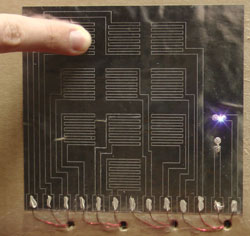
The researchers have already develop an alarmed box with a keypad that requires a code to allow authorised access

Researchers in the US and France have developed a paper-based electronic touch pad, opening the way for low cost, throwaway touch pads to be incorporated into anything from food packaging to disposable or sterile medical devices.

The touch pads are made from metallised paper - paper coated in a layer of aluminium around 10nm thick, which is overlaid with a thin film of transparent polymer. The paper is produced commercially and is used for shiny labels on beer bottles, or for glossy book covers, for example. And it is inexpensive at around $0.25/m2.

'We are interested in designing systems that use low cost materials to provide high-tech functionality,' says lead researcher Aaron Mazzeo, who works in the lab of George Whitesides at Harvard University, US.

The key to the system is that the paper has the essential elements of a capacitor - two surfaces of the thin metal film can be easily placed in proximity with a small gap between them. The team demonstrated two configurations of capacitor. One requires two sheets of the paper to be stuck together, with a 'horizontal' gap between the metal surfaces; the other uses only a single sheet, with a 'vertical' gap cut through the conducting surface. 'We use a laser cutter to ablate through the conductive layer to create distinct regions of conductivity on the metallised paper,' explains Mazzeo. Using the laser it is possible to cut a number of individual capacitors within the surface, each corresponding to a key on the pad. The keys are then linked to an external source of power and to electronic circuitry to detect when a given key is touched.

The human body itself acts as a capacitor and when a finger touches one of the keys there is a significant increase in capacitance at the key, detected by the external electronics. Mazzeo says that the paper touch pad will really come into its own when the power source and associated electronics also become cheap, flexible and disposable. Nevertheless, there could still be applications for the touch pad as it stands. One possibility would be for security on packaging. A cardboard box could incorporate a touch pad, with the electronics - retrievable and reusable - inside. The box could be opened legitimately only if the correct code was keyed in, otherwise the internal chip would detect interference. 'Other possibilities could include using the touch pads in sterile or contaminated medical environments,' Mazzeo suggests.

Commenting on the work, Khasha Ghaffarzadeh, an expert in printed electronics for the technology consultancy IDTechEx in Cambridge, UK, says: 'This is a very interesting piece of work. But as the authors also point out, the limiting factor will be the read-out electronics, which currently cannot be integrated onto paper-based products with favourable performance or price points.'

Source: Chemistry World

Additional Information:

  • A D Mazzeo et al, Adv. Mater., 2012, DOI: 10.1002/adma.201200137

Thursday, 10 May 2012

Medical robotics research: Within 0.5 Millimeter for Spinal Column Operations

Engineerblogger
May 10, 2012


With less than a 0.5 mm margin of error, Neuroglide, the robot developed by researchers in the robotics lab, allows for the placement of screws in small vertebrae with unequaled precision. KB Medical is the start-up being founded to get this product on the market.

Imagine placing a screw 4 mm in diameter into a bone that measures, on average, 6 mm in width, with cerebral arteries on one side and the spinal cord on the other. It’s a risky operation for even the best surgeons. The robot, developed by Szymon Kostrzewki, Philippe Bérard and other researchers from the group “Virtual Reality and Active Interfaces” (VRAI) led by Charles Baur at the Robotic Systems Laboratory (LSRO2) at EPFL, has demonstrated a precision of 0.5 mm for this operation. Right now, trials are being done on bodies donated to science at the CHUV, and a start-up, KB medical, is being created.

A Guide to Penetrate the Vertebrae
The robot is compact, in the form of a small box, and is maintained by a passive structure on top of the operating field. The secret: a design that combines high precision mechanics and automatic control, giving the robot irreproachable accuracy. This level of reliability is not possible without the most discerning vision. An optical tracking camera, developed by Atracsys, another spin-off of VRAI at LSRO2, allows for following the trajectory of this medical drill precisely and in real-time. The information gathered is then transmitted to software that allows the robot to constantly reposition itself according to the trajectory pre-established by the surgeon.

Even the Vibration of the Drilling is Corrected
As with all operations on the spine, a preliminary x-ray is required. With this image, the surgeon sets about virtually simulating the best placement for the screw and the appropriate positioning of the robot. Once the patient is properly placed for the surgery, the practitioner aligns on the real robot and its virtual image on the screen. Neuroglide, the drill’s guide, maintains the desired position to one-tenth of a millimeter during the drilling, compensating for even the slight displacement linked to the vibration of the drill. “In the end, the operation does not last but one or two minutes longer than the current manual methods that are already computer-assisted,” says Szymon Kostrzewski, “due to the time necessary for placing the robot.” In the future, the operating time will be considerably reduced thanks to a percutaneous procedure.

Optimal Placement is Evaluated at 68%
After an accident, a herniated disc or osteoporosis, placing a screw to bind together cervical vertebrae may become necessary to spare the patient excess and uncomfortable pain. About 400,000 screw placements in the spinal column are performed every year in Europe. According to the International Journal on Medical Robotics and Computer-Assisted Surgery, around 4% of manual operations on the second cervical vertebra present neurological complications. The occurrence of arterial injury hovers between 4% and 8% and the optimal placement of screws is marginally above 68%. Philippe Bérard highlights the fact that, “The world market for spinal fusion equipment is worth many billions of dollars.”

Clinical trials in Autumn 2013
KB Medical, the start-up being created by Szymon Kostrzewski and Philippe Bérard to commercialize the system, hopes to finish a second prototype in a year and proceed to clinical trials in Autumn 2013. Other applications for this system are already on the horizon. For example, the device shows promise for surgeries in otolaryngology, which are becoming more and more mechanized, such as in procedures to remove tumors that present a different resistance to cartilage and other neighboring tissues.

Source: École polytechnique fédérale de Lausanne EPFL


Additional Information:
Harnessing natural light, indoors

Engineerblogger
May 10, 2012


© 2012 EPFL

Using the most recent generation windows, architects and lighting designers can to control daylight, directing it where they want within a room. An EPFL laboratory has developed a simulation tool to make access to this technology more widely available.

How can the diffusion of natural light be sent into the farthest corners of a room – optimized, among other things, to save energy? It’s an architectural conundrum. The light source should be neither blinding nor too low, in summer and winter alike. To achieve this tour de force, without using skylights or mirrors, new kinds of increasingly complex glass are being developed, but they have not caught on, due to their high cost and difficulty of implementation. Architects are not trained specifically in these technologies. But Geronimo, a simple visual simulation software developed at EPFL, should make their task easier.
To venture into today’s simulation software, you need to be a lighting specialist. The programs are complicated, and the graphics they generate are difficult to interpret. In addition, it is a laborious process to accurately visualize the look and effectiveness of the glass that you want to install.

Sunlight doesn’t enter a room casually any more

The role of complex windows is to direct sunlight where it is most beneficial and least irritating. They also maximize light use in cloudy conditions while at the same time preventing overheating and glare in a blazing sun. These latest-generation windows are often designed for channeling the light in two directions, towards the ceiling and towards the interior of the room. For example, some windows contain curved strips that capture and redirect the light. The performance of these special windows is tested in enormous machines called goniphotometers. EPFL’s machine is three meters in diameter – not very practical when you want to build an architectural project.

EPFL’s Laboratory of Solar Energy and Building Physics (LESO) decided to create a giant database using the data from all these window tests. They implemented the database into their software, which the lab is making open source, freely available to architects and lighting designers. To use the software, they just need to enter the kind of glass, click on geographical coordinates, the time of day and periods of the year, and Geronimo gathers the information and transforms it into images. They can see in a single glance the impact that various different complex windows will have in their virtual mockups. “There’s the human view of the location, but also a statistical analysis,” explains Geronimo’s developer, Jérôme Kämpf. “Geronimo gives luminosity values at various points, and the potential to improve it with the selected glass.”

Developed from a thesis

To develop the software, the scientist drew upon the results of a PhD thesis that had been done several years earlier by Maryline Andersen, who is currently a professor at EPFL. Her work focused on the performance of the then brand-new complex glass, and the thesis gave manufacturers critical information about bidirectional transmission of light. The values characterized at the time by Andersen have since become reference values for describing products.
Today LESO is taking another step forward with Geronimo, by providing a simple, easy-to-use tool to architects who want to “harness the light.”

Source:  EPFL

Additional Information

Monday, 23 April 2012

Self-assembling highly conductive plastic nanofibers

Engineerblogger
April 23, 2012

Researchers from CNRS and the Université de Strasbourg, headed by Nicolas Giuseppone(1) and Bernard Doudin(2), have succeeded in making highly conductive plastic fibers that are only several nanometers thick. These nanowires, for which CNRS has filed a patent, “self-assemble” when triggered by a flash of light! Inexpensive and easy to handle, unlike carbon nanotubes(3), they combine the advantages of the two materials currently used to conduct electric current: metals and plastic organic polymers(4). In fact, their remarkable electrical properties are similar to those of metals. In addition, they are light and flexible like plastics, which opens up the possibility of meeting one of the most important challenges of 21st century electronics: miniaturizing components down to the nanometric scale. This work will be published on 22 April 2012 on Nature Chemistry's website. The next step is to demonstrate that these fibers can be industrially integrated within electronic devices such as flexible screens, solar cells, etc.

In previous work published in 2010(5), Giuseppone and his colleagues succeeded for the first time in obtaining nanowires. To achieve this feat, they chemically modified “triarylamines”, synthetic molecules that have been used for decades by industry in Xerox® photocopying processes. Much to their surprise, they observed that in light and in solution, their new molecules stacked up spontaneously in a regular manner to form miniature fibers. These wires, a few hundred nanometers long (1 nm = 10-9 m, i.e. a billionth of a meter), are made up of what is known as the “supramolecular” assembly of several thousand molecules.

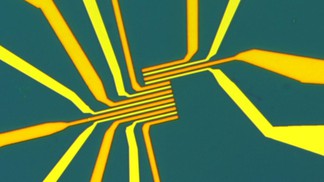
In collaboration with Doudin's team, the researchers then studied the electrical properties of these nanofibers in detail. This time, they placed their molecules in contact with an electronic microcircuit comprising gold electrodes spaced 100 nm apart. They then applied an electric field between these electrodes.

© Graphics: M. Maaloum, ICS (CNRS)
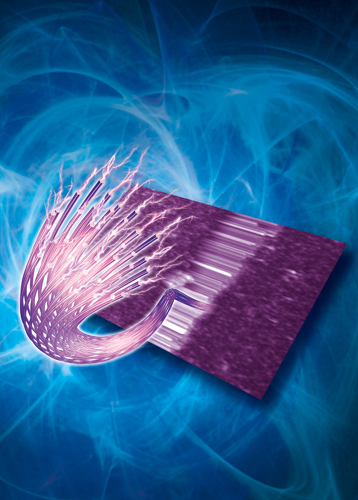
Artist's impression based on a real atomic force microscopy (AFM) image showing conductive supramolecular fibers trapped between two gold electrodes spaced 100 nm apart. Each plastic fiber is composed of several short fibers and is capable of transporting electrical charges with the same efficiency as a metal.

Their first important finding was that, when triggered by a flash of light, the fibers self-assemble solely between the electrodes. The second surprising result was that these structures, which are as light and flexible as plastics, turn out to be capable of transporting extraordinary current densities, above 2.106 Amperes per square centimeter (A.cm-2), approaching those of copper wire. In addition, they have very low interface resistance with metals(6): 10,000 times below that of the best organic polymers.

The researchers now hope to demonstrate that their fibers can be used industrially in miniaturized electronic devices such as flexible screens, solar cells, transistors, printed nanocircuits, etc.


© M. Maaloum, ICS (CNRS)
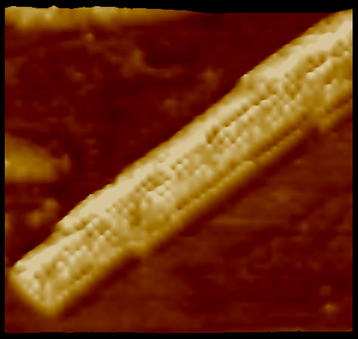
Real atomic force microscopy image showing a conductive supramolecular fiber, composed of several short fibers. Each grain corresponds to a molecule (the image is 50 nm in height).

Notes:
  1. Institut Charles Sadron (CNRS).
  2. Institut de Physique et Chimie des Matériaux de Strasbourg (CNRS / Université de Strasbourg).
  3. Hollow carbon tubes with a diameter of around one nanometer (1 nm = 10-9 m), displaying outstanding electrical, mechanical and thermal properties, thus opening the way to numerous applications in the microelectronics sector. 
  4. Very large organic molecules, in other words of living origin or derived from oil, mainly containing carbon and hydrogen.
  5. The Hierarchical Self-Assembly of Charge Nanocarriers: A Highly Cooperative Process Promoted by Visible Light; Giuseppone, N. et co. Angew. Chem. Int. Ed. 2010, 49, 6974-78
  6. “Force” with which the conductor opposes the flow of current.

Source: CNRS

Additional Information:

Friday, 20 April 2012

New motor can cut space exploration costs

Engineerblogger
April 20, 2012


A European team of researchers led by the Ecole Polytechnique Fédérale de Lausanne (EPFL) in Switzerland has developed a prototype of a new, ultra-compact motor that will enable small satellites to journey beyond Earth's orbit. The objective of this new motor is to make space exploration less expensive. The result is an outcome of the MICROTHRUST ('Microelectromechanical systems (MEMS)-based electric micropropulsion for small spacecraft to enable robotic space exploration and space science') project, which is supported under the Space Theme of the EU's Seventh Framework Programme (FP7), to the tune of EUR 1.9 million.

The compact motor weights only a few hundred grams and is specifically designed to propel small satellites, weighing from 1 to 100 kilograms. The conventional thruster can change orbit around our planet and travel to more distant destinations, but it is usually used for large and expensive spacecraft. The researchers say their prototype will probably be used on CleanSpace One, a satellite currently being developed at EPFL that will clean up space debris, as well as on OLFAR, a swarm of Dutch nanosatellites able to record ultra-low radio-frequency signals on the far side of the Moon.

The prototype weighs only around 200 grams, with the fuel and control electronics included. The motor can be mounted on satellites as small as 10 x 10 x 10 square cubic metres. It is also very efficient.

'At the moment, nanosatellites are stuck in their orbits. Our goal is to set them free,' said Herbert Shea, the head of EPFL's Microsystems for Space Technologies Laboratory and the coordinator of the MICROTHRUST project.

Research into the development of small satellites has intensified in recent times, due mostly to the low cost of production and launch. The price tag for the small satellites is around USD 500 million; the price for larger ones runs into the hundreds of millions. The problem with nanosatellites lay in the lack of an efficient propulsion system ... until now.

The new mini motor does not run on combustible fuel but rather on an 'ionic' liquid, and in this project, it is a liquid chemical compound, EMI-BF4, used as both a solvent and an electrolyte. It is made up of ions, electrically charged molecules, which are extracted from the liquid and then ejected to produce thrust. The fuel is expelled, not burnt.

'We calculated that in order to reach lunar orbit, a 1-kilogram nanosatellite with our motor would travel for about 6 months and consume 100 millilitres of fuel,' said Muriel Richard, a scientist in EPFL's Swiss Space Center.
'Our prototype still has a few flow problems at the nozzle extremities, which could cause short-circuits,' Dr Shea concluded.

Researchers from the Netherlands, Sweden and the United Kingdom, members of the MICROTHRUST consortium, also contributed to this study.

Source: CORDIS

Additional Information:
Monday, 2 April 2012

Extending the Hands of the Endoscopic Surgeon

Engineerblogger
April 2, 2012


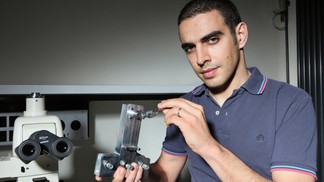
Ricardo Beira ©2012 Alain Herzog

More precision and less cost for endoscopic surgeries: the tool developed by DistalMotion, a spin-off of EPFL, will allow surgeons to reproduce their exact movements. The prototype was just released from the lab, and on the 29th of March, the start-up received 130,000 Swiss francs in the final phase of the Venture Kick prize.

A machine that allows highly skilled surgeons to effectively lengthen their fingers has been designed in the Robotics System Laboratory. Ricardo Beira elaborated this idea in his thesis, and subsequently created the start-up, DistalMotion, to further develop it:. The device is controlled by small joysticks which allow the operation of surgical tools fixed to the end of a metal arm. The goal? To facilitate minimally invasive operations without opening the abdominal wall.

Two to three bodily orifices allow for the passage of a small camera and long surgical instruments. This technique, known as endoscopy, is used more and more in urology, gynecology and visceral surgery.While this technique has many benefits, the main problem is the lack of precision in the surgeon’s movements, which is linked to the rigidity of the tools. Moreover, the surgeon must work with a mirror as, for example, a movement to the surgeon’s left results in the tool moving to the right; hence, a particularly intense training is necessary. Ricardo Beira’s system solves these problems.

Completely Mechanical
The small joysticks are able to exactly replicate the surgeon’s movements,. As a result, pliers, scissors, needles and other tools move as if a practitioner was directly holding them. The research completed at the robotics laboratory has allowed for the elimination of a problem inherent to such mechanisms, the exaggeration of movements. When a small movement outside of the patient’s body is translated into a larger one inside the patient, operations become even more. delicate and painstaking. Thanks to this device, seven degrees of freedom are permitted in the reproduction of movement, including, for example, the rotation of the wrist.

In the era of robotics crammed with electronics, detectors and sensors, this mechanical engine developed by Ricardo Beira is quite remarkable. It should permit a considerable expansion of the variety of coelioscopic procedures, which present numerous advantages in relation to traditional surgery, notably with regard to safety, aesthetics and cost. The post-operative pain and risk of infection are lesser, the scars are smaller, and the stay at the hospital shorter.

The device requires craftsmanship of the highest and most detailed order, but the horizon is bright due to the numerous foreseen advantages . “The future cost of production will lie outside a common measure with the only devices capable of this much mobility in this type of operation, the DaVinci robots. These enormous devices, which equip only a few hospitals in the world, cost millions and necessitate huge spaces,”explains Ricardo Beira.

Second Prototype and Pre-Clinical Trials
Pre-clinical trials at the CHUV and the Inselspital in Bern will take place this year with simulations of prostate operations. The product was redesigned to give it a more appealing form for the market. The start-up has just been created, but a few days ago it won the final phase of Venture Kick, an aid to young talents worth up to 130,000 Swiss francs. The validation process of the system is in progress.

Source:  EPFL


Related Information:

Getting to the Moon on Drops of Fuel

Engineerblogger
April 2, 2012


Imagine reaching the Moon using just a tenth of a liter of fuel. With their ionic motor, MicroThrust, EPFL scientists and their European partners are making this a reality, ushering in a new era of low-cost space exploration.


The first prototype of a new, ultra-compact motor that will allow small satellites to journey beyond Earth’s orbit is just making its way out of the EPFL laboratories where it was built. The goal of the micro motor: to drastically reduce the cost of space exploration.

Imagine reaching the Moon using just a fraction of a liter of fuel. With their ionic motor, MicroThrust, EPFL scientists and their European partners are making this a reality and ushering in a new era of low-cost space exploration. The complete thruster weighs just a few hundred grams and is specifically designed to propel small (1-100 kg) satellites, which it enables to change orbit around the Earth and even voyage to more distant destinations – functions typically possible only for large, expensive spacecraft. The just-released prototype is to be employed on CleanSpace One, a satellite under development at EPFL that is designed to clean up space debris, and on OLFAR, a swarm of Dutch nanosatellites that will record ultra-low radio-frequency signals on the far side of the Moon.

The motor, designed to be mounted on satellites as small as 10x10x10 cm3, is extremely compact but highly efficient. The prototype weighs only about 200 grams, including the fuel and control electronics.

“At the moment, nanosatellites are stuck in their orbits. Our goal is to set them free,” explains Herbert Shea, coordinator of the European MicroThrust project and director of EPFL’s Microsystems for Space Technologies Laboratory.

Small satellites are all the rage right now because their manufacturing and launch costs are relatively low – about half a million dollars, compared to conventional satellites that run into the hundreds of millions. But nanosatellites currently lack an efficient propulsion system that would render them truly autonomous and thus able to carry out exploration or observation missions.

A motor that doesn’t burn fuel
Instead of a combustible fuel, the new mini motor runs on an “ionic” liquid, in this case the chemical compound EMI-BF4, which is used as a solvent and an electrolyte. It is composed of electrically charged molecules (like ordinary table salt) called ions, except that this compound is liquid at room temperature. The ions are extracted from the liquid and then ejected by means of an electric field to generate thrust. This is the principle behind the ionic motor: fuel is not burned, it is expelled.

In the motor developed at EPFL, the flow of ions is emitted from an array of tiny silicon nozzles – over 1,000 per square centimeter. The fuel is first guided by capillary action from a reservoir to the extremity of the micro-nozzles, where the ions are then extracted by an electrode held at 1,000 volts, accelerated, and finally emitted out the back of the satellite. The polarity of the electric field is reversed every second, so that all the ions – positive and negative – are ejected.

SystematIC Design, a MicroThrust project partner, designed the motor’s electrical system. The ion ejection system requires a high electrical voltage, but the available energy aboard a 1-liter nanosatellite is limited to a few small solar cells – in practice, about four watts of power. The Dutch company was able to develop a system that overcame this difficulty.

Cruising speed: 40,000 km per hour
After six months of acceleration, the microsatellite’s speed increases from 24,000 km/h, its launch speed, to 42,000 km/h. The acceleration is only about a tenth of a millimeter per square second, which translates into 0-100 km/h in 77 hours. But in space, where there is no friction to impede motion, gentle but steady acceleration is the way to go.

The ionic motor will power CleanSpace One – a nanosatellite whose mission is to tidy up space by grabbing space debris and pulling it into the Earth’s atmosphere to be safely incinerated. According to the Swiss Space Center, CleanSpace One will take two to three months and more than 1,000 terrestrial revolutions to reach one of its targets, the decommissioned Swisscube cubesat or Tlsat-1 cubesat. Scientists have just over a year to finalize their system.

Researchers have a bit more than a year to finalize the ionic motor. The prototype was developed in the context of a European project coordinated by EPFL and involved Queen Mary and Westfield College in the UK, the Dutch companies TNO and SystematIC Design B.V., and Nanospace AB in Sweden.

Source: École Polytechnique Fédérale de Lausanne (EPFL)

Related Information:

Monday, 16 January 2012

One step closer to controlling nuclear fusion

Engineerblogger
Jan 16, 2012


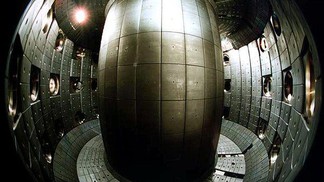
Confined chamber for the plasma © EPFL

Using a heating system, physicists have succeeded for the first time in preventing the development of instabilities in an efficient alternative way relevant to a future nuclear fusion reactor. It’s an important step forward in the effort to build the future ITER reactor.

Scientists have achieved a milestone: they have managed to stop the growth of instabilities inside a nuclear fusion reactor. How? Here’s a look at this energy source, which despite being challenging to control, is nevertheless extremely promising.

Nuclear fusion is an attempt to reproduce the energy of the Sun in an Earth-based reactor system. When gas is heated to several million degrees, it becomes plasma. Sometimes in the plasma, an instability will appear and grow large enough to perturb the plasma, making it vibrate despite the presence of the magnetic field in which it is contained. If the plasma touches the walls of the reactor, it will cool rapidly and create large electromagnetic forces within the structure of the machine.

The challenge is to reduce the instabilities deep within in the interior of the plasma so that they don’t amplify, while at the same time allowing the reactor to continue to function normally. Thus it is necessary to work within the specific configuration of these fusion reactors, where the plasma is strongly confined by a magnetic field. By adjusting an antenna that emits electromagnetic radiation, Jonathan Graves and his colleagues from EPFL’s Center for Research in Plasma Physics were able to quench the instabilities when they appear, in the precise region where they are forming, and without perturbing the rest of the installation.

From theory to practice

The physicists first conducted simulations to verify the extent to which specific radiation frequencies and locations of application would suppress the growth of instabilities. Then they carried out tests to confirm their calculations. The beauty of their approach is that they were able to use antennas that are used as part of the system to heat the plasma, and that are already present in the Joint European Torus (JET), the largest reactor currently in use. Surprisingly, the simulations and the tests showed that heating and instability suppression can be combined, by aiming the radiation slightly off-center in the plasma.

The next step will be to add a detector system that will make it possible to neutralize instabilities in real time over longer time periods. These improvements can then be implemented in the ITER fusion reactor, currently in development in Southern France.

Source: École polytechnique fédérale de Lausanne (EPFL)

Additional Information:
Friday, 6 January 2012

Deciphering communication: learning from robots

Engineerblogger
Jan 6, 2012


An experiment led by Laurent Keller at the University of Lausanne (UNIL) and by Steffen Wischmann and Dario Floreano at EPFL shows that communication systems can evolve differently within the same species and even the same environment. Performed using robots, this research can enable a better understanding of communication within the animal kingdom.

A joint research project conducted at UNIL and EPFL enabled the scientists to follow the evolution of communication in 100 groups of 20 robots over the course of 1000 generations. The robots were equipped with a camera that detected the environment, and also with wheels and a ring enabling them to emit luminous signals of different colors. Positioned in arenas, they had to locate a source of virtual food that was only visible when they came upon it. Their behavior was guided by a “neural network”, which was also controlled by genes that could evolve through mutation and selection in the course of successive generations.

An initial experiment showed that the robots rapidly acquire a communication system that enables them to transmit information about the location of the food to their peers. In fact, two really distinct communication systems evolved, according to the given populations. The simplest mechanism, using a single color to indicate the location of the food, proved more effective that the system using two colors – one pointing towards the food and the other towards the remaining part of the arena.

It also became evident that a population that has evolved towards a relatively effective type of communication doesn’t subsequently change it, as it would then be necessary to simultaneously modify the way the information is transmitted, and also the way of responding. In other words, a communication system, just like a language, cannot change rapidly through generations. In addition, this research underlines the importance of random factors in evolutionary processes. The experiment performed in twenty homogenous groups (with robots of the same type) actually shows that half of them choose the simpler – one color – strategy, whereas the other half opt for the two color system.

Competition requests more complex talking
Finally, a second experiment demonstrated that, even with robots, nothing is perfect. Within a competition context, when groups of robots were confronted with robots of other populations, it was the more complex (two-color) strategy that won the day, in spite of the proven effectiveness of the single-color strategy.

Supported by the Swiss National Science Foundation, this research has been published in the magazine PNAS (Proceedings of the National Academy of Sciences of the United States). It shows that communication strategies can evolve in different ways through generations within an identical environment.

“We know that in the animal kingdom communication systems are very complex”, concludes Laurent Keller, “and this diversity evolved over a very long period of time. Our experiment shows how it occurs, and reveals that environmental factors are not the only ones involved, as one might believe. The robots shed new light on these evolutionary processes.”


Source: École polytechnique fédérale de Lausanne (EPFL)

Additional Information:
Radar could detect objects that have fallen on railway tracks

Engineerblogger
Jan 6, 2012


Radar devices could soon be fitted in railway stations to prevent accidents by detecting luggage or people that fall onto the tracks.

Researchers from French research centres IFSTTAR and IEMN have demonstrated a system that uses ultra-wideband radio waves to detect and characterise objects that fall on train tracks and alert station operators to reduce delays and avoid accidents.

‘With the possibility of trains, passengers and even poor lighting, in some instances, obscuring the view of CCTV cameras, radar techniques could certainly be effective in these scenarios,’ said Ali Mroué, lead author of the research published in the journal Measurement Science and Technology.

The Automatic Target Recognition (ATR) procedure defines and simplifies the characteristics of an object when it is detected, and then compares the information to a database to determine what the object is.

Using a computer simulation, the researchers initially tested out a number of objects, ranging from suitcases to glass bottles, and several models of the human body: an adult, a teenager and a child.


Real-life experiments were then performed in a small, echo-free chamber, using a 3m-long waveguide — a solid beam-like structure that guides the radio waves in a certain direction, in this case towards the object being measured. These showed the system was able to differentiate between luggage and people.

‘We hope these devices will be used in the near future since they are very complementary to existing video systems and have a similar final cost,’ said Mroué.

‘The complementary use of video and radar systems could lead to low levels of false detection, which is mandatory for this application, and maximise the chance of survival for passengers who have fallen on the line.’

Source: The Engineer

Tuesday, 6 December 2011

Robots will soon appear in school classrooms

Engineerblogger
Dec 06, 2011


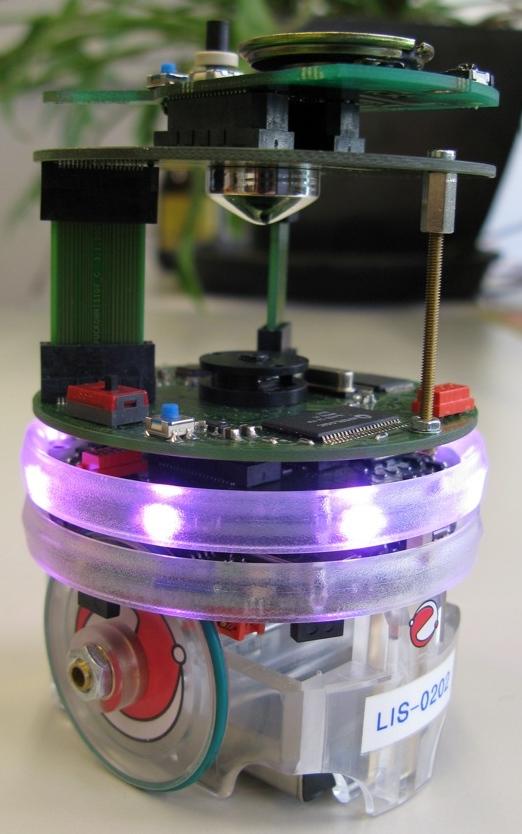
Thymio II. Credit: EPFL


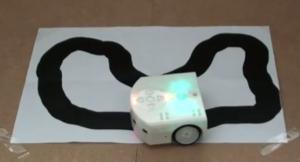
EPFL scientists have developed an educational robot designed to introduce children to technology in schools. Baptized Thymio II, it was officially presented to teachers in the Canton of Vaud last friday.

Creating an original pedagogical tool to get students interested in technology and robotics: this is the challenge that was undertaken by a group of the researchers led by Fancesco Mondada, in EPFL’s Robotics Systems Laboratory. In collaboration with the University of Art and Design Lausanne (ECAL), they developed Thymio II, a little programmable white robot, jam-packed with sensors and LEDs, that can exhibit a wide range of behaviours. “We worked really hard on the hardware,” Mondada explains. “Each sensor is associated with a coloured LED, which allows the kids to visualize the activation of the sensors during a specific manoeuver.” The Thymio II robots, which made their debut in May during EPFL’s robotics festival, has been presented to teachers on November 25, as part of a course organized by the cantonal teacher’s college (HEP).

Explorer, coward, investigator, friend
The 11 cm x 11 cm robot is equipped with proximity sensors (it can detect close objects), ground-directed sensors (it can detect the edge of a table around which it’s circulating, or a line to follow), accelerometers (It can measure acceleration, detect impacts and indicate gravity), a microphone and a temperature sensor (an electronic thermometer). It also has a memory card for recording sound. After they’ve turned their Thymio II on using buttons on the surface, users get the robot to adopt one of the basic modes, such as friend (follows an object in front of it), explorer (avoids obstacles), coward (detects impacts and empty space) or investigator (follows a line on the ground).
By hooking it up to a computer via a USB cable, users can invent and program other behaviours. “You could imagine the robot becoming blue when you put it in the fridge, for example,” suggests Mondada. The programming is done using a software called Aseba, which was developed by EPFL. “Aseba is a simple language, but it contains the principle concepts of programming,” Mondada continues. The software code is “open source,” available for modification or downloading over the Internet, and rights free.


Credit: EPFL

 From Lego to programming, by way of physics
Thymio II is not just a teaching tool for robotics professors. Thanks to its many sensors, it can also be used to teach physics, when subjects such as gravity, the properties of light and temperature are on the agenda. And thanks to its engaging character, the robot can also be used by children who are too young to understand programming. “It’s possible to stack Lego bricks on top of the Thymio II. Kids can decorate it and play with it to start with, then discover new kinds of behaviour over the Internet, and start to program it when they’ve gotten a bit older.”

Will Thymio II be a hit in the schools? Philippe Krähenbuhl , a science and robotics teacher at the Collège du Vevey, is enthusiastic. “Thymio II is inexpensive (about 99 francs), accessible, and very complete. It leaves room for creativity,” he says. “I appreciate the fact that you can use it in different ways, whether for building with legos, for teaching physics or for teaching programming skills.” For his part, Mondada says he welcomes suggestions from teachers, in order to improve the small white robot even further.

Source:  École polytechnique fédérale de Lausanne (EPFL)

First Molybdenite Microchip

Engineerblogger
Dec 06, 2011

© 2011 EPFL

Molybdenite, a new and very promising material, can surpass the physical limits of silicon. EPFL scientists have proven this by making the first molybdenite microchip, with smaller and more energy efficient transistors.

After having revealed the electronic advantages of molybdenite, EPFL researchers have now taken the next definitive step. The Laboratory of Nanoscale Electronics and Structures (LANES) has made a chip, or integrated circuit, confirming that molybdenite can surpass the physical limits of silicon in terms of miniaturization, electricity consumption, and mechanical flexibility.

“We have built an initial prototype, putting from two to six serial transistors in place, and shown that basic binary logic operations were possible, which proves that we can make a larger chip,” explains LANES director Andras Kis, who recently published two articles on the subject in the scientific journal ACS Nano.

In early 2011, the lab unveiled the potential of molybdenum disulfide (MoS2), a relatively abundant, naturally occurring mineral. Its structure and semi-conducting properties make it an ideal material for use in transistors. It can thus compete directly with silicon, the most highly used component in electronics, and on several points it also rivals graphene.

Three atoms thick

“The main advantage of MoS2 is that it allows us to reduce the size of transistors, and thus to further miniaturize them,” explains Kis. It has not been possible up to this point to make layers of silicon less than two nanometers thick, because of the risk of initiating a chemical reaction that would oxidize the surface and compromise its electronic properties. Molybdenite, on the other hand, can be worked in layers only three atoms thick, making it possible to build chips that are at least three times smaller. At this scale, the material is still very stable and conduction is easy to control.

Not as greedy

MoS2 transistors are also more efficient. “They can be turned on and off much more quickly, and can be put into a more complete standby mode,” Kis explains.
Molybdenite is on a par with silicon in terms of its ability to amplify electronic signals, with an output signal that is four times stronger than the incoming signal. This proves that there is “considerable potential for creating more complex chips,” Kis says. “With graphene, for example, this amplitude is about 1. Below this threshold, the output voltage would not be sufficient to feed a second, similar chip.”

Built in flexibility

Molybdenite also has mechanical properties that make it interesting as a possible material for use in flexible electronics, such as eventually in the design of flexible sheets of chips. These could, for example, be used to manufacture computers that could be rolled up or devices that could be affixed to the skin.

Source: École polytechnique fédérale de Lausanne (EPFL)

Thursday, 24 November 2011

New revolutionary material can be worked like glass

Engineerblogger
Nov 24, 2011


CNRS Photothèque / ESPCI / Cyril FRÉSILLON
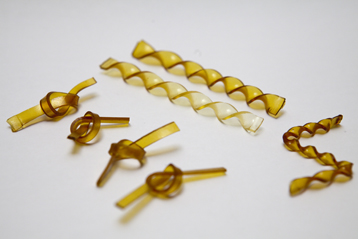
The material can take various forms


A common feature of sailboards, aircraft and electronic circuits is that they all contain resins used for their lightness, strength and resistance. However, once cured, these resins can no longer be reshaped. Only certain inorganic compounds, including glass, offered this possibility until now. Combining such properties in a single material seemed impossible until a team led by Ludwik Leibler, CNRS researcher at the Laboratoire “Matière Molle et Chimie” (CNRS/ESPCI ParisTech), developed a new class of compounds capable of this remarkable feat. Repairable and recyclable, this novel material can be shaped at will and in a reversible manner at high temperature. And, quite surprisingly, it also retains certain properties specific to organic resins and rubbers: it is light, insoluble and difficult to break. Inexpensive and easy to produce, this material could be used in numerous industrial applications, particularly in the automobile, aeronautics, building, electronics and leisure sectors. This work is published on 18 November 2011 in Science. Replacing metals by lighter but just as efficient materials is a necessity for numerous industries, such as aeronautics, car manufacturing, building, electronics and sports industry. Due to their exceptional mechanical strength and thermal and chemical resistance, composite materials based on thermosetting resins are currently the most suitable. However, such resins must be cured in situ, using from the outset the definitive shape of the part to be produced. In fact, once these resins have hardened, welding and repair become impossible. In addition, even when hot, it is impossible to reshape parts in the manner of a blacksmith or glassmaker.

This is because glass (inorganic silica) is a unique material: once heated, it changes from a solid to a liquid state in a very progressive manner (glass transition), which means it can be shaped as required without using molds. Conceiving highly resistant materials that can be repaired and are infinitely malleable, like glass, is a real challenge both in economic and ecological terms. It requires a material that is capable of flowing when hot, while being insoluble and neither as brittle nor as “heavy” as glass.


© CNRS Photothèque / ESPCI / Cyril FRÉSILLON
Sequence showing how a complex-shaped object is made by successively deforming and heating it.

From ingredients that are currently available and used in industry (epoxy resins, hardeners, catalysts, etc.), researchers from the Laboratoire “Matière Molle et Chimie” (CNRS/ESPCI ParisTech) developed a novel organic material made of a molecular network with original properties: under the action of heat, this network is capable of reorganizing itself without altering the number of cross-links between its atoms. This novel material goes from the liquid to the solid state or vice versa, just like glass. Until now, only silica and some inorganic compounds were known to show this type of behavior. The material thus acts like purely organic silica. It is insoluble even when heated above its glass transition temperature.

Remarkably, at room temperature, it resembles either hard or soft elastic solids, depending on the chosen composition. In both cases, it has the same characteristics as thermosetting resins and rubbers currently used in industry, namely lightness, resistance and insolubility. Most importantly, it has a significant advantage over the latter as it is reshapeable at will and can be repaired and recycled under the action of heat. This property means it can undergo transformations using methods that cannot be envisaged either for thermosetting resins or for conventional plastic materials. In particular, it makes it possible to produce shapes that are difficult or even impossible to obtain by molding or for which making a mold is too expensive for the envisaged purpose.
© CNRS Photothèque / ESPCI / Cyril FRÉSILLON
A strip of material is deformed in an oven. It is subjected to torsion stress, clearly visible in bright colors under polarized light. These colors fade away within a few minutes when hot: the material has taken a new, permanent shape.

Used as the basis of composites, this new material could therefore favorably compete with metals and find extensive applications in sectors as diverse as electronics, car manufacturing, construction, aeronautics or printing. In addition to these applications, these results shed unexpected light on a fundamental problem: the physics of glass transition.

Source:  Centre national de la recherche scientifique (CNRS)

Thursday, 17 November 2011

A touchscreen you can really feel

Engineerblogger
Nov 17, 2011


EPFL researchers have invented a new generation of tactile surfaces with relief effects – users can feel actual raised keys under their fingers. This technology could have many applications, particularly in improving access to electronic media for the visually impaired.

Finally a true tactile surface! EPFL researchers have developed a way to control the texture of a screen so that the “feeling” of specific areas can be modified underneath a user’s fingertips. This technology, developed by EPFL’s Integrated Actuators Laboratory (LAI) in Neuchâtel, is being designed for smartphones, tablets, computers, and vending machines.

“We’re adding the sense of touch to tactile surfaces,” says Christophe Winter, a PhD student in the LAI who is writing his thesis on the subject. “The term ‘touch screen’ that’s used to describe current technology is really a misnomer, because they only provide visual and auditory feedback.”

By adding another layer of information to devices, this invention will improve their usability and thus improve the user experience. For example, it could be used to enrich online texts, drawing the reader’s attention to certain elements on the page, or to make video games even more entertaining, by adding an additional sensory dimension. And for the visually impaired, it could truly open up access to smartphones and other electronic devices.

A layer of air

To obtain this relief effect, the scientists used a material that vibrates when a voltage is applied to it. These materials are described as “piezoelectric.” The material expands and then returns to its original shape very rapidly, all at the nanometer scale. “This movement generates micro-vibrations, whose intensity can be controlled mechanically,” explains LAI director Yves Perriard. These vibrations – whose amplitude is only about a micron, or one-hundredth of the thickness of a human hair – are themselves imperceptible to us. But they create a very thin layer of air between the surface and a user’s finger, giving him or her the feeling that there’s something raised underneath it.

Source:  Ecole Polytechnique Federale de Lausanne

Wednesday, 16 November 2011

Watch This Robot Control a Person's Arm Using Electrodes

Spectrum.ieee.org
Nov 15, 2011


When this robot needs a hand, it borrows yours.


In an experiment that opens a new chapter in human-machine interaction, a French research team has demonstrated how a robot can control both its own arm and a person’s arm to manipulate objects in a collaborative manner.

The robot controls the human limb by sending small electrical currents to electrodes taped to the person's forearm and biceps, which allows it to command the elbow and hand to move. In the experiment, the person holds a ball, and the robot a hoop; the robot, a small humanoid, has to coordinate the movement of both arms to successfully drop the ball through the hoop.

The researchers, from the Montpellier Laboratory of Informatics, Robotics, and Microelectronics (known by its French acronym LIRMM), say the approach is still in the proof-of-concept stage, but they are confident that performing more complex tasks is possible. Their goal is to develop robotic technologies that can help people suffering from paralysis and other disabilities to regain some of their motor skills.

To be sure, an advanced, dexterous robot arm would be capable of assisting paralyzed people with daily tasks. And other technologies such as robot teleoperation, brain-machine interfaces, and powered exoskeletons also promise to give physically disabled people more mobility.

But Adorno and his colleagues say there are advantages in having a robot controlling a person's body. The technique they're using to do that, known as functional electrical stimulation (FES), is used in rehabilitation and has physical and psychological benefits to patients.

"Imagine a robot that brings a glass of water to a person with limited movements," says Bruno Vilhena Adorno, the study's lead researcher. "From a medical point of view, you might want to encourage the person to move more, and that's when the robot can help, by moving the person's arm to reach and hold the glass."

Another advantage, he adds, is that capable robotic arms are still big, heavy, and expensive. By relying on a person's physical abilities, robotic arms designed to assist people can have their complexity and cost reduced. Many research teams are teaching robots how to perform bimanual manipulations, and Adorno says it seemed like a natural step to bring human arms into the mix.
To read more click here...

Monday, 14 November 2011

The Delta robot – Swiss-made and fastest in the world!

Engineerblogger
Nov 14, 2011


It’s the story of a long dynasty of industrial robots. Delta’s three arms began by packaging chocolates, before being used in watchmaking, tele-surgery and the processing of materials....
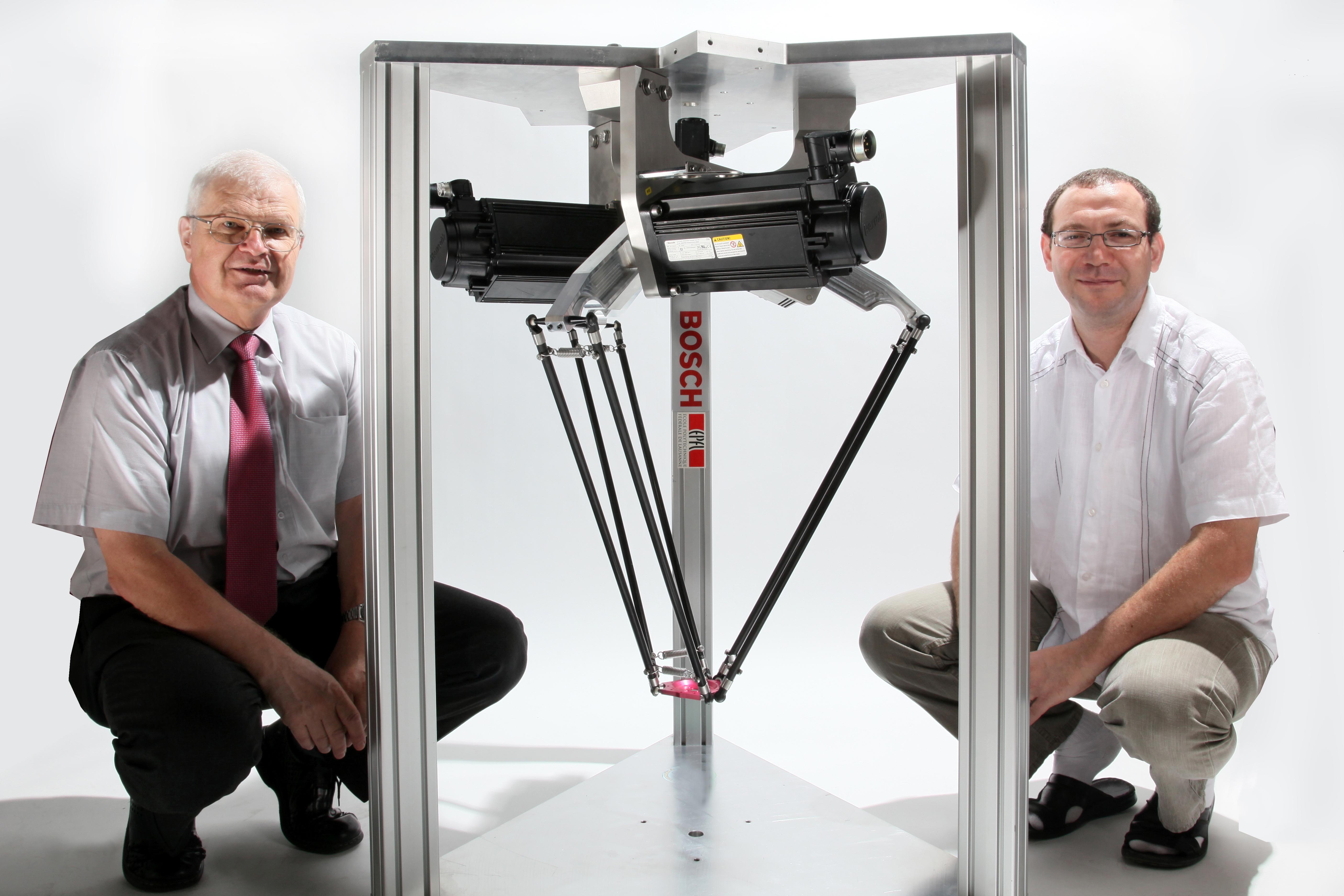
More than 200 operations per minute! It’s not a firearm, but rather an outstanding packaging tool. The Delta robot made light work of hundreds of packets of Smarties at the Triennial Interpack Exhibition in Düsseldorf. The inventor of the concept, Reymond Clavel, was presenting in Germany the most recent version of the Delta robot, resulting of a collaboration with Bosch. The performance of “Delta Direct Drive” is impressive – the robot can achieve acceleration of over 15 g, and this represents an increase in performance of 50% compared to robots of the previous generation.

Increasing speed and maintaining precision

The challenge in developing this new variant was daunting – it involved increasing the speed of the Delta robot, while maintaining its precision. Previously, less powerful motors required the addition of a mechanical component, enabling a more effective transmission of the movement, but this limited the maximum speed of the robot. Scientists have now been able to take advantage of the progress made in motorization – in both power and cost – and this avoids the use of any such linking components. Thus, they have really gone up a gear. Reymond Clavel reveals: “The idea of direct drive had been tucked away in a drawer for ages, but then again, twenty years ago the cost of such motors would have been much too high.”

A success story

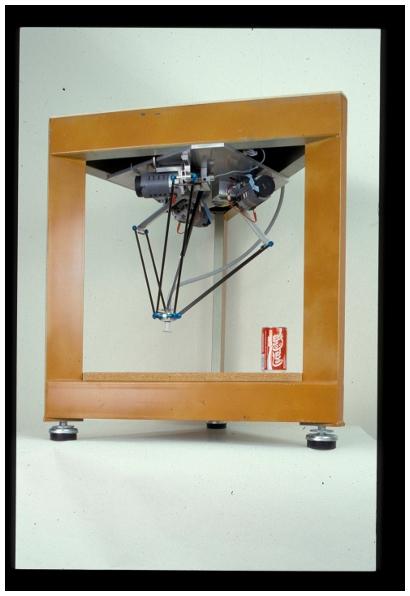
In 1985, the first Delta robot revolutionized the packaging world with its three arms and its gripping device. And – unthinkable at the time – a quarter of a century later, it has become a standard in industrial packaging. Reymond Clavel explains: “In fact, I was astonished to note that around 140 Delta robots were working all around the Düsseldorf fair.” A belated success for this robot, which had taken off rather too slowly for its inventor’s liking. He continues: “To be honest, when we had developed the first Delta, I was so enthusiastic that I expected lots of companies to rush to my office to buy one. Not at all! In fact, two years passed before we signed our first licence transfer, because our robot had scared off the industrialists. Its very fine structure, which looked like an umbrella to them, was disconcerting. They thought that it wasn’t robust enough.” Time has proved them wrong.

From chocolates to neurosurgery

Originally conceived to manipulate small, light objects such as chocolates, over time the Delta has been used for many other applications. Together with the team from the Laboratoire de systèmes robotiques, Mohamed Bouri is developing new variants of the highly dynamic tool: “In particular, we have developed ultra-high-precision robots, designed for use in the areas of electro-erosion, which involves machining very hard materials. These robots are also used in the manipulation and positioning of optical elements.”


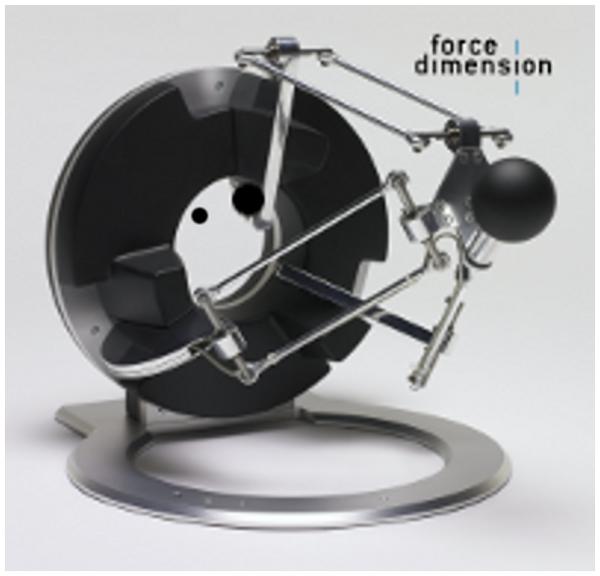
Other members of the Delta family have been developed in areas which demand the highest possible speed and precision, for example in watchmaking. Working together with neurosurgeons at the University Hospital Center of the canton of Vaud, a tactile feedback device has been developed to enable the surgeon to perform his hand movements. Reymond Clavel is convinced – the future of the Delta robot is assured. It will be adapted for use in many important areas: processing; packaging, surgery, watchmaking and – wait for it – chocolates!


Source: Ecole Polytechnique Federale de Lausanne (EPFL)

Dye-sensitized solar cells break a new record

Engineerblogger
Nov 14, 2011


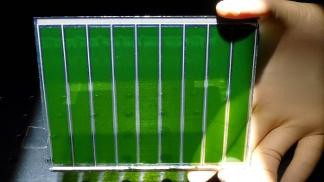
Green dye-sensitized solar cells © 2011 EPFL


Dye-sensitized Grätzel solar cells have just set a new efficiency benchmark. By changing the composition and color of the cells, an EPFL team has increased their efficiency to more than 12%. Their results have just been published in Science.

A group of scientists in EPFL’s Laboratory of Photonics and Interfaces, under the leadership of EPFL professor Michael Grätzel, has improved the efficiency of the famous Grätzel solar cells to 12.3%. This performance is now comparable to silicon-based solar panels that are on the market today. And the costs of using this technology have come down slightly. Their results appeared in an article in the November 4 issue of Science magazine.

The challenge was to increase the efficiency of the dye-sensitized cells, in order to produce more electricity. To do this, the chemists replaced the standard dye components – ruthenium and iodine – with porphyrin and cobalt. This combination allows them to increase the absorption of sunlight and results in a more efficient electron exchange. It’s this exchange of electrons from the dye to the substrate that produces electricity.

Grätzel cells mimic the process of plant photosynthesis, and these new dye-sensitized cells take the imitation even closer -- the new chemical combination gives them a greenish tint. This color increases the efficiency of the process that converts light energy into electricity. To get the most out of the light coming from the Sun, the cell absorbs the colors of the spectrum with the highest energies and rejects the rest, which includes the green wavelengths.

Grätzel cells can be used to create flexible, transparent solar panels. They’re a promising alternative for certain applications in which traditional rigid, silicon-based panels cannot be used. In addition, this new efficiency benchmark brings them well within the efficiency range of silicon cells: the theoretical maximum efficiency of Grätzel cells is now 30%, compared with 26% for silicon.

Source: Ecole Polytechnique Federale de Lausanne (EPFL)


Additional Information:
Thursday, 30 June 2011

France Funds Rail Research Initiative

Engineerblogger
June 30, 2011

France has extended €550m funding to the European Institute for Technological Research in Rail Infrastructure to support research and development, innovation and engineering training in rail infrastructure.

As part of the project, a main campus will be set up in Valenciennes and the surrounding area, while a secondary site will be set up in the Lille area in northern France.

The campus will have a 5km rail test loop, a tramway test track, a fatigue simulation track, running trial facilities and service structures.

The project will focus on developing a sustainable infrastructure that is more reliable and intelligent, performs better and is more easily certifiable.

Work on building the research centre will start in 2015 and it is expected to be operational by 2017.