Engineerblogger
July 2, 2012
Cobham, Jaguar Land Rover and Ricardo will carry out research into the design of economic electric motors that avoid expensive magnet materials.
Next-generation electric motors for low carbon emission vehicles are the target of a new collaborative research programme to be led by Cobham Technical Services. The project, ‘Rapid Design and Development of a Switched Reluctance Traction Motor’, will also involve partners Jaguar Land-Rover and engineering consultancy Ricardo UK, and is co-funded by the Technology Strategy Board.
As part of its work in the project, Cobham will develop multi-physics software and capture the other partners’ methodology in order to design, simulate and analyze the performance of high efficiency, lightweight electric traction motors that eliminate the use of expensive magnetic materials. Using these new software tools JLR and Ricardo will design and manufacture a prototype switched reluctance motor that addresses the requirements of luxury hybrid vehicles.
The project is one of 16 collaborative R&D programmes to have won funding from the UK government-backed Technology Strategy Board and the Department for Business, Innovation and Skills (BIS), which have agreed to invest £10 million aimed at achieving significant cuts in CO2 emissions for vehicle-centric technologies. The total value of this particular motor project is £1.5 million, with half the amount funded by the Technology Strategy Board/BIS, and the rest by the project partners.
According to Kevin Ward, Director of Cobham Technical Services - Vector Fields Software, “Design software for switched reluctance motors is at about the same level as diesel engine design software when it was first introduced. Cobham will develop its existing SRM capabilities to provide the consortium with enhanced tools based on the widely used Opera suite for design, finite element simulation and analysis. In addition to expanding various facets of Opera’s electromagnetic capabilities, we will investigate advanced integration with our other multi-physics software, to obtain more accurate evaluation of model related performance parameters such as vibration. Design throughput will also be enhanced via more extensive parallelization of code and developing an environment which captures the workflow of the design process.”
Tony Harper, Jaguar Land Rover Head of Research: “It is important to understand the capability of switched reluctance motors in the context of the vehicle as a whole so that we can set component targets that will deliver the overall vehicle experience. Jaguar Land Rover will apply its expertise in designing and producing world class vehicles to this project, with the aim of developing the tools and technology for the next generation of electric motors.”
Dr Andrew Atkins, chief engineer – innovation, at Ricardo UK, said: “The development of technologies enabling the design of electric vehicle motors that avoid the use of expensive and potentially carbon-intensive rare-earth metals, is a major focus for the auto industry. Ricardo is pleased to be involved in this innovative programme and we look forward to working with Cobham and Jaguar Land Rover to develop this important new technology. This will further build upon our growth plans for electric drives capability and capacity.”
The project has a three year timetable, at the end of which improved design tools and processes will be in place to support rapid design, helping to accelerate the uptake of this technology into production. Aside from the need to further reduce CO2 emissions from hybrid vehicles by moving to more efficient and lower weight electric motors, there is an urgent requirement to eliminate the use of rare earth elements, which are in increasingly short supply and have risen ten-fold in cost in recent years. Virtually all electric traction motors currently used in such applications employ permanent magnets made from materials such as neodymium-iron-boron and samarium-cobalt. Since switched reluctance motors do not use permanent magnets, they are likely to provide the ideal replacement technology. However, one of the main challenges of the project will be to produce a torque-dense motor that is also quiet enough for use in luxury vehicles.
Source: Ricardo
Additional Information:
Showing posts with label Tata. Show all posts
Tuesday, 3 July 2012
Research targets next-generation electric motors for luxury automobiles
Posted by
Unknown
2
comments
Labels:
Automotive,
Automotive Technology,
Energy,
Materials,
Research and Development,
Ricardo,
Tata,
UK
Monday, 9 May 2011
JLR seeks to hire more engineers
Finanical Times
May 7, 2011
Jaguar Land Rover wants to recruit 1,000 engineers in the next two years to its UK operations as part of a £5bn ($8.2bn) plan to boost its position in the luxury end of the car business.
Assuming it can attract the people it wants, JLR will increase its team of 4,000 engineers by about 25 per cent.
Ralf Speth, JLR’s chief executive, said that if he could do it, he would “hire these engineers tomorrow” to increase the skills of the company part of India’s Tata industrial group.
May 7, 2011
Assuming it can attract the people it wants, JLR will increase its team of 4,000 engineers by about 25 per cent.
Ralf Speth, JLR’s chief executive, said that if he could do it, he would “hire these engineers tomorrow” to increase the skills of the company part of India’s Tata industrial group.
Related Article:
Posted by
Unknown
0
comments
Labels:
Automotive,
Investment,
Tata,
UK
Friday, 6 May 2011
Tata hands Jaguar £5bn to match German rivals
Finanical Times
May 6, 2011
Jaguar Land Rover is investing £5bn ($8.2bn) over the next five years to catch up on quality with BMW, Mercedes-Benz and Audi – the three German companies that dominate the luxury end of the automotive business globally.
The money will be spent mainly on product development and new equipment at JLR’s three UK plants, which together employ just over 17,000 people, with some of it likely to cover new investments at a planned factory in China.
The spending is seen as a sign of commitment to the UK by JLR’s Indian parent group, Tata. Ratan Tata, chairman, authorised the $2.3bn purchase of JLR three years ago from Ford, only to see his plans blown off course by the global recession.
To read more click here...
May 6, 2011
The money will be spent mainly on product development and new equipment at JLR’s three UK plants, which together employ just over 17,000 people, with some of it likely to cover new investments at a planned factory in China.
The spending is seen as a sign of commitment to the UK by JLR’s Indian parent group, Tata. Ratan Tata, chairman, authorised the $2.3bn purchase of JLR three years ago from Ford, only to see his plans blown off course by the global recession.
To read more click here...
Posted by
Unknown
0
comments
Labels:
Automotive,
business,
Investment,
Tata,
UK
Wednesday, 6 April 2011
Jaguar Land Rover Likely To Open India Assembly Plant By End-May
WSJ
April 5, 2011
Jaguar Land Rover, a unit of Tata Motors Ltd. (TTM), is likely to open its first assembly plant in India by the end of May, said a spokesman for the U.K.-based luxury car maker.
"We are still in talks with executives from Tata Motors and Jaguar Land Rover on an exact date" for opening the plant, the spokesman, who declined to be named, told Dow Jones Newswires late Monday. "But, end of May would seem realistic enough."
To read more click here...
April 5, 2011
"We are still in talks with executives from Tata Motors and Jaguar Land Rover on an exact date" for opening the plant, the spokesman, who declined to be named, told Dow Jones Newswires late Monday. "But, end of May would seem realistic enough."
To read more click here...
Posted by
Unknown
0
comments
Labels:
Automotive,
BRIC,
India,
Investment,
Tata
Thursday, 24 March 2011
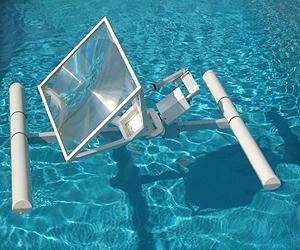
India to Build Floating Solar Plant
New Delhi (UPI)
March 23, 2011
India's private energy giant Tata Power has joined with Australia's Sunengy Pty Limited for a $1 million pilot project to build a solar-powered electricity generation plant that will float on water, the companies announced.
To read more click here...
March 23, 2011
India's private energy giant Tata Power has joined with Australia's Sunengy Pty Limited for a $1 million pilot project to build a solar-powered electricity generation plant that will float on water, the companies announced.
To read more click here...
Posted by
Unknown
0
comments
Labels:
BRIC,
Energy,
Green Energy,
India,
Tata
Subscribe to:
Posts (Atom)