Blogger Themes

Wednesday, 2 May 2012

Medical: Hip implant for long-term use

Engineerblogger
May 2, 2012


The ceramic femoral head fits perfectly into the PEEK hip socket. © Fraunhofer IPA

Hip replacement is one of the most frequent operations carried out in Germany. Each year, doctors implant some 200,000 artificial hip joints. Often the artificial hips need to be replaced just ten years later. In the future, a new implant currently being developed using high technology materials could help prevent premature revision surgeries.

Thanks to artificial hips, people with irreparable damage to the joint have been able to lead active, pain-free lives for the past 50 years. Still, some hip replacements do not function completely as intended, and metal-on-metal implants in particular, demand accurate positioning in surgery and implants positioned non optimally are often susceptible to premature failure notably in small female patients. Physicians are even calling for a prohibition on the use of artificial joints made of cobalt-chromium alloys in which the joint‘s metal ball rubs against its metal socket whenever the wearer walks. Poorly designed or positioned metal on metal implants can lead to higher wear rates and this releases elevated cobalt-chromium ion levels that spread out through the blood and lymph, potentially damaging organs and triggering inflammation. Metal ions are also suspected carcinogens. Because these hip replacements are so robust, however, to date they have often been implanted in young, active patients.

A metal-free composite

Researchers at the Fraunhofer Institute for Manufacturing Engineering and Automation IPA in Stuttgart, partnering in an international team on an EC-funded project entitled “ENDURE” (Enhanced Durability Resurfacing Endoprosthesis), have now developed a new kind of hip implant that, unlike the conventional counterpart implants on the market today, provide a metal-free solution and bone-like elasticity. This is the result of a metal-free, high-tech composite: The hip socket is made of carbon fibre-reinforced PEEK – a high-strength, wear resistant, biocompatible polymer composite. For the femoral head, ceramic was used. In addition to this, a hydroxylapatite coating at the interface to the bone helps ensure that the bone tissue will fuse thoroughly with the surface structure of the implant. “The cobalt-chromium implants in use to date are very rigid, and the load transfer to the bone is non-optimal leading to potential adverse bone adaptation. Thanks to the new combination of materials, the transmission of force through the PEEK hip socket to the pelvic bone is modeled on natural conditions. And there are no metal ions released,“ notes IPA engineer Jasmin Hipp. The researcher and her team were able to confirm the good wear resistance in initial tests of the new hip replacement using a robot that simulated various series of movements such as walking or climbing and descending stairs. The experiments used a prototype of the implant.

Tiny pins protect bone tissue

The ENDURE implants follow the bone-preserving principle of hip resurfacing: they are thin-walled shells which replace the bearing surface of the joint articulation alone, instead of employing large metal stems for support, which require a substantial volume of bone to be removed. Researchers have also redesigned the way the prosthesis is mechanically attached to the bone. Without cement, and using a press-fit and an integral scaffold-type structure on the surfaces of the implant that contact the bone, the hemispherical ball and socket are tapped onto the prepared femoral head and into the acetabulum – the natural, concave surface of the pelvis – and anchored in place.

To ensure the best possible positioning of the artificial hip, the researchers at IPA have developed a size-scalable tool that attaches the implant to standard surgical instruments, enabling implantation, re-alignment and removal. The tool can be discarded after a single use – like a disposable surgical glove. The challenge is to attach instruments to the very thin-walled cup implant, with sufficient strength for implant repositioning. The instrument features a smart collet pin combination allowing strong, quick, single-position attachment and detachment by the surgeon. The scientists have already submitted a patent application for the tool. A team of physicians at the University of Newcastle have demonstrated in operations performed on cadavers, the new hip can be set in place and, if necessary, removed without any difficulties. Meanwhile, the preclinical studies have been completed, and final development work is being planned to allow clinical studies to commence. Partners in the EU-funded project are Aurora Medical, Medicoat, Hunt Developments, Ala Ortho, CeramTec, Invibio, Biomatech and the Universities of Gothenburg and Southampton.

Source: Fraunhofer-Gesellschaft

Sustainable solar cells based on abundant metals

Engineerblogger
May 2, 2012


Comparative testing of ruthenium and zinc dye-sensitized solar cells. (Photo: University of Basel / Edwin Constable)

Following the tragic effects of the Tsunami in 2011, there is an imperative to find energy sources to replace nuclear power. Many technologies are actively under investigation, but a neglected aspect is the sustainability of the material requirements. A highly efficient process based on extremely rare materials is unlikely to enter the mainstream. In an article in the flagship journal Chemical Communications, chemists of the University of Basel describe a paradigm-shifting approach to sustainable and renewable photovoltaic devices.
Dye-sensitized solar cells (DSCs) consist of a semiconductor, titanium dioxide, which is coated with a colored dye. The dye absorbs sunlight and injects an electron into the semiconductor. This is the primary event leading to the photocurrent. Researchers Nik Hostettler and Ewald Schoenhofer in the group of Professors Ed Constable and Catherine Housecroft from the University of Basel have made two breakthroughs (see paper in Chemical Communications).

Firstly, they have developed a new strategy for making and attaching colored materials to the surface of titanium dioxide nanoparticles and, secondly, they have shown for the first time that simple compounds of the readily available metal zinc may be used. Project Officer Dr Biljana Bozic says that the key discovery was finding a method for the simultaneous synthesis of the dye and its attachment to the semiconductor surface.

Colorful dyes from gray zinc

The discovery that zinc dyes can be used is most unexpected. Constable states that most chemists consider zinc to be a "boring" element, as most of its compounds are colourless. However, in course of other work related to next-generation lighting devices, his team discovered new highly-colored organic compounds that could bind to zinc to give new coloured materials. Although the devices are not yet particularly efficient, this observation opens the way to new generations of DSCs with hitherto unconsidered types of dyes.
Conventional DSCs use ruthenium dyes, but ruthenium is very rare and expensive (3,500 Swiss Francs/2,990 Euro per kilogram). Recently, this research team demonstrated that dyes from abundant and relatively inexpensive copper (7.5 Swiss Francs/6.3 Euro per kilogram) were effective in DSCs and the extension to cheap zinc (1.8 Swiss Francs/1.5 Euro per kilogram) compounds further increases the sustainability of the materials science. "This is a significant step towards our dream of coupling photovoltaics and lighting in an intelligent curtain which can store solar energy during the day and function as a lighting device at night. This is at the core of our ERC research programme Light-In, Light-Out", Ed Constable comments.


Dye solar cells in the test under an artificial sun. (Photo: University of Basel / Edwin Constable)

Source: University of Basel

Additional Information:

Tuesday, 1 May 2012

Unique research laboratory focuses on making aircraft engines more efficient

Engineerblogger
May 1, 2012


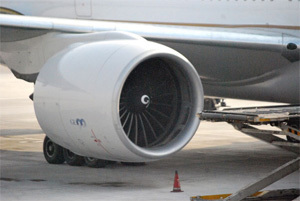
Travel on airlines has become so routine for most of us, we often fail to appreciate what a true technological marvel it is. And it’s a costly and noisy marvel. Moving millions of passengers millions of miles each year requires an astounding amount of costly jet fuel and generates a significant amount of engine noise.

That helps explain why the companies that manufacture aircraft engines often find their way to the laboratory of Scott Morris, an associate professor of aerospace and mechanical engineering at the University of Notre Dame.

Morris conducts experimental research on turbomachinery and acoustics as part of the Institute for Flow Physics and Control, which is located in Notre Dame’s Hessert Laboratory for Aerospace Research. His work is aimed at helping the airline industry and the military to increase the efficiency of aircraft engines and reduce their noise.

Morris and research assistant professor Joshua Cameron developed a turbomachinery laboratory that is focused on improving the components of gas turbine engines for propulsion and power system applications. The lab’s facilities include two transonic axial compressors and a high speed research turbine. These facilities feature single-stage rotating experiments that allow for advanced diagnostics and flow control under conditions that are similar to those occurring in full-scale aircraft engines.

The lab also focuses on aeroacoustics, a field that involves fluid mechanics, acoustics, fluid structure interactions and vibrations. Experiments conducted in this area focus on problems such as airfoil generated noise and vibration, fan noise and the sound associated with active flow control devices.

Turbine engine manufacturers and the military are keenly interested in developing quieter, more energy efficient engines and the Morris lab enables them to gain insights into engine performance that can result in savings of millions of dollars in design and operational costs.

The research facility is growing significantly with a current staff of 20 and a calendar booked with experiments into 2014. The experiments being conducted in the Morris lab are leading to new discoveries that will improve both the energy costs and environmental impact of air travel.

Source:  University of Notre Dame

Company to begin testing electric airplane this spring

Engineerblogger
May 1, 2012


A new aircraft could run entirely on electricity, Popular Science reports.

Researchers at Volta Volare have worked over the past few years to use the latest in engineering research as they sought to create an airplane that could operate using only electricity. Achieving such would have far-reaching repercussions within the aviation sector, as volatile fuel prices are the single most significant contributor to high ticket prices, and the company's newest model could help usher in a new era in flight, the firm's executives contend.

Based in Portland, Oregon, Volta Volare is a leader in its efforts to use novel engineering tools to help make electric and hybrid flight a reality. Paul Peterson, the company's chief executive, said recently that advances in electric vehicle batteries and motors have bolstered the firm's research initiatives. Peterson reckons that electric planes could become as ubiquitous as conventional ones, although the emergent field faces many hurdles on its quest.

This spring, Volta Volare will begin testing an electric aircraft prototype, a G4 that seats four passengers, according to the news provider. Company engineers modeled the plane in many ways on electric vehicle designs, Peterson noted. The G4's hybrid powertrain, for instance, is similar to that of the Chevrolet Volt, and is equipped with batteries and backup gasoline engine components.

The potential payoff for the company is massive, especially as jet fuel prices remain at record highs. Completing a 200-mile journey with an electric aircraft that is equipped with a single engine would cost roughly one-fourth of the amount the same trip would take with a plane that operates using fossil fuels. What's more, electric planes would require less maintenance than their gas-powered counterparts because their motors have only one moving part, Peterson noted.

Electric planes would also reduce aircraft emissions and would produce a quantifiable drop in carbon emissions released by the aviation sector each year, scientists note. While such aircraft are promising, safety experts have long questioned whether they are viable. An electric plane running out of battery power is far more serious than if the same scenario occurs in an electric vehicle.

Still, Peterson said engineers have worked to address many of the safety and structural issues that have long thwarted the development of electric aircraft. Volta Volare's electric plane prototype features a canard, which is a short cross-wing installed near the aircraft's nose and propeller. The canard helps propel the plane through the air, according to PopSci.

Additionally, the canard served as yet another area where engineers could install battery packs. The plane's propellers are also made from a carbon-composite material that is significantly lighter than the materials used in conventional aircraft. Using carbon-composite in the design of the electric plane also ensured the plane was secure enough to contend with the rigors of flight.

The plane is also outfitted with a 900-pound lithium-polymer battery system, according to the company. There are 236 individual cells that make up the battery pack. Each of the batteries is approximately equivalent to the same of a notebook computer, and the pack as a whole is capable of generating 600 horsepower at peak output. Throughout the course of a flight, it roughly has an output of 400 horsepower, Peterson affirmed.

Source: Knovel

Additional Information:

Bejeweled: Nanotech gets boost from nanowire decorations

Engineerblogger
May 1, 2012


Decoration with nanoparticles creates intricate surface patterns full of nooks and crannies, twists and turns that greatly improve surface area. Image courtesy of the Stanford Nanocharacterization Laboratory.

Engineers at Stanford have found a novel method for “decorating” nanowires with chains of tiny particles to increase their electrical and catalytic performance. The new technique is simpler, faster and provides greater control than earlier methods and could lead to better batteries, solar cells and catalysts.

Like a lead actress on the red carpet, nanowires—those superstars of nanotechnology—can be enhanced by a little jewelry, too. Not the diamonds and pearls variety, but the sort formed of sinuous chains of metal oxide or noble metal nanoparticles.

Though science has known for some time that such ornamentation can greatly increase the surface area and alter the surface chemistry of nanowires, engineers at Stanford University have found a novel and more effective method of “decorating” nanowires that is simpler and faster than previous techniques. The results of their study were published recently in the journal Nano Letters.

The development, say the researchers, might someday lead to better lithium-ion batteries, more efficient thin-film solar cells and improved catalysts that yield new synthetic fuels.

Tree-like structures

“You can think of it like a tree. The nanowires are the trunk, very good at transporting electrons, like sap, but limited in surface area,” explained Xiaolin Zheng, an assistant professor of mechanical engineering and senior author of the study. “The added nanoparticle decorations, as we call them, are like the branches and leaves, which fan out and greatly increase the surface area.”

At the nanoscale, surface area matters a great deal in engineering applications like solar cells, batteries and, especially catalysts, where the catalytic activity is dependent on the availability of active sites at the surface of the material.

“Greater surface area means greater opportunity for reactions and therefore better catalytic capabilities in, for example, water-splitting systems that produce clean-burning hydrogen fuel from sunlight,” said Yunzhe Feng, a research assistant in Zheng’s lab and first author of the study.

Other applications such as sensing small concentrations of chemicals in the air—of toxins or explosives, for example—might also benefit from the greater likelihood of detection made possible by increased surface area.

A spark of an idea

The key to the Stanford team’s discovery was a flame. Engineers had long known that nanoparticles could be adhered to nanowires to increase surface area, but the methods for creating them were not very effective in forming the much-desired porous nanoparticle chain structures. These other methods proved too slow and resulted in a too-dense, thick layer of nanoparticles coating the wires, doing little to increase the surface area.

Zheng and her team wondered whether a quick burst of flame might work better, so they tried it.

Zheng dipped the nanowires in a solvent-based gel of metal and salt, then air-dried them before applying the flame. In her process the solvent burns away in a few seconds, allowing the all-important nanoparticles to crystalize into branch-like structures fanning out from the nanowires.

“We were a little surprised by how well it worked,” said Zheng. “It performed beautifully.”

Using sophisticated microscopes and spectroscopes at the Stanford Nanocharacterization Laboratory, the engineers were able to get a good look at their creations.

“It created these intricate, hair-like tendrils filled with lots of nooks and crannies,” said Zheng. The bejeweled nanowires look like pipe cleaners. The resulting structure increases the surface many fold over what went before, she said.

Prof. Xiaolin Zheng has discovered a new way to "decorate" nanowires with coatings of metal nanoparticles that greatly improve surface area. The decorated nanowires look like tiny pipe cleaners. Image courtesy of the Stanford Nanocharacterization Lab.

Dramatic performance, unprecedented control

“The performance improvements have so far been dramatic,” said In Sun Cho, a post-doctoral fellow in Zheng’s lab and co-author of the paper.

Assistant Professor Xiaolin Zheng. Photo: John Todd
 
Zheng and team have dubbed the technique the sol-flame method, for the combination of solvent and flame that yields the nanoparticle structures. The method appears general enough to work with many nanowire and nanoparticle materials and, perhaps more importantly, provides an unprecedented degree of engineering control in creating the nanoparticle decorations.

The high temperature of the flame and brief annealing time ensure that the nanoparticles are small and spread evenly across the nanowires. And, by varying the concentration of nanoparticle in the precursor solution and the number of times the wires are dip-coated, the Stanford team was able to vary the size of the nanoparticle decorations from tens to hundreds of nanometers, and the density from tens to hundreds of particles per square micrometer.

“Though more research is needed, such precision is crucial and could bolster the wider adoption of the process,” said Zheng.

Pratap M. Rao and Lili Cai also contributed to this research. The study was supported by the ONR/PECASE program.

Source: Stanford University


Additional Information:

Scientists to develop faster organic thin-film transistors for plastic electronics

Engineerblogger
May 1, 2012

Credit: Imperial College London


The speed with which your smart phone reacts to your touch as you swipe it is governed by the rate at which electrical charges move through the various display components. Scientists from Imperial College London have collaborated with colleagues at King Abdullah University of Science and Technology (KAUST) to produce organic thin-film transistors (OTFTs) that consistently achieve record-breaking carrier mobility through careful solution-processing of a blend of two organic semiconductors. The OTFTs and their processing methods will be very useful for a host of future electronic applications.

Professor Aram Amassian's group at KAUST teamed with Dr. Thomas Anthopoulos, Department of Physics, Imperial College London, and colleagues Professor Iain McCulloch and Dr. Martin Heeney, Department of Chemistry, to develop and characterize a composite material that enhances the charge transport and enables the fabrication of organic transistors with record-breaking carrier mobility. They described their novel semiconductor blend in a joint paper published in Advanced Materials:

In response to the challenge of expensive vacuum deposition processes, synthetic organic chemists have been increasingly successful in synthesizing conjugated small-molecules that are soluble. "While they have a tendency to form large crystals, reproducible formation of high quality, continuous and uniform films remains an issue", remarked Dr. Anthopoulos, lead Imperial investigator. By contrast, polymer semiconductors are often quite soluble and form high-quality continuous films, but, until recently, could not achieve charge carrier mobilities greater than 1 cm2/Vs.

In this collective work, chemists from Imperial, working together with device physicists in the College's Centre for Plastic Electronics and material scientists at KAUST combined the advantageous properties of both polymer and small molecules in one composite material, which offers higher performance than do small-molecule and polymer semiconductors alone, while enhancing device-to-device reproducibility and stability.

"A key aspect of this work is that it appears to eliminate the high degree of anisotropy typically observed in polycrystalline films of small-molecule semiconductors," said Professor John Anthony of University of Kentucky, a pioneer in the design and synthesis of high-performance small-molecule semiconductors, who was not directly involved in this research. "This anisotropy leads to significant device-to-device variations in performance, which makes them difficult to use in large-scale commercial applications."

The improved performance is attributed in part to the crystalline texture of the small-molecule component of the blend and to the flatness and smoothness achieved at the top surface of the polycrystalline film. The latter is crucial in top-gate, bottom-contact configuration devices, whereby the top surface of the semiconductor blend forms the semiconductor-dielectric interface when solution-coated by the polymer dielectric.

The smoothness and continuity of the surface and the absence of apparent grain boundaries are uncommon for otherwise highly polycrystalline small molecules in pure form, suggesting that the polymer binder planarizes and may even coat the semiconductor crystals with a nanoscale thin layer. "The performance of the polymer-molecule blend exceeds 5 cm2/Vs, which is very close to the single-crystal mobility previously reported for the molecule itself," noted KAUST co-author Prof. Amassian.

The materials scientists at KAUST addressed the challenging questions about the phase separation, crystallinity, and morphology of the organic semiconductor blend by using a combination of synchrotron-based X-ray scattering at the D1 beam line of the Cornell High Energy Synchrotron Source (CHESS), cross-sectional energy-filtered transmission electron microscopy (EF-TEM), and atomic force microscopy in topographic and phase modes.

"This work is particularly exciting as it shows that by bringing to bear complementary powerful characterization techniques on these complex organic blends, one can learn a lot about how they work. It's a textbook example of a structure-property relationship study highlighting the usefulness of such collaborations.'' said Professor Alberto Salleo of Stanford University, an expert on advanced structural characterization of polymer semiconductors and not a member of the research team. "A mobility of 5 cm2/Vs is already a spectacular number. The methods described in this manuscript, however, chart the way for researchers to obtain even higher mobilities."

The team is continuing its collaboration in the hopes of designing even better materials and processes by understanding how the material design and solution processing conditions lead to these extraordinary film properties. "The in-situ diagnostics methods developed by the KAUST group will reveal the intricacies of the solution-processing and phase separation of the blend," commented co-author Dr. Martin Heeney. "We look forward to using this insight to improve these devices even further."

"In principle, this simple blend approach could be applied to a range of existing small molecules and polymers, and lead to the development of organic transistors with performing characteristics well beyond the current state-of-the-art,'' added Dr. Anthopoulos.

Source: King Abdullah University of Science and Technology (KAUST)

Plants into plastics: Team develops cheaper, non-petroleum method to make plastics from biomass

Engineerblogger
May 1, 2012


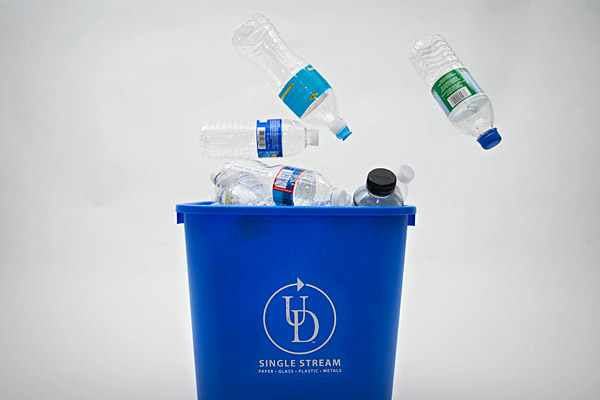
University of Delaware researchers, in collaboration with colleagues at the University of Massachusetts Amherst, have developed a cheaper, non-petroleum method to make plastics from biomass. Credit: UDEL

A team of chemical engineers has discovered a new way to make plastic bottles from biomass rather than petroleum, with researchers from the University of Massachusetts Amherst and the University of Delaware announcing the discovery on the heels of Earth Day.

The discovery demonstrates an efficient, renewable way to produce the chemical p-xylene, necessary in creating certain plastic containers. Xylene chemicals are used to produce a plastic called PET (polyethylene terephthalate), which is currently used in many products including soda bottles, food packaging, synthetic fibers for clothing and even automotive parts.

“You can mix our renewable chemical with the petroleum-based material and the consumer would not be able to tell the difference,” said Paul J. Dauenhauer, assistant professor of chemical engineering at UMass Amherst.

The research was published in the journal ACS Catalysis, a publication of the American Chemical Society.

The new process uses a zeolite catalyst capable of transforming glucose into p-xylene in a three-step reaction within a high-temperature biomass reactor. Researchers call this a major breakthrough since other methods of producing renewable p-xylene are either expensive or inefficient due to low yields.

"Our discovery shows remarkable potential for green plastics, particularly those used to distribute soft drinks and water,” said Dion Vlachos, director of the University of Delaware’s Catalysis Center for Energy Innovation (CCEI). “This technology could significantly reduce production costs for manufacturers of plastics from renewable sources."

A key to the success of the new process is using a catalyst specifically designed to promote the p-xylene reaction over other less desirable reactions.

“We discovered that the performance of the biomass reaction was strongly affected by the nanostructure of the catalyst, which we were able to optimize and achieve a 75 percent yield,” said Wei Fan, assistant professor of chemical engineering at UMass Amherst.

The research team believes further modifying the process could potentially boost the yield and make it even more economically attractive.

This discovery is a part of a larger effort by UD's Catalysis Center for Energy Innovation to create breakthrough technologies for the production of biofuels and chemicals from plant biomass. The center is funded by the U.S. Department of Energy as part of the Energy Frontiers Research Center program, which combines more than 20 faculty with complimentary research skills to collaborate on solving the world’s most pressing energy challenges.

“This is the new frontier in our center and an exciting advancement for biomass transformation," Vlachos said.

The discovery for the production of plastics adds another dimension to the already rich portfolio of accomplishments of CCEI. Notable examples include:
  • a new Tin-Beta catalyst discovered by a research team led by Mark Davis of the California Institute of Technology, which has the potential to replace the costly and slow bioenzymatic process currently used to convert glucose to fructose;
  • a novel fuel cell technology developed by a research team led by Ray Gorte and John Vohs at the University of Pennsylvania that converts solid biomass to electricity; and
  • a catalytic fast pyrolysis technology developed by George Huber and Wei Fan of the University of Massachusetts Amherst that significantly improves the yield for aromatics that can be used as drop-in fuels, such as gasoline.
Source: University of Delaware