Engineerblogger
May 3, 2012
Scientists are reporting development and successful testing of the first self-propelled “microsubmarines” designed to pick up droplets of oil from contaminated waters and transport them to collection facilities. The report concludes that these tiny machines could play an important role in cleaning up oil spills, like the 2010 Deepwater Horizon incident in the Gulf of Mexico. It appears in the journal ACS Nano.
Joseph Wang and colleagues explain that different versions of microengines have been developed, including devices that could transport medications through the bloodstream to diseased parts of the body. But no one has ever shown that these devices — which are about 10 times smaller than the width of a human hair — could help clean up oil spills. There is an urgent need for better ways of separating oil from water in the oceans and inside factories to avoid releasing oil-contaminated water to the environment. Wang’s team developed so-called microsubmarines, which require very little fuel and move ultrafast, to see whether these small engines could help clean up oil.
Tests showed that the cone-shaped microsubmarines can collect droplets of olive oil and motor oil in water and transport them through the water. The microsubs have a special surface coating, which makes them “superhydrophobic,” or extremely water-repellent and oil-absorbent. “These results demonstrate the potential of the superhydrophobic-modified microsubmarines for facile, rapid and highly efficient collection of oils in oil-contaminated water samples,” say the researchers.
The authors acknowledge funding from the National Science Foundation, NATO Science for Peace and Security Program, Spanish MICINN, Beatriu de Pinós (Government of Catalonia) and University of Alcalá (Madrid).
Source: American Chemical Society(ACS)
Additional Information:
Thursday, 3 May 2012
Wednesday, 2 May 2012
Squid and zebrafish cells inspire camouflaging smart materials
Engineerblogger
May 2, 2012
Researchers from the University of Bristol have created artificial muscles that can be transformed at the flick of a switch to mimic the remarkable camouflaging abilities of organisms such as squid and zebrafish. They demonstrate two individual transforming mechanisms that they believe could be used in ‘smart clothing’ to trigger camouflaging tricks similar to those seen in nature.
The study, by Dr Jonathan Rossiter, Senior Lecturer in the Department of Engineering Mathematics and Dr Andrew Conn, Lecturer in the Department of Mechanical Engineering, is published in IOP Publishing’s journal Bioinspiration and Biomimetics, and is accompanied by a video(view below) showing the camouflaging in action.
“We have taken inspiration from nature's designs and exploited the same methods to turn our artificial muscles into striking visual effects,” said lead author of the study Dr Jonathan Rossiter.
The soft, stretchy, artificial muscles are based on specialist cells called chromatophores that are found in amphibians, fish, reptiles and cephalopods, and contain pigments of colours that are responsible for the animals’ remarkable colour-changing effects.
The colour changes in these organisms can be triggered by changes in mood, temperature, stress or something visible in the environment, and can be used for camouflage, communication or attracting a mate.
Two types of artificial chromatophores were created in the study: the first based on a mechanism adopted by a squid and the second based on a rather different mechanism adopted by zebrafish.
A typical colour-changing cell in a squid has a central sac containing granules of pigment. The sac is surrounded by a series of muscles and when the cell is ready to change colour, the brain sends a signal to the muscles and they contract. The contracting muscles make the central sacs expand, generating the optical effect which makes the squid look like it is changing colour.
The fast expansion of these muscles was mimicked using dielectric elastomers (DEs) – smart materials, usually made of a polymer, which are connected to an electric circuit and expand when a voltage is applied. They return to their original shape when they are short circuited.
In contrast, the cells in the zebrafish contain a small reservoir of black pigmented fluid that, when activated, travels to the skin surface and spreads out, much like the spilling of black ink. The natural dark spots on the surface of the zebrafish therefore appear to get bigger and the desired optical effect is achieved. The changes are usually driven by hormones.
The zebrafish cells were mimicked using two glass microscope slides sandwiching a silicone layer. Two pumps, made from flexible DEs, were positioned on both sides of the slide and were connected to the central system with silicone tubes; one pumping opaque white spirit, the other a mixture of black ink and water.
“Our artificial chromatophores are both scalable and adaptable and can be made into an artificial compliant skin which can stretch and deform, yet still operate effectively. This means they can be used in many environments where conventional 'hard' technologies would be dangerous, for example at the physical interface with humans, such as smart clothing,” continued Rossiter.
Source: Bristol University
Additional Information:
May 2, 2012
| Example of triple disk artificial chromatophore showing 'on' state |
Researchers from the University of Bristol have created artificial muscles that can be transformed at the flick of a switch to mimic the remarkable camouflaging abilities of organisms such as squid and zebrafish. They demonstrate two individual transforming mechanisms that they believe could be used in ‘smart clothing’ to trigger camouflaging tricks similar to those seen in nature.
The study, by Dr Jonathan Rossiter, Senior Lecturer in the Department of Engineering Mathematics and Dr Andrew Conn, Lecturer in the Department of Mechanical Engineering, is published in IOP Publishing’s journal Bioinspiration and Biomimetics, and is accompanied by a video(view below) showing the camouflaging in action.
“We have taken inspiration from nature's designs and exploited the same methods to turn our artificial muscles into striking visual effects,” said lead author of the study Dr Jonathan Rossiter.
| The common cuttlefish is able to actively camouflage against the seabed |
The soft, stretchy, artificial muscles are based on specialist cells called chromatophores that are found in amphibians, fish, reptiles and cephalopods, and contain pigments of colours that are responsible for the animals’ remarkable colour-changing effects.
The colour changes in these organisms can be triggered by changes in mood, temperature, stress or something visible in the environment, and can be used for camouflage, communication or attracting a mate.
Two types of artificial chromatophores were created in the study: the first based on a mechanism adopted by a squid and the second based on a rather different mechanism adopted by zebrafish.
A typical colour-changing cell in a squid has a central sac containing granules of pigment. The sac is surrounded by a series of muscles and when the cell is ready to change colour, the brain sends a signal to the muscles and they contract. The contracting muscles make the central sacs expand, generating the optical effect which makes the squid look like it is changing colour.
The fast expansion of these muscles was mimicked using dielectric elastomers (DEs) – smart materials, usually made of a polymer, which are connected to an electric circuit and expand when a voltage is applied. They return to their original shape when they are short circuited.
In contrast, the cells in the zebrafish contain a small reservoir of black pigmented fluid that, when activated, travels to the skin surface and spreads out, much like the spilling of black ink. The natural dark spots on the surface of the zebrafish therefore appear to get bigger and the desired optical effect is achieved. The changes are usually driven by hormones.
The zebrafish cells were mimicked using two glass microscope slides sandwiching a silicone layer. Two pumps, made from flexible DEs, were positioned on both sides of the slide and were connected to the central system with silicone tubes; one pumping opaque white spirit, the other a mixture of black ink and water.
“Our artificial chromatophores are both scalable and adaptable and can be made into an artificial compliant skin which can stretch and deform, yet still operate effectively. This means they can be used in many environments where conventional 'hard' technologies would be dangerous, for example at the physical interface with humans, such as smart clothing,” continued Rossiter.
Source: Bristol University
Additional Information:
Posted by
Unknown
0
comments
Labels:
Environment,
Materials,
Nanotechnology,
Research and Development,
Science,
UK
Electric mass mobility for urban environments
Engineerblogger
May 2, 2012
Electric vehicles powered by electricity from renewable energy sources are an attractive option for mobility within the urban area and beyond. However, previous approaches lead to vehicles that either are too heavy and too expensive or do not meet mass-market safety requirements. Within the joint research project Visio.M scientists at the Technische Universitaet Muenchen (TUM), in cooperation with engineers from the automotive industry, will develop concepts to produce electric cars that are efficient, safe, and inexpensive. Lead manager of the project is BMW AG. The project has a total volume of 10.8 million euros and is funded by the German Federal Ministry for Education and Research (BMBF).
Electric cars are silent and cause no emissions where they go. Therefore, they are considered an important option for future individual mobility in urban areas and beyond. But on the way to mass production of electric vehicles, there are still significant technological hurdles to overcome. Previous small electric vehicles offer only a minimum level of vehicle safety and therefore are not mass-marketable. Electric cars that were derived from gasoline-powered models are usually too heavy and require large and expensive batteries.
Within the joint research project Visio.M well known companies of the German automotive industry, together with scientists from the Technische Universitaet Muenchen, explore how the price and safety of small, efficient electric vehicles can be brought to a level enabling them to achieve a significant share of the mass market. The mobility concept deriving from these visionaries will be a vehicle with a power of 15 kilowatts and a maximum curb weight of 400 kg (without battery), meeting the requirements of the European regulatory category L7e.
The consortium partners use the electric vehicle prototype MUTE developed by the TU Muenchen as their test carrier to explore innovations and new technologies for vehicle safety, propulsion, energy storage, and operational concepts for implementation under the framework requirements of large-scale production. Special attention is given to safety-related design issues. Despite minimal weight, Visio.M is expected to achieve a level of protection equal to that offered by conventional cars with combustion engines.
Participants in the Visio.M consortium are, in addition to the automotive companies BMW AG (lead manager) and Daimler AG, the Technische Universitaet Muenchen as a scientific partner, and Autoliv BV & Co. KG, the Federal Highway Research Institute (BAST), Continental Automotive GmbH, E.ON AG, Finepower GmbH, Hyve AG, IAV GmbH, InnoZ GmbH, Intermap Technologies GmbH, LION Smart GmbH, Neumayer Tekfor Holding GmbH, Siemens AG, Texas Instruments Germany GmbH and TÜV SÜD AG as industrial partners. The project is funded under the priority program "Key Technologies for Electric Mobility - STROM" of the Federal Ministry for Education and Research (BMBF).
Source: Technische Universitaet Muenchen (TUM)
May 2, 2012
MUTE serves as test carrier for the Visio.M-Project - Photo: Florian Lehmann / TUM |
Electric cars are silent and cause no emissions where they go. Therefore, they are considered an important option for future individual mobility in urban areas and beyond. But on the way to mass production of electric vehicles, there are still significant technological hurdles to overcome. Previous small electric vehicles offer only a minimum level of vehicle safety and therefore are not mass-marketable. Electric cars that were derived from gasoline-powered models are usually too heavy and require large and expensive batteries.
Within the joint research project Visio.M well known companies of the German automotive industry, together with scientists from the Technische Universitaet Muenchen, explore how the price and safety of small, efficient electric vehicles can be brought to a level enabling them to achieve a significant share of the mass market. The mobility concept deriving from these visionaries will be a vehicle with a power of 15 kilowatts and a maximum curb weight of 400 kg (without battery), meeting the requirements of the European regulatory category L7e.
The consortium partners use the electric vehicle prototype MUTE developed by the TU Muenchen as their test carrier to explore innovations and new technologies for vehicle safety, propulsion, energy storage, and operational concepts for implementation under the framework requirements of large-scale production. Special attention is given to safety-related design issues. Despite minimal weight, Visio.M is expected to achieve a level of protection equal to that offered by conventional cars with combustion engines.
Participants in the Visio.M consortium are, in addition to the automotive companies BMW AG (lead manager) and Daimler AG, the Technische Universitaet Muenchen as a scientific partner, and Autoliv BV & Co. KG, the Federal Highway Research Institute (BAST), Continental Automotive GmbH, E.ON AG, Finepower GmbH, Hyve AG, IAV GmbH, InnoZ GmbH, Intermap Technologies GmbH, LION Smart GmbH, Neumayer Tekfor Holding GmbH, Siemens AG, Texas Instruments Germany GmbH and TÜV SÜD AG as industrial partners. The project is funded under the priority program "Key Technologies for Electric Mobility - STROM" of the Federal Ministry for Education and Research (BMBF).
Source: Technische Universitaet Muenchen (TUM)
Posted by
Unknown
0
comments
Labels:
Automotive,
Automotive Technology,
Europe,
Germany,
Infrastructure,
Technology,
Transport
Graphene-based terahertz devices: The wave of the future
Engineerblogger
May 2, 2012
People use electromagnetic energy every day … watching television, listening to the radio, popping corn with a microwave, taking an X-ray or using a cellphone. This energy travels in the form of waves, which are widely used in electronic and wireless devices.
One of the hottest areas of the electromagnetic spectrum being explored today is the terahertz (THz) range. Terahertz waves, lying between microwave and optical frequencies, offer improved performance for a variety of applications in everyday life. For instance, THz waves can carry more information than radio/microwaves for communications devices. They also provide medical and biological images with higher resolution than microwaves, while offering much smaller potential harm of exposure than X-rays.
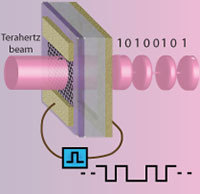
Researchers at the University of Notre Dame have shown that it is possible to efficiently manipulate THz electromagnetic waves with atomically thin graphene layers. This achievement, which was recently published in Nature Communications, sets the stage for development of compact, efficient and cost-effective devices and systems operating in the THz band.
“A major bottleneck in the promise of THz technology has been the lack of efficient materials and devices that manipulate these energy waves,” says Berardi Sensale-Rodriguez, a graduate student in the Department of Electrical Engineering at Notre Dame. “Having a naturally two-dimensional material with strong and tunable response to THz waves — for example, graphene — gives us the opportunity to design THz devices achieving unprecedented performance.”
The terahertz team — graduate students Sensale-Rodriguez, Rusen Yan, Kristof Tahy and Tian Fang; research assistant professors Michelle M. Kelly, through Center for Nano Science and Technology (NDnano), and Lei Liu, in conjunction with Advanced Diagnostics and Therapeutics at Notre Dame (AD&T); visiting research assistant professor Wan Sik Hwang, with Midwest Institute for Nanoelectronics Discovery (MIND); associate professor Debdeep Jena and John Cardinal O’Hara, C.S.C., Associate Professor Huili (Grace) Xing — has demonstrated the first proof of concept prototype of a graphene-based THz modulator, a device enabled solely by intraband transitions in graphene.
Graphene, an atom-thick semiconductor material, has shown promising electrical, mechanical and thermal properties leading to the recent demonstration of fast transistors, flexible/transparent electronics, optical devices and now terahertz active components.
“Graphene has been touted as an ideal platform to discover new, as well as prove/dispute existing, physical phenomena since 2004," Xing said. "That is what two physicists in the United Kingdom, Andre Geim and Konstantin Novoselov, were awarded the Nobel Prize for in 2010. However, very few real-world applications of graphene have emerged to date. Using graphene to manipulate THz waves is one of such applications. This Nature Communication paper documented our first experimental effort to realize the predictions in our paper published in Applied Physics Letters last year. Devices with better performance continue rolling out of our laboratories.
“Though Professor Jena and I formed the vision to use two-dimensional electron gas to manipulate THz waves back in 2006, it was not until Michelle, Lei and Berardi joined us that this piece of work was possible,” Xing added.
This research was supported by the National Science Foundation and the Office of Naval Research, as well MIND, NDnano and AD&T.
Source: University of Notre Dame
Additional Information:
May 2, 2012
People use electromagnetic energy every day … watching television, listening to the radio, popping corn with a microwave, taking an X-ray or using a cellphone. This energy travels in the form of waves, which are widely used in electronic and wireless devices.
One of the hottest areas of the electromagnetic spectrum being explored today is the terahertz (THz) range. Terahertz waves, lying between microwave and optical frequencies, offer improved performance for a variety of applications in everyday life. For instance, THz waves can carry more information than radio/microwaves for communications devices. They also provide medical and biological images with higher resolution than microwaves, while offering much smaller potential harm of exposure than X-rays.
Researchers at the University of Notre Dame have shown that it is possible to efficiently manipulate THz electromagnetic waves with atomically thin graphene layers. This achievement, which was recently published in Nature Communications, sets the stage for development of compact, efficient and cost-effective devices and systems operating in the THz band.
“A major bottleneck in the promise of THz technology has been the lack of efficient materials and devices that manipulate these energy waves,” says Berardi Sensale-Rodriguez, a graduate student in the Department of Electrical Engineering at Notre Dame. “Having a naturally two-dimensional material with strong and tunable response to THz waves — for example, graphene — gives us the opportunity to design THz devices achieving unprecedented performance.”
The terahertz team — graduate students Sensale-Rodriguez, Rusen Yan, Kristof Tahy and Tian Fang; research assistant professors Michelle M. Kelly, through Center for Nano Science and Technology (NDnano), and Lei Liu, in conjunction with Advanced Diagnostics and Therapeutics at Notre Dame (AD&T); visiting research assistant professor Wan Sik Hwang, with Midwest Institute for Nanoelectronics Discovery (MIND); associate professor Debdeep Jena and John Cardinal O’Hara, C.S.C., Associate Professor Huili (Grace) Xing — has demonstrated the first proof of concept prototype of a graphene-based THz modulator, a device enabled solely by intraband transitions in graphene.
Graphene, an atom-thick semiconductor material, has shown promising electrical, mechanical and thermal properties leading to the recent demonstration of fast transistors, flexible/transparent electronics, optical devices and now terahertz active components.
“Graphene has been touted as an ideal platform to discover new, as well as prove/dispute existing, physical phenomena since 2004," Xing said. "That is what two physicists in the United Kingdom, Andre Geim and Konstantin Novoselov, were awarded the Nobel Prize for in 2010. However, very few real-world applications of graphene have emerged to date. Using graphene to manipulate THz waves is one of such applications. This Nature Communication paper documented our first experimental effort to realize the predictions in our paper published in Applied Physics Letters last year. Devices with better performance continue rolling out of our laboratories.
“Though Professor Jena and I formed the vision to use two-dimensional electron gas to manipulate THz waves back in 2006, it was not until Michelle, Lei and Berardi joined us that this piece of work was possible,” Xing added.
This research was supported by the National Science Foundation and the Office of Naval Research, as well MIND, NDnano and AD&T.
Source: University of Notre Dame
Additional Information:
- In Nature Communications ("Broadband graphene terahertz modulators enabled by intraband transitions")
Posted by
Unknown
0
comments
Analyzing energy potential
Engineerblogger
May 2, 2012
Sensors, radio transmitters and GPS modules all feature low power consumption. All it takes is a few milliwatts to run them. Energy from the environment – from sources such as light or vibrations – may be enough to meet these requirements. A new measurement device can determine whether or not the energy potential is high enough.
The freight train races through the landscape at high speed, the train cars clattering along the tracks. The cars are rudely shaken, back and forth. The rougher the tracks, the more severe the shaking. This vibration delivers enough energy to charge small electronic equipment: this is how the sensors that monitor temperatures in refrigerator cars, or GPS receivers, can receive the current they need to run.
Vibration replaces batteries
Experts refer to this underlying technology as “energy harvesting“, where energy is derived from everyday sources such as temperature or pressure differences, air currents, mechanical movements or vibrations. But is this really enough to supply electronic microsystems? The answer is provided by a data logger that is also installed on board, a product by the Fraunhofer Institute for Integrated Circuits. This compact system analyzes and characterizes the potential of usable energy – in this case, the oscillations created during the ride. It measures key parameters of the source of the vibrations, such as the amplitude and the frequency spectrum of acceleration. “We can use the data collected to design vibration converters, such as the piezoelectric generators, to feed the sensors, radio transmission receivers, tracking systems and other low-power-consuming devices with enough energy to power them,“ explains the IIS group manager and engineer, Dr. Peter Spies. “The tracking systems in use to date run on just a battery. These batteries need constant replacement, but that involves a lot of effort and expense. Thanks to energy harvesting, we can replace the batteries and wiring.“ Logistics processes are not the only candidates, however. The energy “harvested“ can be used for a great many other applications as well – to charge heart-rate monitors, sensors in washing machines and production plants, or measurement systems in cars to measure the air pressure in tires.
The elements of the data logger include an acceleration sensor, a GPS module, a micro-controller, an SD card and a WiFi interface. The sensor measures the freight train‘s acceleration along three axes. At the same time, the GPS module determines the vehicle‘s position and stores the data along with the acceleration values on the SD card. These parameters can be used to pinpoint the train‘s speed and the amount of energy available to it. “That way, we can fine-tune the energy converter and tailor it to the application involved,“ the researcher adds.
The data logger is already in use in freight cars, trucks and machinery. Spies and his team are currently working to develop a complete tracking system that includes not only a GSM module and a GPS receiver but also a vibration converter that turns mechanical energy into electrical energy. The researchers are showcasing a prototype of the IIS data logger at the Sensor+Test 2012 trade fair, May 22-24 in Nuremberg.
Source: Fraunhofer-Gesellschaft
May 2, 2012
Researchers attaching a data logger to a shipping container. © Fraunhofer IIS
|
Sensors, radio transmitters and GPS modules all feature low power consumption. All it takes is a few milliwatts to run them. Energy from the environment – from sources such as light or vibrations – may be enough to meet these requirements. A new measurement device can determine whether or not the energy potential is high enough.
The freight train races through the landscape at high speed, the train cars clattering along the tracks. The cars are rudely shaken, back and forth. The rougher the tracks, the more severe the shaking. This vibration delivers enough energy to charge small electronic equipment: this is how the sensors that monitor temperatures in refrigerator cars, or GPS receivers, can receive the current they need to run.
Vibration replaces batteries
Experts refer to this underlying technology as “energy harvesting“, where energy is derived from everyday sources such as temperature or pressure differences, air currents, mechanical movements or vibrations. But is this really enough to supply electronic microsystems? The answer is provided by a data logger that is also installed on board, a product by the Fraunhofer Institute for Integrated Circuits. This compact system analyzes and characterizes the potential of usable energy – in this case, the oscillations created during the ride. It measures key parameters of the source of the vibrations, such as the amplitude and the frequency spectrum of acceleration. “We can use the data collected to design vibration converters, such as the piezoelectric generators, to feed the sensors, radio transmission receivers, tracking systems and other low-power-consuming devices with enough energy to power them,“ explains the IIS group manager and engineer, Dr. Peter Spies. “The tracking systems in use to date run on just a battery. These batteries need constant replacement, but that involves a lot of effort and expense. Thanks to energy harvesting, we can replace the batteries and wiring.“ Logistics processes are not the only candidates, however. The energy “harvested“ can be used for a great many other applications as well – to charge heart-rate monitors, sensors in washing machines and production plants, or measurement systems in cars to measure the air pressure in tires.
The elements of the data logger include an acceleration sensor, a GPS module, a micro-controller, an SD card and a WiFi interface. The sensor measures the freight train‘s acceleration along three axes. At the same time, the GPS module determines the vehicle‘s position and stores the data along with the acceleration values on the SD card. These parameters can be used to pinpoint the train‘s speed and the amount of energy available to it. “That way, we can fine-tune the energy converter and tailor it to the application involved,“ the researcher adds.
The data logger is already in use in freight cars, trucks and machinery. Spies and his team are currently working to develop a complete tracking system that includes not only a GSM module and a GPS receiver but also a vibration converter that turns mechanical energy into electrical energy. The researchers are showcasing a prototype of the IIS data logger at the Sensor+Test 2012 trade fair, May 22-24 in Nuremberg.
Source: Fraunhofer-Gesellschaft
Posted by
Unknown
0
comments
Labels:
Energy,
Europe,
Germany,
Research and Development,
Technology
New method quickly identifies nanomaterials that can cause oxidative damage to cells
Engineerblogger
May 2, 2012
Engineered nanomaterials, prized for their unique semiconducting properties, are already prevalent in everyday consumer products — from sunscreens, cosmetics and paints to textiles and solar batteries — and economic forecasters are predicting the industry will grow into $1 trillion business in the next few years. But how safe are these materials?
Because the semiconductor properties of metal-oxide nanomaterials could potentially translate into health hazards for humans, animals and the environment, it is imperative, researchers say, to develop a method for rapidly testing these materials to determine the potential hazards and take appropriate preventative action.
To that end, UCLA researchers and their colleagues have developed a novel screening technology that allows large batches of these metal-oxide nanomaterials to be assessed quickly, based on their ability to trigger certain biological responses in cells as a result of their semiconductor properties. The research is published in the journal ACS Nano.
Just as semiconductors can inject or extract electrons from industrial materials, semiconducting metal-oxide nanomaterials can have an electron-transfer effect when they come into contact with human cells that contain electronically active molecules, the researchers found. And while these oxidation–reduction reactions are helpful in industry, when they occur in the body they have the potential to generate oxygen radicals, which are highly reactive oxygen molecules that damage cells, triggering acute inflammation in the lungs of exposed humans and animals.
In a key finding, the research team predicted that metal-oxide nanomaterials and electronically active molecules in the body must have similar electron energy levels — called band-gap energy in the case of the nanomaterial — for this hazardous electron transfer to occur and oxidative damage to result.
Based on this prediction, the researchers screened 24 metal-oxide nanoparticles to determine which were most likely to lead to toxicity under real-life exposure. Using a high-throughput screening assay (performed by robotic equipment and an automated image-capture microscope), they tested the two dozen materials on a variety of cell types in a matter of a few hours and found that six of them — those that had previously met the researchers' predictive criteria for being toxic based on their band-gap energy — led to oxidative damage in cells.
The team then tested the nanomaterials in well-orchestrated animal studies and found that only those materials that had led to oxidative damage in cells were capable of generating inflammation in the lungs of mice, confirming the researchers' band-gap hypothesis.
"The ability to make such predictions, starting with cells in a test tube, and extrapolating the results to intact animals and humans exposed to potentially hazardous metal oxides, is a huge step forward in the safety screening of nanomaterials," said senior author Dr. Andre Nel, chief of the division of nanomedicine at the David Geffen School of Medicine at UCLA and the California NanoSystems Institute at UCLA and director of the University of California Center for Environmental Implications of Nanotechnology.
According to the researchers, this new safety-assessment technology has the potential to replace traditional testing, which is currently performed one material at a time in labor-intensive animal studies using a "wait-and-see" approach that doesn't reveal why the implicated nanomaterials could be hazardous. The UCLA team's predictive approach and screening technique could speed up the ability to assess large numbers of emerging new nanomaterials rather than waiting for their toxicological potential to become manifest before action is taken.
"Being able to integrate metal-oxide electronic properties into a predictive and high-throughput scientific platform in this work could play an important role in advancing nanomaterial safety testing in the 21st century to a preventative strategy, rather than waiting for problems to emerge," Nel said.
Another major advantage of an approach based on the assessment of nanomaterials' properties is that one can identify those properties that could potentially be redesigned to make the materials less hazardous, the researchers said.
The implementation of high-throughput screening is also leading to the development of computer tools that assist in prediction-making; in the future, much of the safety assessment of nanomaterials could be carried out using computer programs that perform smart modeling and simulation procedures based on electronic properties.
"We can now further refine the testing of an important class of engineered nanomaterials to the level where regulatory agencies can make use of our predictions and testing methods," said Haiyuan Zhang, a postdoctoral research scholar at the Center for Environmental Implicatioons of Nanotechnology at UCLA's CNSI and the lead author of the study.
Source: UCLA
Additional Information:
May 2, 2012
Engineered nanomaterials, prized for their unique semiconducting properties, are already prevalent in everyday consumer products — from sunscreens, cosmetics and paints to textiles and solar batteries — and economic forecasters are predicting the industry will grow into $1 trillion business in the next few years. But how safe are these materials?
Because the semiconductor properties of metal-oxide nanomaterials could potentially translate into health hazards for humans, animals and the environment, it is imperative, researchers say, to develop a method for rapidly testing these materials to determine the potential hazards and take appropriate preventative action.
To that end, UCLA researchers and their colleagues have developed a novel screening technology that allows large batches of these metal-oxide nanomaterials to be assessed quickly, based on their ability to trigger certain biological responses in cells as a result of their semiconductor properties. The research is published in the journal ACS Nano.
Just as semiconductors can inject or extract electrons from industrial materials, semiconducting metal-oxide nanomaterials can have an electron-transfer effect when they come into contact with human cells that contain electronically active molecules, the researchers found. And while these oxidation–reduction reactions are helpful in industry, when they occur in the body they have the potential to generate oxygen radicals, which are highly reactive oxygen molecules that damage cells, triggering acute inflammation in the lungs of exposed humans and animals.
In a key finding, the research team predicted that metal-oxide nanomaterials and electronically active molecules in the body must have similar electron energy levels — called band-gap energy in the case of the nanomaterial — for this hazardous electron transfer to occur and oxidative damage to result.
Based on this prediction, the researchers screened 24 metal-oxide nanoparticles to determine which were most likely to lead to toxicity under real-life exposure. Using a high-throughput screening assay (performed by robotic equipment and an automated image-capture microscope), they tested the two dozen materials on a variety of cell types in a matter of a few hours and found that six of them — those that had previously met the researchers' predictive criteria for being toxic based on their band-gap energy — led to oxidative damage in cells.
The team then tested the nanomaterials in well-orchestrated animal studies and found that only those materials that had led to oxidative damage in cells were capable of generating inflammation in the lungs of mice, confirming the researchers' band-gap hypothesis.
"The ability to make such predictions, starting with cells in a test tube, and extrapolating the results to intact animals and humans exposed to potentially hazardous metal oxides, is a huge step forward in the safety screening of nanomaterials," said senior author Dr. Andre Nel, chief of the division of nanomedicine at the David Geffen School of Medicine at UCLA and the California NanoSystems Institute at UCLA and director of the University of California Center for Environmental Implications of Nanotechnology.
According to the researchers, this new safety-assessment technology has the potential to replace traditional testing, which is currently performed one material at a time in labor-intensive animal studies using a "wait-and-see" approach that doesn't reveal why the implicated nanomaterials could be hazardous. The UCLA team's predictive approach and screening technique could speed up the ability to assess large numbers of emerging new nanomaterials rather than waiting for their toxicological potential to become manifest before action is taken.
"Being able to integrate metal-oxide electronic properties into a predictive and high-throughput scientific platform in this work could play an important role in advancing nanomaterial safety testing in the 21st century to a preventative strategy, rather than waiting for problems to emerge," Nel said.
Another major advantage of an approach based on the assessment of nanomaterials' properties is that one can identify those properties that could potentially be redesigned to make the materials less hazardous, the researchers said.
The implementation of high-throughput screening is also leading to the development of computer tools that assist in prediction-making; in the future, much of the safety assessment of nanomaterials could be carried out using computer programs that perform smart modeling and simulation procedures based on electronic properties.
"We can now further refine the testing of an important class of engineered nanomaterials to the level where regulatory agencies can make use of our predictions and testing methods," said Haiyuan Zhang, a postdoctoral research scholar at the Center for Environmental Implicatioons of Nanotechnology at UCLA's CNSI and the lead author of the study.
Source: UCLA
Additional Information:
Posted by
Unknown
0
comments
Robotics: Flying 3D eye-bots
Engineerblogger
May 2, 2012
They can be deployed as additional surveillance resources during major events, or as high-resolution 3D street imaging systems. Intelligent swarms of aerial drones are a universally useful tool for police, crisis managers and urban planners. Special 3D sensors developed by Fraunhofer researchers ensure flawless aerobatics and prevent collisions.
Like a well-rehearsed formation team, a flock of flying robots rises slowly into the air with a loud buzzing noise. A good two dozen in number, they perform an intricate dance in the sky above the seething hordes of soccer fans. Rowdy hooligans have stormed the field and set off flares. Fights are breaking out all over, smoke is hindering visibility, and chaos is the order of the day. Only the swarm of flying drones can maintain an overview of the situation. These unmanned aerial vehicles (UAVs) are a kind of mini-helicopter, with a wingspan of around two meters. They have a propeller on each of their two variable-geometry side wings, which lends them rapid and precise maneuverability. In operation over the playing field, their cameras and sensors capture urgently-needed images and data, and transmit them to the control center. Where are the most seriously injured people? What’s the best way to separate the rival gangs? The information provided by the drones allows the head of operations to make important decions more quickly, while the robots form up to go about their business above the arena autonomously – and without ever colliding with each other, or with any other obstacles.
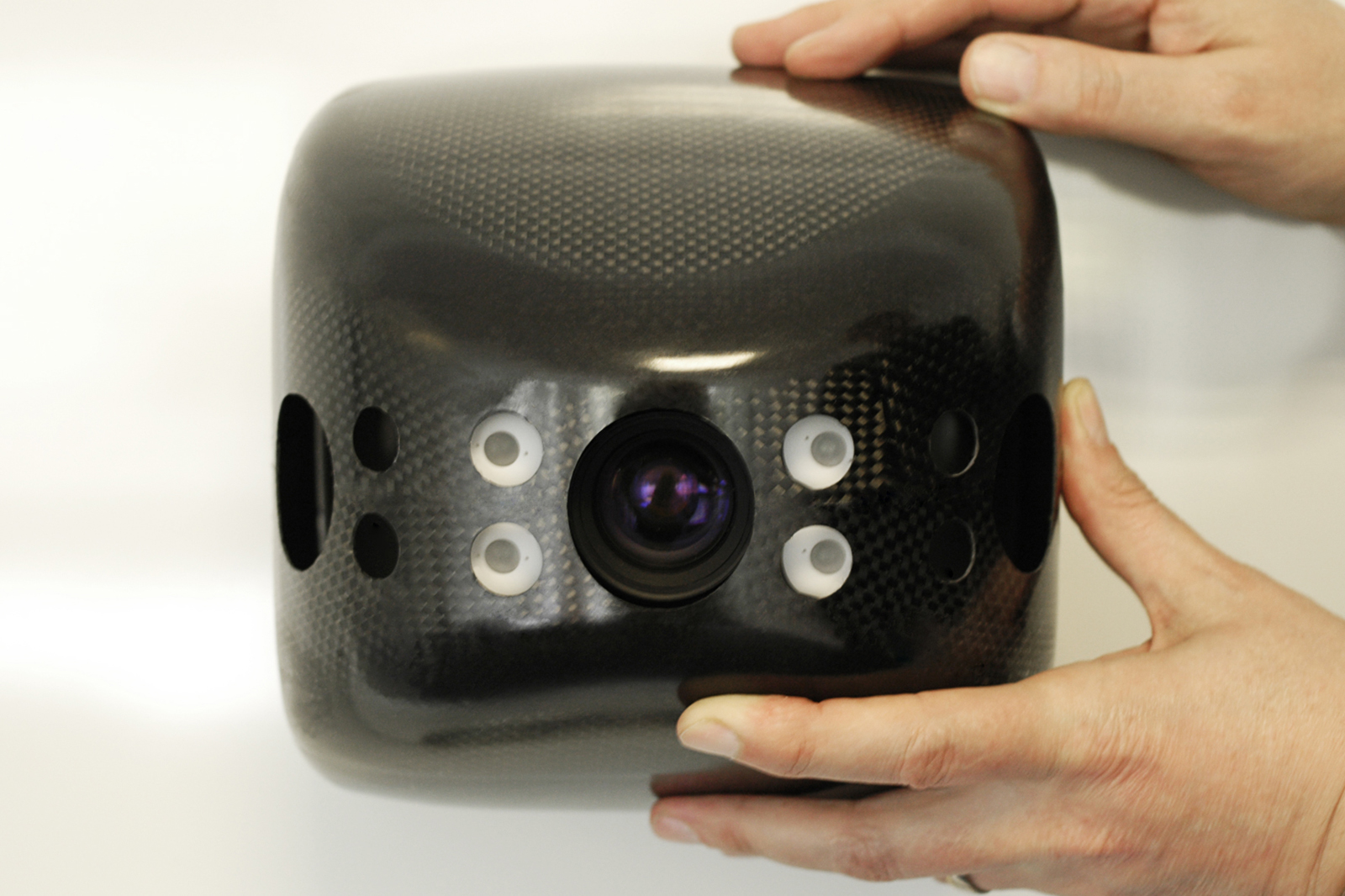
A CMOS sensor developed by researchers at the Fraunhofer Institute for Microelectronic Circuits and Systems IMS in Duisburg lies at the heart of the anti-collision technology. “The sensor can measure three-dimensional distances very efficiently,” says Werner Brockherde, head of the development department. Just as in a black and white camera, every pixel on the sensor is given a gray value. “But on top of that,” he explains, “each pixel is also assigned a distance value.” This enables the drones to accurately determine their position in relation to other objects around them.
Sensor has a higher resolution than radar
The distance sensor developed by the IMS offers significant advantages over radar, which measures distances using reflected echoes. “The sensor has a much higher local resolution,” says Brockherde. “Given the near-field operating conditions, radar images would be far too coarse.” The flying robots are capable of identifying even small objects measuring 20 by 15 centimeters at ranges of up to 7.5 meters. Moreover, this distance information is then transmitted at the very impressive rate of 12 images per second.
Even when there is interfering light, for example when a drone is flying directly into the sun, the sensor will deliver accurate images. It operates according to the time-of-flight (TOF) process, whereby light sources emit short pulses that are reflected by objects and bounced back to the sensor. In order to prevent over-bright ambient light from masking the signal, the electronic shutter only opens for a few nanoseconds. In addition, the sensor also takes differential measurements, in which the first image is captured using ambient light only, a second is taken using the light pulse as well, and the difference between the two determines the required output signal. “All of this happens in real time,” adds Brockherde.
The 3D distance sensors are built into cameras manufactured by TriDiCam, a spin-off company of Fraunhofer IMS. Jochen Noell, TriDiCam’s managing director, admits: “This research project has presented us with new challenges as regards ambient operating conditions and the safety of the sensor technology.” The work falls under the AVIGLE project, one of the winners of the ‘Hightech.NRW’ cutting-edge technology competition which receives funding from both the Land of North Rhine-Westphalia and the EU. The IMS engineers will be presenting their sensor technology at the Fraunhofer CMOS Imaging Workshop in Duisburg on June 12 and 13 this year.
Conducting intelligent aerial surveillance of major events is not the only intended use for flying robots. They could also be of benefit to disaster relief workers, and likewise to urban planners, who could utilize them to produce detailed 3D models of streets or to inspect roofs in order to establish their suitability for solar installations. Whether deployed to create virtual maps of difficult-to-access areas, to monitor construction sites or to measure contamination at nuclear power plants, these mini UAVs could potentially be used in a wide range of applications, obviating the need for expensive aerial photography and/or satellite imaging.
Source: Fraunhofer-Gesellschaft
May 2, 2012
| The 3D camera in the flying robot can identify small objects measuring 20 by 15 centimeters from seven meters away. © Fraunhofer IMS |
They can be deployed as additional surveillance resources during major events, or as high-resolution 3D street imaging systems. Intelligent swarms of aerial drones are a universally useful tool for police, crisis managers and urban planners. Special 3D sensors developed by Fraunhofer researchers ensure flawless aerobatics and prevent collisions.
Like a well-rehearsed formation team, a flock of flying robots rises slowly into the air with a loud buzzing noise. A good two dozen in number, they perform an intricate dance in the sky above the seething hordes of soccer fans. Rowdy hooligans have stormed the field and set off flares. Fights are breaking out all over, smoke is hindering visibility, and chaos is the order of the day. Only the swarm of flying drones can maintain an overview of the situation. These unmanned aerial vehicles (UAVs) are a kind of mini-helicopter, with a wingspan of around two meters. They have a propeller on each of their two variable-geometry side wings, which lends them rapid and precise maneuverability. In operation over the playing field, their cameras and sensors capture urgently-needed images and data, and transmit them to the control center. Where are the most seriously injured people? What’s the best way to separate the rival gangs? The information provided by the drones allows the head of operations to make important decions more quickly, while the robots form up to go about their business above the arena autonomously – and without ever colliding with each other, or with any other obstacles.
A CMOS sensor developed by researchers at the Fraunhofer Institute for Microelectronic Circuits and Systems IMS in Duisburg lies at the heart of the anti-collision technology. “The sensor can measure three-dimensional distances very efficiently,” says Werner Brockherde, head of the development department. Just as in a black and white camera, every pixel on the sensor is given a gray value. “But on top of that,” he explains, “each pixel is also assigned a distance value.” This enables the drones to accurately determine their position in relation to other objects around them.
Sensor has a higher resolution than radar
The distance sensor developed by the IMS offers significant advantages over radar, which measures distances using reflected echoes. “The sensor has a much higher local resolution,” says Brockherde. “Given the near-field operating conditions, radar images would be far too coarse.” The flying robots are capable of identifying even small objects measuring 20 by 15 centimeters at ranges of up to 7.5 meters. Moreover, this distance information is then transmitted at the very impressive rate of 12 images per second.
Even when there is interfering light, for example when a drone is flying directly into the sun, the sensor will deliver accurate images. It operates according to the time-of-flight (TOF) process, whereby light sources emit short pulses that are reflected by objects and bounced back to the sensor. In order to prevent over-bright ambient light from masking the signal, the electronic shutter only opens for a few nanoseconds. In addition, the sensor also takes differential measurements, in which the first image is captured using ambient light only, a second is taken using the light pulse as well, and the difference between the two determines the required output signal. “All of this happens in real time,” adds Brockherde.
The 3D distance sensors are built into cameras manufactured by TriDiCam, a spin-off company of Fraunhofer IMS. Jochen Noell, TriDiCam’s managing director, admits: “This research project has presented us with new challenges as regards ambient operating conditions and the safety of the sensor technology.” The work falls under the AVIGLE project, one of the winners of the ‘Hightech.NRW’ cutting-edge technology competition which receives funding from both the Land of North Rhine-Westphalia and the EU. The IMS engineers will be presenting their sensor technology at the Fraunhofer CMOS Imaging Workshop in Duisburg on June 12 and 13 this year.
Conducting intelligent aerial surveillance of major events is not the only intended use for flying robots. They could also be of benefit to disaster relief workers, and likewise to urban planners, who could utilize them to produce detailed 3D models of streets or to inspect roofs in order to establish their suitability for solar installations. Whether deployed to create virtual maps of difficult-to-access areas, to monitor construction sites or to measure contamination at nuclear power plants, these mini UAVs could potentially be used in a wide range of applications, obviating the need for expensive aerial photography and/or satellite imaging.
Source: Fraunhofer-Gesellschaft
Posted by
Unknown
0
comments
Subscribe to:
Posts (Atom)