Blogger Themes

Wednesday, 25 April 2012

Improving on the amazing: Ames Laboratory scientists seek new conductors for metamaterials

Engineerblogger
April 25, 2012


A model of a three-dimensional metamaterial. Ames Laboratory scientists
developed a method to evaluate different conductors for use in metamaterial
structures.

Scientists at the U.S. Department of Energy’s Ames Laboratory have designed a method to evaluate different conductors for use in metamaterial structures, which are engineered to exhibit properties not possible in natural materials. The work was reported this month in Nature Photonics.

Cloaking devices that hide planes from RADAR, microscopes that can see inside a single cell, and miniature antennae that measure only a few millimeters all sound like parts of a science fiction movie. But, within the span of the decade since they began their work, Ames Laboratory physicist Costas Soukoulis and his research team have moved these and other innovations from the realm of fiction closer to reality.

“Metamaterials have a few fundamentally new properties that may allow for many new applications,” said Soukoulis. For instance, natural materials refract light to the opposite side of the incidence normal, while metamaterials can refract light to the same side (left-handed materials), allowing imaging with a flat lens. Metamaterials are also capable of absorbing all light that hits them, reflecting none of it, creating perfect absorbers. The materials can even slow light. And what makes these properties even more interesting is that they can be adjusted to the needs of particular technologies.

“Usually, materials scientists are presented with a material, determine its properties and only then come up with a use for the material. But metamaterials work in the opposite direction,”

said Soukoulis. “With metamaterials, we can think about what technology we’d like and what properties we want – perhaps properties unheard of before – and design the materials to exhibit those properties.”

Take, for example, the goal of creating super-efficient devices to harvest sunlight in solar energy products. Ideal materials for such a device would absorb 100 percent of the solar spectrum.

“In metamaterials, we can design both their magnetic and electric responses,” said Thomas Koschny, Ames Laboratory associate scientist. “Therefore, we can control the reflection at the interface of the metamaterial, which you cannot easily do in normal materials. In regular materials, particularly with the types of waves like light, materials have only an electric response, and they are always reflective. But, in a metamaterial, we can arrange the parts of the material so that the electric response equals the magnetic response, and the surface is reflection free and all waves go into the material.”

Other possible applications are “superlenses” that would allow us to use visible light to see molecules, like DNA molecules, in detail and devices that store large amounts of data optically. And many other potential uses exist because, unlike in natural materials, metamaterials can be designed to work at target frequencies, at least in principle, from radio frequencies to visible light.

But with such great potential also comes several challenges, some of which Soukoulis’ team have already made significant progress toward meeting. In 2006, the researchers were the first to fabricate a left-handed metamaterial, one with a negative index of refraction, in waves very close to visible light. In 2007, the group designed and fabricated the first left-handed metamaterial for visible light, and they recently fabricated chiral metamaterials that have giant optical activity.

Another challenge is reducing energy losses in metamaterials. Energy is lost by conversion to heat in their metallic components. In results reported in Nature Photonics this month, Soukoulis and his team evaluated a variety of conducting materials – including graphene, high-temperature superconductors and transparent conducting oxides.

“Graphene is a very interesting material because it is only a single atom thick and it is tunable, but unfortunately it does not conduct electrical current well enough to create an optical metamaterial out of it,” said Philippe Tassin, a postdoctoral research associate at Ames Laboratory. “We also thought high-temperature superconductors were very promising, but we found that silver and gold remain the best conductors for use in metamaterials.”

While neither graphene nor superconductors will immediately fix losses in metamaterials, Soukoulis’ work provides a method for evaluating future candidates to replace gold or silver that will help harness the enormous potential of metamaterials.

“Metamaterials may help solve the energy problems America is facing,” said Soukoulis. “There’s no shortage of new ideas in the field of metamaterials, and we’re helping make progress in understanding metamaterials’ basic physics, applied physics and possible applications.”

The research was funded by DOE’s Office of Science.

The Ames Laboratory is a U.S. Department of Energy Office of Science national laboratory operated by Iowa State University. The Ames Laboratory creates innovative materials, technologies and energy solutions. We use our expertise, unique capabilities and interdisciplinary collaborations to solve global problems.

Source: Ames Laboratory

Engineers load new Iowa Falls bridge with damage-detection gauges

Engineerblogger
April 25, 2012

Iowa State researchers have loaded the new U.S. Highway 65/Oak Street bridge in Iowa Falls with more than 100 gauges and sensors to monitor the structural health, behavior and security of the structure.  Bridge Engineering Center

The new bridge over the Iowa River near downtown Iowa Falls is a major upgrade over the 1928 concrete arch structure it replaced last fall, once the longest arch span bridge in the state.

The new U.S. Highway 65/Oak Street bridge is stronger. Its foundation is more secure. Its roadway is 18 feet wider. The steel arch maintains some of the aesthetics of the old bridge. And all over the new bridge are gauges, sensors and other technologies installed by Iowa State University researchers that will be used for continuous, real-time monitoring of the structural health, behavior and security of the structure.

"There are more than 100 individual gauges on the bridge," said Justin Dahlberg, a research engineer for the Bridge Engineering Center, a part of Iowa State University's Institute for Transportation.

Those sensors will provide a tremendous amount of quantitative information about the bridge's performance and condition, said Brent Phares, the interim director of the Bridge Engineering Center. It's a model that could be used for other new bridges, including much larger ones.

Those gauges take 100 readings a second for corrosion, strain, surface conditions, moisture within the steel arch and structure movements over time. The bridge is also equipped to monitor the security of the structure and to record surveillance video.

"This is a whole distributed network," Phares said. "There is an impressive information transfer infrastructure at that bridge."

Iowa State researchers are now working to set up the hardware that will collect data from the bridge gauges. The accompanying software will scan the data and trigger an emergency message to researchers, transportation officials or police whenever there are unusual readings. The system will also display real-time data readings and video feeds on a website. This phase of the project is expected to be completed by the middle of this summer.

The monitoring project is supported by a grant of $300,000 from the Iowa Department of Transportation. Iowa State engineers have worked on bridge-monitoring projects with the department for the past 10 years.

Ahmad Abu-Hawash, the chief structural engineer for the Iowa DOT, said the Iowa Falls project is a prototype for a system that will monitor a new Interstate 74 bridge over the Mississippi River between Bettendorf and Moline, Ill., when it is eventually constructed.

He also said the Iowa Falls project was a chance to combine various monitoring technologies the department and Iowa State researchers have developed and tested over recent years. And, it gives researchers and engineers the data they need to verify the assumptions used to design a steel arch bridge, which can be more complicated than designing a traditional bridge.

"This was a good opportunity to test the concept and work out any bugs," Abu-Hawash said.

The Iowa Falls project is also unique because the Iowa State researchers had complete access to the bridge during its construction, from the fall of 2010 to fall 2011. That's because the monitoring system was part of the bridge project from the beginning.

"This is the first time in all the work we've done that a monitoring system was included in the bridge plans," Phares said. "We've never been in the contract documents to this level."

As a result, the project's contractor, Cramer & Associates Inc. of Grimes, worked closely with the researchers to install all the gauges and sensors. While that resulted in an "inconvenience cost" the contractor charged back to the transportation department, Phares said the fee was far smaller that it would have been to complete the project independently of the bridge contractor.

"That special provision put into the original contract documents was extremely valuable," Phares said. "We didn't realize how valuable it would be. It gave us such easy access to the bridge when we needed it. And it opened up the lines of communication between the contractor and our team from day zero."

So, for example, when the construction crew accidentally cut through a sensor wire, the contractor contacted Iowa State researchers so it could be fixed.

And now, researchers are hoping this kind of planning process, contracting agreement and monitoring system can be built into more bridge projects.

"I'm not sure how this could have gone any better," Phares said. "Hopefully, a statement has been made for using this process when other bridges are built in the state."

Source:  Iowa State University

Scientists Discover Bilayer Structure in Efficient Solar Material

Engineerblogger
April 25, 2012


Structural details of photovoltaic material revealed: The bilayer polymer backbone motif (3D image) is derived from the x-ray scattering pattern (background) obtained at beamline X9 of NSLS. In the 3D image, the yellow region denotes the paired backbones and the blue region denotes the liquid-like side chains.

Detailed studies of one of the best-performing organic photovoltaic materials reveal an unusual bilayer lamellar structure that may help explain the material’s superior performance at converting sunlight to electricity and guide the synthesis of new materials with even better properties. The research, published in Nature Communications April 24, 2012, was conducted by scientists at the U.S. Department of Energy’s (DOE) Brookhaven National Laboratory, in collaboration with researchers from Stony Brook University, Seoul National University in Korea, the Max Planck Institute for Polymer Research in Germany, and Konarka Technologies.

The material, known by the handle PCDTBT, is an example of a “polycarbazole conjugated polymer,” a molecule composed of a chainlike carbon backbone with alkyl side chains. Its ability to move electrons around — both “donating” and “accepting” them — makes it among the best organic photovoltaic materials currently in use, able to convert sunlight to electricity with efficiency as high as 7.2 percent in organic solar cells.

“Despite the fact that this material has been extensively studied, no one has reported detailed structural features to provide a basis for its superior performance,” said Brookhaven physicist Benjamin Ocko, who led the current research. “Understanding why this material performs so well will help scientists harness its essential attributes to engineer new materials for a wide range of applications, including displays, solid-state lighting, transistors, and improved solar cells,” he said.

To probe the molecular structure, the team exposed thin films of PCDTBT to intense beams of x-rays at Brookhaven’s National Synchrotron Light Source (NSLS) using a high-resolution x-ray scattering technique. Unlike previous studies, which used less-intense x-rays, these studies revealed the formation of a crystalline-like phase at elevated temperatures. Furthermore, the patterns produced by the diffracted x-rays indicate that the structure is comprised of layers of conjugated backbone pairs, a pattern quite different from the single backbone constructions observed in all other organic photovoltaic materials studied to date.

Xinhui Lu, the paper’s lead author, noted that by analyzing the scattering patterns, they discovered undulations along the polymer’s backbone, and how the undulations in neighboring backbones are shifted with respect to each other. By carrying out molecular modeling simulations, the authors were able to predict which polymer backbone configuration would be most stable.

In a conjugated polymer, the backbone provides the path for electrical conductivity and the alkyl side chains, similar to simple oils, provide the solubility required for processing. Though necessary, these side chains interfere with the polymer’s electrical performance. PCDTBT is novel, the scientists say, since it is predominately composed of the backbone with little alkyl material. “Similar to oil and water, the polymer’s conjugated backbone pairs ‘phase separate’ from their alkyl side chains and this gives rise to the bilayer structure,” said David Germack, one of the paper’s coauthors. It is this structural motif that likely contributes to the material’s excellent electrical properties, and this understanding could guide the design of new organic solar materials.

“While we have significant in-house expertise in synthetic chemistry and organic solar device fabrication, we lack the in-depth structural characterization tools available at Brookhaven Lab,” said Jeff Peet, a senior scientist at Konarka Technologies, a world leader in the development and commercialization of organic solar cells. “These kinds of tools and collaborative studies with research partners at Brookhaven can elucidate very subtle differences between materials, giving us critical insights into how we should design our next generation of solar cell materials.”

Additional collaborators on this research are: Htay Hlaing of Broookhaven Lab and Stony Brook University, Won Ho Jo of Seoul National University, and Denis Andrienko and Kurt Kremer of the Max Planck Institute for Polymer Research.

This research was funded by the DOE Office of Science, Konarka Technologies, the Energy Laboratory Research and Development Initiative at Brookhaven Lab, the German Research Foundation, and the German Federal Ministry of Education and Research. The National Synchrotron Light Source at Brookhaven is also supported by the DOE Office of Science.

DOE’s Office of Science is the single largest supporter of basic research in the physical sciences in the United States, and is working to address some of the most pressing challenges of our time.

Source:  Brookhaven National Laboratory (BNL)

Additional Information:

Automotive Technology Programs Changing With the Times: Build Electric Cars

Engineerblogger
April 25, 2012


The EV (electric vehicle) Challenge is a program for high school students to replace traditional automotive technology programs with a new idea: Take a donated (or even abandoned) gasoline-powered car or truck and convert it into an all-electric vehicle.

Students learn about design, engineering, electronics, math, and science. They make hard decisions and learn about tradeoffs (larger voltage batteries have higher acceleration capability, but won’t last as long in endurance runs, for example). Students then come together to compete with their vehicles in a two day long event held at the NCCAR Test Track facility in Garysburg, NC. Please note that is not a typo for NASCAR, although I wouldn’t be surprised if some cars that get tested have something to do with the pro racing circuit in the future. NCCAR stands for North Carolina Center for Automotive Research.

Students take written tests, compete in Jeopardy rounds, demonstrate and explain their vehicles to judges, and finally physically compete in acceleration tests, endurance tests (driving until the batteries fail completely) and then on the second day have an actual race with their cars.

The challenge for many of these schools and classrooms is finding affordable test equipment and tools. Harris Educational (also known for their Reinventing Edison Light Bulb Kit and the Reinventing Morse Telegraph Kit) was hired to design and manufacture a new troubleshooting board for their event. The program wanted a smaller, portable, and less expensive model that schools can afford to add to their classrooms or labs so that students can learn about electric vehicle circuits and how to troubleshoot them as a way to practice for the real competition. The program is seeking sponsors to allow more high schools to participate.

“The Electric Fox” is a converted Ford Mustang that North Carolina McMichael High School found abandoned in the woods. They will exhibit their car at the Burlington North Carolina Mini Maker Faire this coming weekend.

It is exciting to see high school programs that keep up with the market and that have an interest in electric and alternative vehicles. More information about the EV Challenge can be found here: http://ev-challenge.org.

Source: Forbes

Automotive technology: Keeping older drivers on the road

Engineerblogger
April 25, 2012


Credit: Newcastle University
A unique research car which monitors our concentration, stress levels and driving habits while we’re sat behind the steering wheel is being used to develop new technologies to support older drivers.

The Intelligent Transport team at Newcastle University have converted an electric car into a mobile laboratory.

Dubbed ‘DriveLAB’, the car is kitted out with tracking systems, eye trackers and bio-monitors in an effort to understand the challenges faced by older drivers and to identify where the key stress points are.

Research shows that giving up driving is one of the key factors responsible for a fall in health and well-being among older people, leading to them becoming more isolated and inactive.

Led by Professor Phil Blythe, the Newcastle team are investigating in-vehicle technologies for older drivers which they hope could help them to continue driving into later life.

These include bespoke navigation tools, night vision systems and intelligent speed adaptations.
Phil Blythe, Professor of Intelligent Transport Systems at Newcastle University, explains: “For many older people, particularly those living alone or in rural areas, driving is essential for maintaining their independence, giving them the freedom to get out and about without having to rely on others.

“But we all have to accept that as we get older our reactions slow down and this often results in people avoiding any potentially challenging driving conditions and losing confidence in their driving skills. The result is that people stop driving before they really need to.

“What we are doing is to look at ways of keeping people driving safely for longer, which in turn boosts independence and keeps us socially connected.”

Funded by Research Councils UK’s Digital Economy programme the research is part of the Social inclusion through the Digital Economy (SiDE) project, a £12m research hub led by Newcastle University.

Using the new DriveLAB as well as the University’s driving simulator, the team have been working with older people from across the North East and Scotland to understand their driving habits and fears and look at ways of overcoming them.

By incorporating the eye tracker and bio-monitor with the driving simulator the team are able to monitor eye movement, speed, reaction, lane position, acceleration, braking and driving efficiency.

Dr Amy Guo, the leading researcher on the older driver study, explains: “The DriveLAB is helping us to understand what the key stress triggers and difficulties are for older drivers and how we might use technology to address these problems.

“For example, most of us would expect older drivers always go slower than everyone else but surprisingly, we found that in 30mph zones they struggled to keep at a constant speed and so were more likely to break the speed limit and be at risk of getting fined.

“We’re looking at the benefits of systems which control your speed as a way of preventing that.”
Another solution is a tailored SatNav which uses pictures as turning cues, such as a post box or public house.

Researcher Chris Emmerson, explains: “One thing that came out of the focus groups was that while the older generation is often keen to try new technologies it’s their lack of experience with, and confidence in, digital technologies which puts them off. Also, they felt most were designed with younger people in mind.”

The work is being presented at the Aging, Mobility and Quality of Life conference in Michigan in June.
Edmund King, AA president and Visiting Professor of Transport at Newcastle University, said: “The car is a life-line for many older people as it helps keep them mobile, independent and connected to friends and family. The AA Charitable Trust has helped thousands of older drivers with our free “Drive Confident” courses but we feel that the pioneering work of DriveLAB will help with technological solutions to ensure that older drivers stay safer behind the wheel.”

The driving simulator is also being used to look at how distractions such as answering a mobile phone, sending a text or eating can affect our driving.

Source:  Newcastle University

Tuesday, 24 April 2012

Manufacturing: Nature-inspired, 3D-Printed

Engineerblogger
April 24, 2012


Urbee with its completed 3D-printed body. Image: KOR EcoLogic Inc.

The first 3D-printed car body may set the pace for a new mode of manufacturing.

3D printing is a transformational technology. Originally used exclusively by engineering departments for verifying prototype designs, 3D printing is now being considered for mass production. Think of it as taking the mature technology of 2D digital printing, which reduced the role of the printing press, and carrying that digitizing idea into the third dimension.

Products, including a remote-control model airplane, a bikini, a titanium jaw bone, a bicycle, and a car body have been designed exclusively for the 3D printing process and manufactured on demand. These sophisticated designs were 3D printed because the 3D manufacturing process places the particles of material exactly where they are needed.

KOR EcoLogic Inc., Manitoba, Canada, has engineered a 3D-printed car body. The car project, called Urbee, began 15 years ago, spawned by the company's concern for the escalating global use of fossil fuels. The company's product designers wanted to act as catalysts for change and took a scientific approach to the redesign of the automobile. The designers believed a return to fundamentals and an emphasis on energy efficiency, were the keys to sustainability. The goal was to design the greenest car possible. The approach was to reduce the required energy low enough to power a practical car solely on renewable energy. The car that emerged from this novel approach was named Urbee, for Urban Electric.

The design element of Urbee that received the most attention was how 3D printing was used to fabricate the car's acrylonitrile butadiene styrene (ABS) plastic body. Previously, 3D printing was not considered suitable for body panels this large—finished panels measuring about 5 feet wide, 3 feet high, and 5 feet long, were made by dovetail joining four parts; each of the four parts were 3D printed.

The large parts were made for the vehicle with help from 3D printer manufacturer Stratasys (Eden Prairie, Minn.), CAD software developers Tebis (Troy, Mich.) and Autodesk (San Rafael, Calif.), simulation software provider CD-Adapco, and others. During this development program, the team became aware that this manufacturing process has significant potential for producing extremely light, strong, and environmentally benign structures.

The designers saw parallels between the honeycomb structure of beehives and 3D printing. They believe only the 3D printing process can create structures as sophisticated as found in nature; and can do so by using non-toxic materials and incorporating intelligence from human brains and electronic computers. The employment of simulation programs using high-performance computing (HPC), and 3D printing's unique ability to mass produce any result from these computers, is presenting new possibilities in product design.

Using HPC, a computer model can virtually test thousands or even millions of alternatives for optimal material composition, shape, and production process. Testing just a fraction of these options with physical prototypes would be prohibitively expensive. Although the modeling is feasible on a high-end PC, it would take too long. HPC allows a very large number of scenarios to be modeled accurately and quickly; the first physical prototype comes very close to the design specifications. For example, a small company currently is using HPC to design custom alloys for the aerospace industry, achieving superior mechanical performance, lower production costs, and replacing rare-earth materials with less expensive and more benign materials. HPC has even been used to analyze biosphere designs to understand how they achieve their structural performance.

Light and strong structures are currently being made primarily by the use of tooling and, at times, use of toxic materials. These materials and fabrication techniques are typically considered a necessity for mass production and for proper economies of scale. Although apparently efficient in the short run, these methods may prove quite uneconomic and problematic over any longer view.

The Urbee team plans to design and build a second Urbee prototype. This second car further explores the potential of 3D printing. All exterior and interior panels will be optimized and made on a Stratasys Fortus 3D printer. All of these strong, lightweight body and interior panels will integrate many functional requirements, such as ducting and wiring, while tightly encasing a tubular metal chassis and hybrid power train. All panels will be printed individually, one particle at a time, without need for any hard tooling.


Source: R&D Mag

Graphene Boosts Efficiency of Next-Gen Solar Cells

Engineerbogger
April 24, 2012


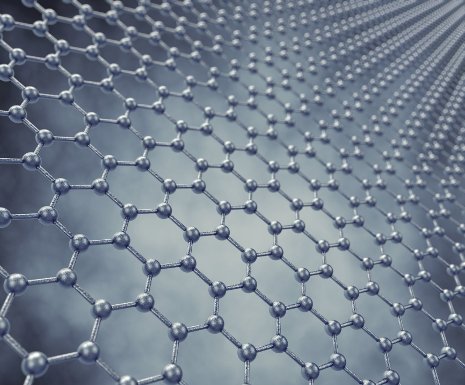
Graphene structure.  Credit: MTU


The coolest new nanomaterial of the 21st century could boost the efficiency of the next generation of solar panels, a team of Michigan Technological University materials scientists has discovered.

Graphene, a two-dimensional honeycomb of carbon atoms, is a rising star in the materials community for its radical properties. One of those properties is electrical conductivity, which could make it a key ingredient in the next generation of photovoltaic cells, says Yun Hang Hu, a professor of materials science and engineering.

Dye-sensitized solar cells don’t rely on rare or expensive materials, so they could be more cost-effective than cells based on silicon and thin-film technologies. But they are not as good at converting light into electricity.

In dye-sensitized solar cells, photons knock electrons from the dye into a thin layer of titanium dioxide, which relays them to the anode. Hu’s group found that adding graphene to the titanium dioxide increased its conductivity, bringing 52.4 percent more current into the circuit.

“The excellent electrical conductivity of graphene sheets allows them to act as bridges, accelerating electron transfer from the titanium dioxide to the photoelectrode,” Hu said.

The team also developed a comparably foolproof method for creating sheets of titanium dioxide embedded with graphene. It first made graphite oxide powder, then mixed it with titanium dioxide to form a paste, spread it on a substrate (such as glass) and then baked it a high temperatures.

“It’s low-cost and very easy to prepare,” said Hu. But not just any recipe will do. “If you use too much graphene, it will absorb the light in the solar cell and reduce its efficiency,” he said.

Their work was presented at the US-Egypt Joint Workshop on Solar Energy Systems, held March 12-14 in Cairo. It was funded by the American Chemical Society Petroleum Research Fund and the National Science Foundation. Their paper “Promoting Effect of Graphene on Dye-Sensitized Solar Cells,” authored by Hui Wang, Samantha Leonard and Hu, has been submitted to Industry and Engineering Chemistry Research. Wang and Leonard are both PhD candidates in materials science and engineering.

Source: Michigan Technological University (MTU)