Blogger Themes

Showing posts with label DARPA. Show all posts

Tuesday, 10 July 2012

How do you turn 10 minutes of power into 200? Efficiency, efficiency, efficiency.

Engineerbloggger
July 10, 2012


DARPA seeks revolutionary advances in the efficiency of robotic actuation; fundamental research into biology, physics and electrical engineering could benefit all engineered, actuated systems

A robot that drives into an industrial disaster area and shuts off a valve leaking toxic steam might save lives. A robot that applies supervised autonomy to dexterously disarm a roadside bomb would keep humans out of harm’s way. A robot that carries hundreds of pounds of equipment over rocky or wooded terrain would increase the range warfighters can travel and the speed at which they move. But a robot that runs out of power after ten to twenty minutes of operation is limited in its utility. In fact, use of robots in defense missions is currently constrained in part by power supply issues. DARPA has created the M3 Actuation program, with the goal of achieving a 2,000 percent increase in the efficiency of power transmission and application in robots, to improve performance potential.

Humans and animals have evolved to consume energy very efficiently for movement. Bones, muscles and tendons work together for propulsion using as little energy as possible. If robotic actuation can be made to approach the efficiency of human and animal actuation, the range of practical robotic applications will greatly increase and robot design will be less limited by power plant considerations.

M3 Actuation is an effort within DARPA’s Maximum Mobility and Manipulation (M3) robotics program, and adds a new dimension to DARPA’s suite of robotics research and development work.

“By exploring multiple aspects of robot design, capabilities, control and production, we hope to converge on an adaptable core of robot technologies that can be applied across mission areas,” said Gill Pratt, DARPA program manager. “Success in the M3 Actuation effort would benefit not just robotics programs, but all engineered, actuated systems, including advanced prosthetic limbs.”

Proposals are sought in response to a Broad Agency Announcement (BAA). DARPA expects that solutions will require input from a broad array of scientific and engineering specialties to understand, develop and apply actuation mechanisms inspired in part by humans and animals. Technical areas of interest include, but are not limited to: low-loss power modulation, variable recruitment of parallel transducer elements, high-bandwidth variable impedance matching, adaptive inertial and gravitational load cancellation, and high-efficiency power transmission between joints.

Research and development will cover two tracks of work:
  • Track 1 asks performer teams to develop and demonstrate high-efficiency actuation technology that will allow robots similar to the DARPA Robotics Challenge (DRC) Government Furnished Equipment (GFE) platform to have twenty times longer endurance than the DRC GFE when running on untethered battery power (currently only 10-20 minutes). Using Government Furnished Information about the GFE, M3 Actuation performers will have to build a robot that incorporates the new actuation technology. These robots will be demonstrated at, but not compete in, the second DRC live competition scheduled for December 2014.
  • Track 2 will be tailored to performers who want to explore ways of improving the efficiency of actuators, but at scales both larger and smaller than applicable to the DRC GFE platform, and at technical readiness levels insufficient for incorporation into a platform during this program. Essentially, Track 2 seeks to advance the science and engineering behind actuation without the requirement to apply it at this point.

While separate efforts, M3 Actuation will run in parallel with the DRC. In both programs DARPA seeks to develop the enabling technologies required for expanded practical use of robots in defense missions. Thus, performers on M3 Actuation will share their design approaches at the first DRC live competition scheduled for December 2013, and demonstrate their final systems at the second DRC live competition scheduled for December 2014.

Source: DARPA

Hypersonic - The new stealth

Engineerblogger
July 10, 2012


Credit: DARPA


DARPA’s research and development in stealth technology during the 1970s and 1980s led to the world’s most advanced radar-evading aircraft, providing strategic national security advantage to the United States. Today, that strategic advantage is threatened as other nations’ abilities in stealth and counter-stealth improve. Restoring that battle space advantage requires advanced speed, reach and range. Hypersonic technologies have the potential to provide the dominance once afforded by stealth to support a range of varied future national security missions.

Extreme hypersonic flight at Mach 20 (i.e., 20 times the speed of sound)—which would enable DoD to get anywhere in the world in under an hour—is an area of research where significant scientific advancements have eluded researchers for decades. Thanks to programs by DARPA, the Army, and the Air Force in recent years, however, more information has been obtained about this challenging subject.

“DoD’s hypersonic technology efforts have made significant advancements in our technical understanding of several critical areas including aerodynamics; aerothermal effects; and guidance, navigation and control,” said Acting DARPA Director, Kaigham J. Gabriel. “but additional unknowns exist.”

Tackling remaining unknowns for DoD hypersonics efforts is the focus of the new DARPA Integrated Hypersonics (IH) program. “History is rife with examples of different designs for ‘flying vehicles’ and approaches to the traditional commercial flight we all take for granted today,” explained Gabriel. “For an entirely new type of flight—extreme hypersonic—diverse solutions, approaches and perspectives informed by the knowledge gained from DoD’s previous efforts are critical to achieving our goals.”

To encourage this diversity, DARPA will host a Proposers’ Day on August 14, 2012, to detail the technical areas for which proposals are sought through an upcoming competitive broad agency announcement.

“We do not yet have a complete hypersonic system solution,” said Gregory Hulcher, director of Strategic Warfare, Office of the Under Secretary of Defense for Acquisition, Technology and Logistics. “Programs like Integrated Hypersonics will leverage previous investments in this field and continue to reduce risk, inform development, and advance capabilities.”

The IH program expands hypersonic technology research to include five primary technical areas: thermal protection system and hot structures; aerodynamics; guidance, navigation, and control (GNC); range/instrumentation; and propulsion.

At Mach 20, vehicles flying inside the atmosphere experience intense heat, exceeding 3,500 degrees Fahrenheit, which is hotter than a blast furnace capable of melting steel, as well as extreme pressure on the aeroshell. The thermal protection materials and hot structures technology area aims to advance understanding of high-temperature material characteristics to withstand both high thermal and structural loads. Another goal is to optimize structural designs and manufacturing processes to enable faster production of high-mach aeroshells.

The aerodynamics technology area focuses on future vehicle designs for different missions and addresses the effects of adding vertical and horizontal stabilizers or other control surfaces for enhanced aero-control of the vehicle. Aerodynamics seeks technology solutions to ensure the vehicle effectively manages energy to be able to glide to its destination. Desired technical advances in the GNC technology area include advances in software to enable the vehicle to make real-time, in-flight adjustments to changing parameters, such as high-altitude wind gusts, to stay on an optimal flight trajectory.

The range/instrumentation area seeks advanced technologies to embed data measurement sensors into the structure that can withstand the thermal and structural loads to provide real-time thermal and structural parameters, such as temperature, heat transfer, and how the aeroshell skin recedes due to heat. Embedding instrumentation that can provide real-time air data measurements on the vehicle during flight is also desired. Unlike subsonic aircraft that have external probes measuring air density, temperature and pressure of surrounding air, vehicles traveling Mach 20 can’t take external probe measurements. Vehicle concepts that make use of new collection and measurement assets are also being sought.

The propulsion technology area is developing a single, integrated launch vehicle designed to precisely insert a hypersonic glide vehicle into its desired trajectory, rather than adapting a booster designed for space missions. The propulsion area also addresses integrated rocket propulsion technology onboard vehicles to enable a vehicle to give itself an in-flight rocket boost to extend its glide range.

“By broadening the scope of research and engaging a larger community in our efforts, we have the opportunity to usher in a new area of flight more rapidly and, in doing so, develop a new national security capability far beyond previous initiatives,” explained Air Force Maj. Christopher Schulz, DARPA program manager, who holds a doctorate in aerospace engineering.

The IH program is designed to address technical challenges and improve understanding of long-range hypersonic flight through an initial full-scale baseline test of an existing hypersonic test vehicle, followed by a series of subscale flight tests, innovative ground-based testing, expanded modeling and simulation, and advanced analytic methods, culminating in a test flight of a full-scale hypersonic X-plane (HX) in 2016. HX is envisioned as a recoverable next-generation configuration augmented with a rocket-based propulsion capability that will enable and reduce risk for highly maneuverable, long-range hypersonic platforms.

More information regarding the August 14 Proposers’ Day is available here.

Saturday, 23 June 2012

Megapixel Camera? Try Gigapixel: Engineers develop revolutionary camera

Engineerblogger
June 23, 2012


The camera

By synchronizing 98 tiny cameras in a single device, electrical engineers from Duke University and the University of Arizona have developed a prototype camera that can create images with unprecedented detail.

The camera’s resolution is five times better than 20/20 human vision over a 120 degree horizontal field.

The new camera has the potential to capture up to 50 gigapixels of data, which is 50,000 megapixels. By comparison, most consumer cameras are capable of taking photographs with sizes ranging from 8 to 40 megapixels. Pixels are individual “dots” of data – the higher the number of pixels, the better resolution of the image.

The researchers believe that within five years, as the electronic components of the cameras become miniaturized and more efficient, the next generation of gigapixel cameras should be available to the general public.

Details of the new camera were published online in the journal Nature. The team’s research was supported by the Defense Advanced Research Projects Agency (DARPA).

The camera was developed by a team led by David Brady, Michael J. Fitzpatrick Professor of Electric Engineering at Duke’s Pratt School of Engineering, along with scientists from the University of Arizona, the University of California – San Diego, and Distant Focus Corp.

“Each one of the microcameras captures information from a specific area of the field of view,” Brady said. “A computer processor essentially stitches all this information into a single highly detailed image. In many instances, the camera can capture images of things that photographers cannot see themselves but can then detect when the image is viewed later."

“The development of high-performance and low-cost microcamera optics and components has been the main challenge in our efforts to develop gigapixel cameras,” Brady said. “While novel multiscale lens designs are essential, the primary barrier to ubiquitous high-pixel imaging turns out to be lower power and more compact integrated circuits, not the optics.”

The software that combines the input from the microcameras was developed by an Arizona team led by Michael Gehm, assistant professor of electrical and computer engineering at the University of Arizona.

“Traditionally, one way of making better optics has been to add more glass elements, which increases complexity,” Gehm said. “This isn’t a problem just for imaging experts. Supercomputers face the same problem, with their ever more complicated processors, but at some point the complexity just saturates, and becomes cost-prohibitive."

“Our current approach, instead of making increasingly complex optics, is to come up with a massively parallel array of electronic elements,” Gehm said. “A shared objective lens gathers light and routes it to the microcameras that surround it, just like a network computer hands out pieces to the individual work stations. Each gets a different view and works on their little piece of the problem. We arrange for some overlap, so we don’t miss anything.”

The prototype camera itself is two-and-half feet square and 20 inches deep. Interestingly, only about three percent of the camera is made of the optical elements, while the rest is made of the electronics and processors needed to assemble all the information gathered. Obviously, the researchers said, this is the area where additional work to miniaturize the electronics and increase their processing ability will make the camera more practical for everyday photographers.

“The camera is so large now because of the electronic control boards and the need to add components to keep it from overheating,” Brady said, “As more efficient and compact electronics are developed, the age of hand-held gigapixel photography should follow.”

Co-authors of the Nature report with Brady and Gehm include Steve Feller, Daniel Marks, and David Kittle from Duke; Dathon Golish and Esteban Vera from Arizona; and Ron Stack from Distance Focus.


Source: Duke University

Sunday, 17 June 2012

Radiation-Resistant Circuits from Mechanical Parts

Engineerblogger
June 16, 2012


Microscopic images of two “logic gates” made of microscopic mechanical parts and thus designed to resist ionizing radiation that fries conventional silicon electronics. The top gate performs the logic function named “exclusive or” and the gate in the bottom image performs the function “and.” These devices, designed at the University of Utah, are so small that four of them would fit in the cross section of a single human hair.
Photo Credit: Massood Tabib-Azar, University of Utah

University of Utah engineers designed microscopic mechanical devices that withstand intense radiation and heat, so they can be used in circuits for robots and computers exposed to radiation in space, damaged nuclear power plants or nuclear attack.

The researchers showed the devices kept working despite intense ionizing radiation and heat by dipping them for two hours into the core of the University of Utah’s research reactor. They also built simple circuits with the devices.

Ionizing radiation can quickly fry electronic circuits, so heavy shielding must be used on robots such as those sent to help contain the meltdowns at the Fukushima Daiichi nuclear power plant after Japan’s catastrophic 2011 earthquake and tsunami.

“Robots were sent to control the troubled reactors, and they ceased to operate after a few hours because their electronics failed,” says Massood Tabib-Azar, a professor of electrical and computer engineering at the University of Utah and the Utah Science Technology and Research initiative.

“We have developed a unique technology that keeps on working in the presence of ionizing radiation to provide computation power for critical defense infrastructures,” he says. “Our devices also can be used in deep space applications in the presence of cosmic ionizing radiation, and can help robotics to control troubled nuclear reactors without degradation.”

The new devices are “logic gates” that perform logical operations such as “and” or “not” and are a type of device known as MEMS or micro-electro-mechanical systems. Each gate takes the place of six to 14 switches made of conventional silicon electronics.

Development of the new logic gates and their use to build circuits such as adders and multiplexers is reported in a study set for online publication this month in the journal Sensors and Actuators. The research was conducted by Tabib-Azar, University of Utah electrical engineering doctoral student Faisal Chowdhury and computer engineer Daniel Saab at Case Western Reserve University in Cleveland.

Tabib-Azar says that if he can obtain more research funding, “then the next stage would be to build a little computer” using the logic gates and circuits.

The study was funded by the Defense Advanced Research Projects Agency.

“Its premier goal is to keep us ready,” says Tabib-Azar. “If there is a nuclear event, we need to be able to have control systems, say for radars, to be working to protect the nation. There are lots of defense applications both in peacetime and wartime that require computers that can operate in the presence of ionizing radiation.”

In April, the Defense Advanced Research Projects Agency issued a call for the development of robots to deal with stricken nuclear reactors to reduce human exposure to deadly radiation. In May, NASA said it was seeking proposals for new shields or materials able to resist radiation in space. Circuits built with the new devices also could resist intense heat in engines to monitor performance, Tabib-Azar says.

MEMS: Ability to Withstand Radiation Overcomes Drawbacks

Current radiation-resistant technologies fall into two categories: conventional complementary silicon-oxide semiconductor electronics shielded with lead or other metals, and the use of different materials that inherently resist radiation.

“Electronic materials and devices by their nature require a semiconducting channel to carry current, and the channel is controlled by charges,” Tabib-Azar says. Radiation creates current inside the semiconductor channel, and “that disrupts the ability of the normal circuitry to control the current, so the signal gets lost.”

He says the MEMS logic gates are not degraded by ionizing radiation because they lack semiconducting channels. Instead, electrical charges make electrodes move to touch each other, thus acting like a switch.

MEMS have their drawbacks, which Tabib-Azar believes is why no one until now has thought to use them for radiation-resistant circuits. Silicon electronics are 1,000 times faster, much smaller, and more reliable because they have no moving parts.

But by having one MEMS device act as a logic gate, instead of using separate MEMS switches, the number of devices needed for a computer is reduced by a factor of 10 and the reliability and speed increases, Tabib-Azar says.

Also, “mechanical switches usually require large voltages for them to turn on,” Tabib-Azar says. “What we have done is come up with a technique to form very narrow gaps between the bridges in the logic gates, and that allows us to activate these devices with very small voltages, namely 1.5 volts” versus 10 or 20 volts. Unlike conventional electronics, which get hot during use, the logic gates leak much less current and run cooler, so they would last longer if battery-operated.

Design and Reactor Testing of the Logic Gates

Each logic gate measures about 25-by-25 microns, or millionths of a meter, “so you could put four of these on the cross section of a human hair,” says Tabib-Azar. Each gate is only a half-micron thick.

The logic gates each have two “bridges,” which look somewhat like two tiny microscope slides crossing each other to form a tic-tac-toe pattern, with tungsten electrodes in the center square. Each bridge is made of a glass-like silicon nitride insulator with polysilicon under it to give rigidity. The insulator is etched and covered by metallic strips of tungsten that serve as electrodes.

“When you charge them, they attract each other and they move and contact each other. Then current flows,” says Tabib-Azar.

He and his colleagues put the logic gates and conventional silicon switches to the test, showing the logic gates kept working as they were repeatedly turned on and off under extreme heat and radiation, while the silicon switches “shorted out in minutes.”

The devices were placed on a hot plate in a vacuum chamber and heated to 277 degrees Fahrenheit for an hour.

Three times, the researchers lowered the devices for two hours into the core of the university’s 90-kilowatt TRIGA research reactor, with wires extending to the control room so the researchers could monitor their operation. The logic gates did not fail.

The researchers also tested the logic gates outside the reactor and oven, running them for some two months and more than a billion cycles without failure. But to be useful, Tabib-Azar wants to improve that reliability a millionfold.

Two Kinds of Logic Gates

For the study, Tabib-Azar and colleagues built two kinds of logic gate, each with two inputs (0 or 1) and thus four possible combinations of inputs (0-0, 0-1, 1-0, 1-1). The input and output are electrical voltages:

– An AND gate, which means “and.” If both inputs – A and B – are true (or worth 1 each), then the output is true (or equal to 1). If input A or B or both are false (worth 0), then the output is false (or equal to 0).

– An XOR gate, which means “exclusive or.” If input A doesn’t equal B (so A is 0 and B is 1 or A is 1 and B is 0), the output is true (equal 1). If both A and B are either true (1) or false (0), the output is false (0).

“In a sense, you can say these are switches with multiple outcomes,” rather than just off-on (0-1), says Tabib-Azar. “But instead of using six [silicon] switches separately, you have one structure that gives you the same logic functionality.”

“Let’s say you want to decide whether to go to dinner tonight, and that depends on if the weather is nice, if you feel like it,” he says. “In order to make that decision, you have a bunch of ‘or’ statements and a bunch of ‘and’ statements: ‘I’ll go to dinner if the weather is nice and I feel like it.’ ‘I like to eat Italian or French.’ You put these statements together and then you can make a decision.”

“To analyze this using silicon computers,” Tabib-Azar says, “you need a bunch of on-off switches that have to turn on or off in a particular sequence to give you the output, whether you go to dinner or not. But just a single one of these [MEMS logic gate] devices can be designed to perform this computation for you.”

Source: Utah University

Monday, 11 June 2012

ICECool to Crack Thermal Management Barrier, Enable Breakthrough Electronics

Engineerblogger
June 11, 2012

DARPA is behind new microfluidics miniaturization technology that embeds microchannels directly into computer chips, helping to cool them down.

The continued miniaturization and the increased density of components in today’s electronics have pushed heat generation and power dissipation to unprecedented levels. Current thermal management solutions, usually involving remote cooling, are unable to limit the temperature rise of today’s complex electronic components. Such remote cooling solutions, where heat must be conducted away from components before rejection to the air, add considerable weight and volume to electronic systems. The result is complex military systems that continue to grow in size and weight due to the inefficiencies of existing thermal management hardware.

Recent advances of the DARPA Thermal Management Technologies (TMT) program enable a paradigm shift—better thermal management. DARPA’s Intrachip/Interchip Enhanced Cooling (ICECool) program seeks to crack the thermal management barrier and overcome the limitations of remote cooling. ICECool will explore ‘embedded’ thermal management by bringing microfluidic cooling inside the substrate, chip or package by including thermal management in the earliest stages of electronics design.

“Think of current electronics thermal management methods as the cooling system in your car,” said Avram Bar-Cohen, DARPA program manager. “Water is pumped directly through the engine block and carries the absorbed heat through hoses back to the radiator to be cooled. By analogy, ICECool seeks technologies that would put the cooling fluid directly into the electronic ‘engine’. In DARPA’s case this embedded cooling comes in the form of microchannels designed and built directly into chips, substrates and/or packages as well as research into the thermal and fluid flow characteristics of such systems at both small and large scales.”

The ICECool Fundamentals solicitation released today seeks proposals to research and demonstrate the microfabrication and evaporative cooling techniques needed to implement embedded cooling. Proposals are sought for intrachip/interchip solutions that bring microchannels, micropores, etc. into the design and fabrication of chips. Interchip solutions for chip stacks are also sought.

“Thermal management is key for advancing Defense electronics,” said Thomas Lee, director, Microsystems Technology Office. “Embedded cooling may allow for smaller electronics, enabling a more mobile, versatile force. Reduced thermal resistance would improve performance of DoD electronics and may result in breakthrough capabilities we cannot yet envision.”

Source: DARPA

Wednesday, 30 May 2012

Planning for uncertainty in power generation

Engineerblogger
May 30, 2012


Renewable energy sources such as wind and solar power help to diversify the nation's energy mix, but they also bring new uncertainty to the power supply. Two UC Davis researchers are working with a national team of experts, funded by the U.S. Department of Energy, to help power utilities make sound plans in the face of that uncertainty.

"The goal is to be able to plan to generate power in the face of the uncertainty caused by a 30-percent penetration of renewables in the power supply," said David Woodruff, a professor in the UC Davis Graduate School of Management.

Woodruff and Roger Wets, a distinguished research professor in the UC Davis Department of Mathematics, are collaborating on the $3 million, two-year project with partners at Iowa State University, Sandia National Laboratories, Alstom, and the Independent System Operator (ISO)-New England. Woodruff and Wets are leading experts in the field of optimization under uncertainty.

The team plans to develop tools that can be implemented commercially by power utilities and regional system operators such as ISO-New England.

Wind and solar power bring big advantages in reducing carbon emissions, but power generation can drop suddenly as clouds form or wind dies down. To compensate, power system managers keep extra capacity from coal- and gas-fired plants in reserve. Coal-fired electricity is relatively cheap, but slow to come online. Gas plants can ramp up fast, but are more expensive. That means that the cost of power can fluctuate over a few hours or even minutes.

One option is to pass costs directly to consumers through a "smart grid" and other devices. For example, a "smart" air conditioning unit could be programmed to cut off when the cost of power goes beyond a pre-set level. But although consumers might plan to be thrifty, when the mercury rises they may well hit the override switch.

"It's hard to predict what consumers will do when you expose them to these prices," Woodruff said.

Woodruff, Wets and colleagues are pursuing a second option, using large-scale computational models to find optimal strategies to hedge against fluctuations in regional power supply.

The project is funded through the Green Electricity Network Integration program of the U.S. Department of Energy's Advanced Research Projects Agency-Energy.

Source: UC Davis

Tuesday, 29 May 2012

Engineers Develop Cheap Onboard Tracking System For UAVs

Engineerblogger
May 30, 2012


The popularity of Unmanned Aerial Vehicles or UAVs has exploded in just a few years. That's the result of smaller, cheaper computers that allow these vehicles to fly unaided, better radio communication systems and more efficient, lighter motors for longer flight times.

As a result, UAVs are extraordinarilly capable. The flying machines available in any toyshop for a few hundred dollars would have been the envy of any UAV research team just ten years ago.

But there are still limits to what these machines can do and one of them is tracking objects on the ground. Send up one of these cheap UAVs to circle your house or to follow a car and it'll be hopelessly lost in seconds.

That's because object recognition tends to be a computationally intensive task and there are obvious power and weight limits for small flyers.

The standard way to solve this problem is to broadcast the images back to the ground where they can be crunched relatively easily and then sent back. But this obviously doesn't work when communications systems are disrupted.

So today Ashraf Qadir and pals at the University of North Dakota in Grand Forks reveal a solution. With Department of Defense funding, these guys have built their own image processing machine, which is small and light enough to be carried by a small UAV. They say their device is capable of tracking objects such as cars and houses in real time without the need for number crunching on the ground.

The way these guys have solved this problem is to simplify it and then solve the simplified puzzle. They point out that from a plane, objects on the ground such as cars and houses do not generally change shape.

However, they do change their orientation and position relative to the camera. So their object-tracking program essentially solves just these two problems. First , it uses the motion of the object in the previous frames to predict where it is going to be in the next frame. That's fairly straightforward.

Second, it uses a remarkably simple process to follow the object as it rotates. When the onboard computer first finds its target, it uses a simple image processing program to creates a set of images in which the object is rotated by 10 degrees. That produces a library of 36 pictures showing the object in every orientation.

So the process of following the target is simply a question of matching it to one of those images. Qadir and co have developed a simple protocol to optomise this process.

And that's it. They've tested the approach both in the lab and in the air using a Linux computer on a single printed circuit board plus a small camera and gimballing system. All this is carried on board the university's customised UAV called Super Hauler with a wingspan of 350 centimetres and payload capability of 11 kilograms.

These guys say the system worked well in tests. The UAV has an air-to-ground video link which allows an operator to select a target such as a car, building, or in these tests, the group's control tent. The onboard computer then locks onto the target, generates the image library and begins tracking.

From an altitude of 200 metres or so, Qadir and co say the system works well at frame rates over 25 frames per second--that's essentially real time..

Of course, the systems has some limitations. Following a single vehicle is obviously much harder than selecting and following one of many in traffic, for example. Similarly, station keeping over a single tent in a field is relatively straightforward compared to the same problem in suburbia where all the houses look the same.

But one step at a time, as they say. These are problems for the future.

These guys have a proof-of-principle device that could easily be deployed cheaply and more widely. The Super Hauler isn't quite in the 'toy' department yet but it isn't hard to imagine how a version of this kind of software and hardware could be deployed in cheap UAVs elsewhere in the near future.

The Department of Defense obviously has its own uses for this kind of gear but for the rest of us it boils down to stalking. All of a sudden, it won't be so hard to follow your boyfriend's car when he says he's going to the game or station keep over your girlfriend's house when she says she "needs time to herself". Gulp!


Source: Technology Review

Additional Information:
  • Ref: arxiv.org/abs/1205.5742: Implementation of an Onboard Visual Tracking System with Small Unmanned Aerial Vehicle (UAV)

Saturday, 19 May 2012

DARPA Collaboration Offers Hope to People with Tetraplegia

Engineerblogger
May 19, 2012


Momentum builds behind upper-limb prosthetic technology as researchers demonstrate direct neural control of an advanced prosthetic arm

DARPA launched the Revolutionizing Prosthetics program in 2006 to advance the state of upper-limb prosthetic technology with the goals of improving quality of life for service-disabled veterans and ultimately giving them the option of returning to duty. Since then, Revolutionizing Prosthetics teams have developed two anthropomorphic advanced modular prototype prosthetic arm systems, including sockets, which offer increased range of motion, dexterity and control options. Through DARPA-funded work and partnerships with external researchers, the arm systems and supporting technology continue to advance.

In a recent development reported in the May 17 issue of Nature, researchers at Providence VA Medical Center, Brown University and Massachusetts General Hospital demonstrated the ability to control an advanced prosthetic arm using a direct neural interface system in humans with brainstem stroke. The BrainGate research team was led by Drs. John Donoghue and Leigh Hochberg, VA researchers and professors at Brown and Brown/Harvard respectively, through funding from the Department of Veterans Affairs. This project featured collaboration with the National Institutes of Health, who provided additional funding, and the Defense Advanced Research Projects Agency, who provided a Generation 2 advanced prosthetic arm developed by DEKA under DARPA’s Revolutionizing Prosthetics program. Microelectrode arrays were implanted in the motor cortex of the brains of two tetraplegic patients. With minimal prior use, the patients were able to control the arm in three-dimensional space and perform reach and grasp tasks.

Source: Defense Advanced Research Projects Agency(DARPA)

Additional Information:

Direct Digital: Novel Casting Process Could Transform How Complex Metal Parts Are Made

Engineerblogger
May 19, 2012


Image shows a collection of molds made through the large area maskless photopolymerization (LAMP) technology and airfoil components produced using them. Credit: Gary Meek

A Georgia Tech research team has developed a novel technology that could change how industry designs and casts complex, costly metal parts. This new casting method makes possible faster prototype development times, as well as more efficient and cost-effective manufacturing procedures after a part moves to mass production.

Suman Das, a professor in the George W. Woodruff School of Mechanical Engineering, has developed an all-digital approach that allows a part to be made directly from its computer-aided design (CAD). The project, sponsored by the Defense Advanced Research Projects Agency (DARPA), has received $4.65 million in funding.

“We have developed a proof-of-concept system which is already turning out complex metal parts, and which fundamentally transforms the way that very high-value castings are made,” said Das, who directs the Direct Digital Manufacturing Laboratory in Georgia Tech’s Manufacturing Research Center (MaRC). “We’re confident that our approach can lower costs by at least 25 percent and reduce the number of unusable waste parts by more than 90 percent, while eliminating 100 percent of the tooling.”

The approach being utilized by Das and his team focuses on a technique called investment casting, also known as lost-wax casting. In this process, which dates back thousands of years, molten metal is poured into an expendable ceramic mold to form a part.

The mold is made by creating a wax replica of the part to be cast, surrounding or “investing” the replica with a ceramic slurry, and then drying the slurry and hardening it to form the mold. The wax is then melted out – or lost – to form a mold cavity into which metal can be poured and solidified to produce the casting.

Today, Das explained, most precision metal castings are designed on computers, using computer-aided design software. But the next step – creating the ceramic mold with which the part is cast – currently involves a sequence of six major operations requiring expensive precision-machined dies and hundreds of tooling pieces.

“The result is a costly process that typically produces many defective molds and waste parts before a useable prototype is achieved,” Das said. “This trial-and-error development phase often requires many months to cast a part that is accurate enough to enter the next stage, which involves testing and evaluation.”

By contrast, Das’s approach involves a device that builds ceramic molds directly from a CAD design, completing the task much faster and producing far fewer unusable parts. Called Large Area Maskless Photopolymerization (LAMP), this high-resolution digital process accretes the mold layer by layer by projecting bitmaps of ultraviolet light onto a mixture of photosensitive resin and ceramic particles, and then selectively curing the mixture to a solid.

The technique places one 100-micron layer on top of another until the structure is complete. After the mold is formed, the cured resin is removed through binder burnout and the remaining ceramic is sintered in a furnace. The result is a fully ceramic structure into which molten metal – such as nickel-based superalloys or titanium-based alloys – are poured, producing a highly accurate casting.

“The LAMP process lowers the time required to turn a CAD design into a test-worthy part from a year to about a week,” Das said. “We eliminate the scrap and the tooling, and each digitally manufactured mold is identical to the others.”

A prototype LAMP alpha machine is currently building six typical turbine-engine airfoil molds in six hours. Das predicts that a larger beta machine – currently being built at Georgia Tech and scheduled for installation at a PCC Airfoils facility in Ohio in 2012 – will produce 100 molds at a time in about 24 hours.

Although the current work focuses on turbine-engine airfoils, Das believes the LAMP technique will be effective in the production of many types of intricate metal parts. He envisions a scenario in which companies could send out part designs to digital foundries and receive test castings within a short time, much as integrated-circuit designers send CAD plans to chip foundries today.

Moreover, he said, direct digital manufacturing enabled by LAMP should allow designers to create increasingly sophisticated pieces capable of achieving greater efficiency in jet engines and other systems.

“This process can produce parts of a complexity that designers could only dream of before,” he said. “The digital technique takes advantage of high-resolution optics and precision motion systems to achieve extremely sharp, small features – on the order of 100 microns.”

Das also noted that the new process not only creates testable prototypes but could also be used in the actual manufacturing process. That would allow more rapid production of complex metal parts, in both low and high volumes, at lower costs in a variety of industries.

“When you can produce desired volumes in a short period without tooling,” he said, “you have gone beyond rapid prototyping to true rapid manufacturing.”

The project depicted in this article is sponsored by the Defense Advanced Research Projects Agency(DARPA).

Source: Georgia Institute of Technology

Tuesday, 6 March 2012

DARPA’s “Cheetah” Sets Land Speed Record for Legged Robots

Engineerblogger
March 6, 2012


The use of ground robots in military explosive-ordinance-disposal missions already saves many lives and prevents thousands of other casualties. If the current limitations on mobility and manipulation capabilities of robots can be overcome, robots could much more effectively assist warfighters across a greater range of missions. DARPA’s Maximum Mobility and Manipulation (M3) program seeks to create and demonstrate significant scientific and engineering advances in robot mobility and manipulation capabilities.

The M3 program pursues four parallel tracks of research and development: tool design, improvement of production methods and processes, improvement in control of robot mobility and manipulation, and prototype demonstration.

This video shows a demonstration of the “Cheetah” robot galloping at speeds of up to 18 miles per hour (mph), setting a new land speed record for legged robots. The previous record was 13.1 mph, set in 1989.

The robot’s movements are patterned after those of fast-running animals in nature. The robot increases its stride and running speed by flexing and un-flexing its back on each step, much as an actual cheetah does.

The current version of the Cheetah robot runs on a laboratory treadmill where it is powered by an off-board hydraulic pump, and uses a boom-like device to keep it running in the center of the treadmill. Testing of a free-running prototype is planned for later this year.

While the M3 program conducts basic research and is not focused on specific military missions, the technology it aims to develop could have a wide range of potential military applications.

The DARPA M3 performer for Cheetah is Boston Dynamics of Waltham, Mass.

Source: DARPA

Friday, 2 March 2012

DARPA’s Robotics Simulator/Test Platform Reaches 2nd Milestone

Engineerblogger
March 2, 2012


DARPA's Autonomous Robotic Manipulation (ARM) program is developing software to perform human-level tasks quickly and with minimal direction.

This video shows the ARM robot performing 18 grasping and manipulation tasks using vision, force, and tactile sensing with full autonomy – no active human control. The DARPA-supplied robot was built using commercial components that include an arm, hand, neck, and head sensors.

During rigorous testing in November 2011, the best team achieved 93% success in grasping modeled and unmodeled objects. The ARM program has entered its second phase, where focus turns to complex bimanual manipulation scenarios.

Source: DARPA

Thursday, 9 February 2012

DARPA Legged Squad Support System (LS3) To lighten Troop's Load

Engineerblogger
Feb 9, 2012


Pack mule. Credit: DARPA

Prototype robotic “pack mule” stands up, lies down and follows leader carrying 400 lbs. of squad’s gear

Today’s dismounted warfighter can be saddled with more than 100 pounds of gear, resulting in physical strain, fatigue and degraded performance. Reducing the load on dismounted warfighters has become a major point of emphasis for defense research and development, because the increasing weight of individual equipment has a negative impact on warfighter readiness. The Army has identified physical overburden as one of its top five science and technology challenges. To help alleviate physical weight on troops, DARPA is developing a highly mobile, semi-autonomous legged robot, the Legged Squad Support System (LS3), to integrate with a squad of Marines or Soldiers.

Recently the LS3 prototype underwent its first outdoor exercise, demonstrating the ability to follow a person using its “eyes”—sensors that allow the robot to distinguish between trees, rocks, terrain obstacles and people. Over the course of the next 18 months, DARPA plans to complete development of and refine key capabilities to ensure LS3 is able to support dismounted squads of warfighters.

Features to be tested and validated include the ability to carry 400lbs on a 20-mile trek in 24-hours without being refueled, and refinement of LS3’s vision sensors to track a specific individual or object, observe obstacles in its path and to autonomously make course corrections as needed. Also planned is the addition of “hearing” technology, enabling squad members to speak commands to LS3 such as “stop,” “sit” or “come here.” The robot also serves as a mobile auxiliary power source— troops may recharge batteries for radios and handheld devices while on patrol.

DARPA seeks to demonstrate that an LS3 can carry a considerable load from dismounted squad members, follow them through rugged terrain and interact with them in a natural way, similar to the way a trained animal and its handler interact.

“If successful, this could provide real value to a squad while addressing the military’s concern for unburdening troops,” said Army Lt. Col. Joe Hitt, DARPA program manager. “LS3 seeks to have the responsiveness of a trained animal and the carrying capacity of a mule.”

The 18-month platform-refinement test cycle, with Marine and Army involvement, kicks off this summer. The tests culminate in a planned capstone exercise where LS3 will embed with Marines conducting field exercises.

LS3 is based on mobility technology advanced by DARPA’s Big Dog technology demonstrator, as well other DARPA robotics programs which developed the perception technology for LS3’s “eyes” and planned “ears.”

The DARPA LS3 performer is Boston Dynamics of Waltham, Mass.


DARPA Legged Squad Support System (LS3)


Source: DARPA

Wednesday, 11 January 2012

Researchers seek high-pressure materials without high-pressure processes

Engineerblogger
Jan 11, 2012


Credit: DARPA

Military missions place tremendous stress on the materials used for defense weapons, vehicles and other applications. As a result, the search for stronger, lighter and more resilient materials is never ending. Some materials have proven to have high pressure phases that could yield performance improvements in a variety of defense applications provided the processes could be scaled to create stable materials in the quantities needed for the defense mission. Applications range from stronger armor, to lighter weights which allow for faster propulsion, to greater resiliency in aerospace, ground and naval platforms. DARPA’s Extended Solids program seeks to identify processes that enable stabilization and production of high pressure phase materials, without the limitations of scale introduced by current high-pressure processes, that exhibit properties far superior to those currently available for DoD applications.

“We seek the ability to access these ultrahigh pressure phases without having to use the ultrahigh pressures currently required to achieve them,” said Judah Goldwasser, DARPA’s program manager for this effort. “In the thermochemical world, the ability to synthesize the vast array of materials available both biochemically and synthetically is predicated on exploitation of multistep synthesis and stabilization strategies, so target materials can be produced through intermediates using methods and conditions mild enough to be viable.”

Through this program, DARPA seeks the development of analogous strategies that can be applied to the barochemistry, or ultrahigh pressure regime. This technology could fundamentally change the way high-pressure polymorphs/phases are synthesized, potentially opening a vast new material design space for exploitation.

Goldwasser stressed that the complex nature of this research effort requires diverse sets of skills and expertise to meet program objectives and milestones, and encouraged potential researchers to team with others to help ensure success.

To increase awareness of this program and attract potential researchers, DARPA has scheduled a Proposers’ Day workshop Feb. 9 at the Executive Conference Center, 4075 Wilson Boulevard, third floor, in Arlington, Va. This meeting is in support of the anticipated release of a Broad Agency Announcement for Extended Solids. The purpose of this workshop is to introduce the research community to this effort and its goals, explain the mechanics of a DARPA research program and the objectives and milestones of this particular effort, and encourage collaborative arrangements among potential proposers who have the required expertise, facilities and capabilities to conduct research and develop in support of Extended Solids. Proposers’ Day details are available through the Special Notice located here. Interested researchers should register soon, as participation is limited to 100 (2 people per organization). Deadline for registration is 5:00 p.m. EST Feb. 6.

Source: DARPA

Related Information:
 

Tuesday, 29 November 2011

TIME Magazine recognizes DARPA’s Hummingbird Nano Air Vehicle

Engineerblogger
Nov 29, 2011


Rapidly flapping wings to hover, dive, climb, or dart through an open doorway, DARPA’s remotely controlled Nano Air Vehicle relays real-time video from a tiny on-board camera back to its operator. Weighing less than a AA battery and resembling a live hummingbird, the vehicle could give war fighters an unobtrusive view of threats inside or outside a building from a safe distance. This week, TIME Magazine named the Hummingbird one of the best 50 inventions of the year, featuring it on the November 28th cover.

“The Hummingbird’s development is in keeping with a long DARPA tradition of innovation and technical advances for national defense that support the agency’s singular mission – to prevent and create strategic surprise,” said Jay Schnitzer, DARPA’s Defense Sciences Office director.

Creating a robotic hummingbird, complete with intricate wings and video capability, may not have seemed doable or even imaginable to some. But it was this same DARPA visionary innovation that decades ago led to unmanned aerial vehicles (UAVs), which were, at the time, inconceivable to some because there was no pilot on board. In the past two years, the Air Force has trained more initial qualification pilots to fly UAVs than fighters and bombers combined.

“Advances at DARPA challenge existing perspectives as they progress from seemingly impossible through improbable to inevitable,” said Dr. Regina Dugan, DARPA’s director.

UAVs from the small WASP, to the Predator, to Global Hawk now number in the hundreds in Afghanistan. What once seemed inconceivable is now routine.

“At DARPA today we have many examples of people – national treasures themselves – who left lucrative careers, and PhD programs, to join the fight,” Dugan said. “Technically astute, inspiringly articulate, full of ‘fire in the belly,’ they are hell-bent and unrelenting in their efforts to show the world what’s possible. And they do it in service to our Nation.”

TIME Magazine also recognized DARPA’s innovative breakthrough in 3-D holography, the Urban Photonic Sandtable Display, among its top 50 inventions. The holographic sand table could give war fighters a virtual mission planning tool by enabling color 3-D scene depictions, viewable by 20 people from any direction—with no 3-D glasses required.


Source: DARPA

Thursday, 24 November 2011

Insect cyborgs may become first responders, search and monitor hazardous environment

Engineerblogger
Nov 24, 2011


Credit: Image courtesy of University of Michigan


Research conducted at the University of Michigan College of Engineering may lead to the use of insects to monitor hazardous situations before sending in humans.

Professor Khalil Najafi, the chair of electrical and computer engineering, and doctoral student Erkan Aktakka are finding ways to harvest energy from insects, and take the utility of the miniature cyborgs to the next level.

"Through energy scavenging, we could potentially power cameras, microphones and other sensors and communications equipment that an insect could carry aboard a tiny backpack," Najafi said. "We could then send these 'bugged' bugs into dangerous or enclosed environments where we would not want humans to go."

The principal idea is to harvest the insect's biological energy from either its body heat or movements. The device converts the kinetic energy from wing movements of the insect into electricity, thus prolonging the battery life. The battery can be used to power small sensors implanted on the insect (such as a small camera, a microphone or a gas sensor) in order to gather vital information from hazardous environments.

A spiral piezoelectric generator was designed to maximize the power output by employing a compliant structure in a limited area. The technology developed to fabricate this prototype includes a process to machine high-aspect ratio devices from bulk piezoelectric substrates with minimum damage to the material using a femtosecond laser.

In a paper called "Energy scavenging from insect flight" (recently published in the Journal of Micromechanics and Microengineering), the team describes several techniques to scavenge energy from wing motion and presents data on measured power from beetles.

This research was funded by the Hybrid Insect Micro Electromechanical Systems program of the Defense Advanced Research Projects Agency under grant No. N66001-07-1-2006. The facilities used for this research include U-M's Lurie Nanofabrication Facility.

The university is pursuing patent protection for the intellectual property, and is seeking commercialization partners to help bring the technology to market.

Source: University of Michigan

Friday, 18 November 2011

Researchers develop world’s lightest material

Engineerblogger
Nov 18, 2011


New metal - which is 99.9 percent air - is so light that it can sit atop dandelion fluff without damaging it.

A team of researchers from UC Irvine, HRL Laboratories and the California Institute of Technology have developed the world’s lightest material – with a density of 0.9 mg/cc – about one hundred times lighter than Styrofoam™. Their findings appear in the Nov. 18 issue of Science.

The new material redefines the limits of lightweight materials because of its unique “micro-lattice” cellular architecture. The researchers were able to make a material that consists of 99.99 percent air by designing the 0.01 percent solid at the nanometer, micron and millimeter scales. “The trick is to fabricate a lattice of interconnected hollow tubes with a wall thickness 1,000 times thinner than a human hair,” said lead author Dr. Tobias Schaedler of HRL.

The material’s architecture allows unprecedented mechanical behavior for a metal, including complete recovery from compression exceeding 50 percent strain and extraordinarily high energy absorption.

“Materials actually get stronger as the dimensions are reduced to the nanoscale,” explained UCI mechanical and aerospace engineer Lorenzo Valdevit, UCI’s principal investigator on the project. “Combine this with the possibility of tailoring the architecture of the micro-lattice and you have a unique cellular material.”

Developed for the Defense Advanced Research Projects Agency, the novel material could be used for battery electrodes and acoustic, vibration or shock energy absorption.

William Carter, manager of the architected materials group at HRL, compared the new material to larger, more familiar edifices: “Modern buildings, exemplified by the Eiffel Tower or the Golden Gate Bridge, are incredibly light and weight-efficient by virtue of their architecture. We are revolutionizing lightweight materials by bringing this concept to the nano and micro scales.”

Source: University of California, Irvine

Wednesday, 16 November 2011

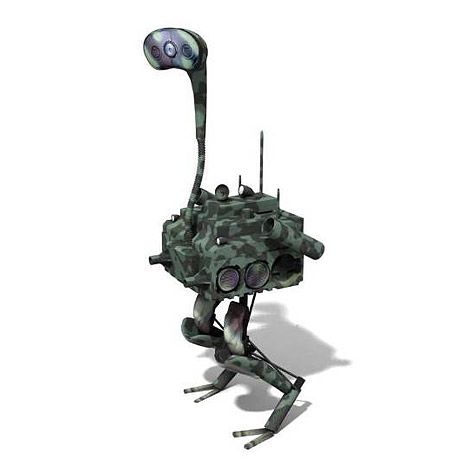
This Is What DARPA's Robot Ostrich Will Look Like

Engineerblogger
Nov 15, 2011


I'll bet you didn't know that DARPA was even interested in a robotic ostrich, did you? I sure as heck didn't. But I suppose it shouldn't be that surprising, since DARPA seems to want robotic versions of just about anything that's capable of extreme levels of performance, and an ostrich apparently fits the, uh, bill.

The above image is a rendering of the eventual form of a robot called FastRunner, a project led by the Florida Institute for Human and Machine Cognition (IHMC), in Pensacola. MIT's Robot Locomotion Group is a partner in the project. FastRunner uses a novel* leg design that should allow it to efficiently sprint at speeds of over 30 kilometers per hour while stabilizing itself and only using one actuator per leg. It'll also be able to run over moderately rough terrain, albeit at 15 km/h, which is still probably going to give even a talented human a run for their money. To put the speed of this robot in perspective, a human can sprint at about 40 km/h over short, level distances, while an actual ostrich can hit almost 100 km/h, with sustained speeds in the 70s.

So far, FastRunner consists of legs and body in simulation, plus one full-scale test leg. When completed, the robot will weigh about 30 kilograms, stand 1.4 meters high, and offer fast, efficient, and very robust motion for whatever potentially sinister applications DARPA can dream up:

IHMC has a lot of experience building legged robots. Researchers there have focused on "biologically inspired hardware design, bipedal and quadrupedal walking, balance, and push-recovery control," among other things. They've written locomotion algorithms for the LittleDog program, another DARPA initiative, and they're also developing humanoid robots for operation in urban environments and robotic exoskeletons to assist people with limited mobility.

MIT, for their part, has a whole bunch of experience with making clever robots with legs. In fact, they have (or had, at any rate) a whole lab dedicated to it. Fans of cool robots might remember this Thanksgiving-themed post from 2008, showing a robotic turkey, chicken, and dinosaur walking around MIT back in 2001. Ostriches are functionally very similar to dinosaurs and their descendants (I'm talking about birds, of course), perhaps even more so since the noble ostrich doesn't rely on its wings for much more than providing shade for smaller ostriches.

Anyway, getting back to FastRunner, it's pretty clear that these researchers have a solid foundation for the design of this robot, especially if you think about where they were 10 years ago and all the technological wonderment that's happened between then and now. My only remaining question is this: Those tubes on the sides of the robot in the rendering... Rocket launchers, or turbojets?


Source: Spectrum IEEE

Friday, 11 November 2011

DARPA AIMS TO LAUNCH SMALL SATELLITES FASTER, CHEAPER

Engineerblogger
Nov 11, 2011


Program plans to put 100-pound satellites into orbit for one-third the cost

Today there’s one way to get a satellite into space: launch it from the ground on a booster rocket, which is expensive and can take weeks or months between missions to prepare the launch pad. And a change in weather can scrap the launch at the last minute.

DARPA’s Airborne Launch Assist Space Access (ALASA) program seeks to reduce cost, time and weather constraints for launching small satellites from an aircraft.

“Current small satellite payloads can cost up to $30,000 per pound to launch, which is unsustainable over the long haul. Even when our increasingly capable small satellites are launched, they are obliged to go to orbits selected by the primary payload on current launchers, rather than to the orbits their designers and operators would prefer,” said Mitchell Burnside Clapp, DARPA program manager. “Through this program we’d like to see the cost per flight drop to less than $1 million dollars, including the range support costs, for 100-pound payloads, and to be able to launch each of those satellites into a dedicated orbit.”

The vision is for an aircraft to carry the small satellite and its host-booster either inside the aircraft or externally. At the desired altitude and direction the aircraft releases the satellite and booster, which continue their climb into space.

A key benefit of such a system is responsiveness to an immediate need. Within a day of being called up, a satellite launch mission could be conducted from a runway anywhere in the world. Another advantage is the flexibility of an aircraft to deliver a satellite into any desired orbit at any time.

Innovative technologies and techniques required for the ALASA program may include propellant systems, possible in-flight liquid oxygen production, motor case materials, flight controls, nozzle designs, thrust vectoring, throttling, mission planning techniques and airspace clearance procedures.

Source DARPA

Additional Information:

Monday, 24 October 2011

Innovators Sought for DARPA Satellite Servicing Technology Program


Engineerblogger
Oct 24, 2011

Phoenix seeks to repurpose ‘retired’ satellite components through GEO servicing

More than $300 billion worth of satellites are estimated to be in the geosynchronous orbit (GEO—22,000 miles above the earth). Many of these satellites have been retired due to normal end of useful life, obsolescence or failure; yet many still have valuable components, such as antennas, that could last much longer than the life of the satellite. When satellites in GEO “retire,” they are put into a GEO disposal or “graveyard” orbit. That graveyard potentially holds tens to more than a hundred retired satellites that have components that could be repurposed – with the willing knowledge and sanction of the satellite’s owner. Today, DoD deploys new, replacement satellites at high cost—one of the primary drivers of the high cost is the launch costs, which is dependent on the weight and volume of antennas. The repurposing of existing, retired antennas from the graveyard represents a potential for significant cost savings.


DARPA’s Phoenix program seeks to develop technologies to cooperatively harvest and re-use valuable components from retired, nonworking satellites in GEO and demonstrate the ability to create new space systems at greatly reduced cost. “If this program is successful, space debris becomes space resource,” said DARPA Director, Regina E. Dugan.

This concept will require diverse expertise from the international and nontraditional space communities. For example, today’s ground-based robotics systems allow surgeons to perform telesurgery on a patient thousands of miles away, and advanced remote imaging systems used for offshore drilling view the ocean floor thousands of feet underwater. These types of capabilities, if re-engineered for zero gravity, high-vacuum and harsh radiation, could be used in space to allow the repurposing of valuable antennas from retired GEO satellites.

“Satellites in GEO are not designed to be disassembled or repaired, so it’s not a matter of simply removing some nuts and bolts,” said David Barnhart, DARPA program manager. “This requires new remote imaging and robotics technology and special tools to grip, cut, and modify complex systems, since existing joints are usually molded or welded. Another challenge is developing new remote operating procedures to hold two parts together so a third robotic ‘hand’ can join them with a third part, such as a fastener, all in zero gravity. For a person operating such robotics, the complexity is similar to trying to assemble via remote control multiple Legos at the same time while looking through a telescope.”

To optimally use those repurposed assets, the Phoenix program will develop low-cost, scalable electronics and structural modules that would allow localized control and communication with each other and a master satellite, ala DARPA’s System F6, that together harnesses the repurposed antennas. Phoenix specifically seeks technologies for developing a new class of small “satlets,” or nanosatellites, which can be sent more economically to the GEO region through existing ride-along services with commercial satellite launches and then robotically attached to the antenna of a nonfunctional cooperating satellite to essentially create a new space system. The nanosatellites may leverage the technologies, infrastructure, protocols and architecture developed within the ongoing System F6 program.

Technical expertise is sought to design a payload orbital delivery system, or PODS, to safely house the satlets when they are launched aboard a commercial satellite.

A separate on-orbit “tender,” or satellite servicing station, is planned to be launched into GEO. Once the tender arrives on-orbit, the PODS would be released from its ride-along host and linked with the tender to become part of the satellite servicing station’s “tool belt.” The tender plans to be equipped with grasping mechanical arms and remote vision systems to remove components and satlets from the PODS using unique space tools to be developed in the program.

Critical to the success of the Phoenix program is active participation from both U.S. and international communities involved in vital technical areas such as:
  • Radiation tolerant microelectronics and memory storage. 
  • Distributed wireless mobile platform solutions for ad hoc connectivity and control.
  • Industrial electronic control systems.
  • Terrestrial microminiature guidance and control measurement units. 
  • Industrial robotics end effectors and tool changeout mechanisms and techniques. 
  • Computer-assisted medical robotics microsurgical telepresence, tools and imaging. 
  • Remote underwater imaging/vision technologies used in the offshore oil and gas drilling industry. 
  • Terrestrial manufacturing of high volume microelectronics and computer data storage. 
  • Terrestrial thermal management design technology of electronic devices and systems. 
  • Low-cost industrial manufacturing of high-volume sheet metal and other structural materials.
  • Additive manufacturing on various structural materials

Source: DARPA

Additional Information:

Monday, 12 September 2011

ARPA-E Announces 2012 Energy Innovation Summit Featuring Bill Gates, Fred Smith and Lee Scott

Department of Energy
Sept 9, 2011

The U.S. Department of Energy’s Advanced Research Projects Agency – Energy (ARPA-E) Director, Arun Majumdar, announced yesterday that the Agency will hold its third annual ARPA-E Energy Innovation Summit from February 27 – 29, 2012 at the Gaylord Convention Center just outside Washington, D.C. Bill Gates, founder and chairman of Microsoft; Fred Smith, chairman, president and CEO of FedEx; and Lee Scott, former CEO of Wal-Mart; will join Secretary Chu and Director Majumdar as distinguished keynote speakers.

“After two successful Summits, I’m excited to once again bring some of our nation’s top thought leaders to Washington to discuss the importance of research, development and deployment of game-changing energy technologies.” said Director Majumdar. “Engagement by business executives such as Bill Gates, Fred Smith and Lee Scott in the Summit emphasizes the critical link between the private sector and government funded R&D for innovation in energy technologies and highlights the important role innovation plays in enabling business, economic growth, and national security.”

Now in its third year, the Summit is designed to unite key players from all sectors of the nation’s energy innovation community to share ideas for developing and deploying the next generation of clean energy technologies. The event is co-hosted by ARPA-E and Clean Technology and Sustainable Industries Organization (CTSI).

Last year’s annual ARPA-E Energy Innovation Summit attracted more than 90 speakers and 2,000 attendees from 49 states and 20 countries. Attendees included members of research and development institutions, global corporations, technology entrepreneurs, investors, policymakers and government officials.

The event will feature a technology showcase with more than 150 exhibits from ARPA-E-funded projects and applicants in areas such as grid-scale storage, power electronics, batteries for electric vehicles, building efficiency, advanced carbon capture and electrofuels. The showcase will also feature new ARPA-E programs such as rare earth alternatives, plant engineering for fuel applications, advanced thermal storage, network integration architecture for the electrical grid, and power electronics for PV applications. A wide range of other energy technologies and new topic areas will also be discussed at the Summit.

In addition to an expanded showcase, the 2012 Innovation Summit will once again feature America’s top businesses focused on developing energy technology. The Summit connects top corporate businesses with clean energy researchers and entrepreneurs with the goal of building lasting partnerships for commercialization. Some of last year’s corporate participants include Lockheed Martin, Dow, Dupont, Battelle and Bosch.

Many more speakers will be added in the coming months. To register for the 2012 ARPA-E Energy Innovation Summit and for the latest news on the Summit program, please visit:http://www.energyinnovationsummit.com.