Blogger Themes

Showing posts with label General Electric. Show all posts

Tuesday, 20 March 2012

GE Harnesses Nanotechnology, Nature to Help Save Airlines Cash

Engineerblogger
March 20, 2012

The above figures show the benefits of GE's nanocoatings in delaying ice formation when compared with existing surfaces. Scientists at GE Global Research measured the onset of icing by monitoring the temperature of a supercooled drop of water on the surface, using an infrared camera. The spike in the drop temperature indicates the start of icing. These figures were recently published in the journal Langmuir, 2012, Volume 28, pp. 3180-3186.

GE Global Research has released a new research report showing promising results for its nanotextured anti-icing surface technology.

According to the report, the technology dramatically reduces ice adhesion and delays ice formation on flat surfaces, which could lead to some significant advantages for the airline industry.

Azar Alizadeh, a materials scientist at GE Global Research and project lead on the anti-icing surfaces program, explained that excess ice accretion on aircraft surfaces can cause lift off issues and negatively affect the aerodynamics of wings during flight. It can also reduce the efficiency of turbine blades.

Traditionally, airlines have used massive amounts of deicing agents and energy-intensive heating systems to combat and prevent ice formation on aircrafts. GE's nano-enabled anti-icing surfaces, however, could help create a passive, more efficient anti-icing system.

This could mean some big cost savings for the airline industry, said Alizadeh.

"Today, airlines and other industry sectors spend hundreds of millions of dollars each year on deicing and other anti-icing measures," she said. "We have successfully engineered new nano-surfaces and coatings that readily shed ice and also significantly delay ice formation under extreme conditions. These technologies could one day reduce and possibly even eliminate the need for existing anti-icing measures, maintaining safety while also saving businesses and consumers time and money." With this technology, ice will still adhere to surfaces in extreme cold, but a much smaller force will be required to remove it, she explained. In most cases, the weight of the ice or the wind's drag forces may be enough to remove the build-up.

While promising, these advances are still a few steps from commercial viability, GE warns. The nanotech surfaces and coatings require further development before they are durable enough and ready for commercial applications.

This development comes as part of GE's ongoing advanced nanotechnology research program at GE Global Research. Work in this field was inspired by research into the Lotus plant leaf, said an announcement from GE. These leaves are covered with a nanotextured wax that repels water. This has helped GE scientists create super water-repellent coatings to improve moisture control in steam turbines and work toward reduced fouling and gas turbines, which would enable them to run more efficiently and reduce maintenance frequency.

Source: Industry Week

Tuesday, 14 February 2012

New Butterfly-inspired Design From GE To Enable More Advanced, Low Cost Thermal Imaging Devices

Engineerblogger
Feb 14, 2012


Morpho butterfly scales decorated with single-walled carbon nanotubes, efficiently detect mid-wave infrared light as visible iridescence changes.  GE’s butterfly-inspired design could enable a new class of thermal imaging sensors with enhanced heat sensitivity and response speed. Credit: GE
  • Nanostructures on Morpho butterfly wings coated with carbon nanotubes can sense temperature changes down to 0.02 degrees Celsius, at a response rate of 1/40 of a second
  • New bio-inspired design by GE scientists could enable more advanced applications for industrial inspection, medical diagnostics, and the military

Taking heat detection to a new level of sensitivity and speed, a team of scientists at GE Global Research, the technology development arm for the General Electric Company, announced new bio-inspired nanostructured systems that could outperform thermal imaging devices available today. This discovery adds to a growing list of new capabilities that GE researchers have developed through their studies of Morpho butterfly wings.

GE scientists are exploring many potential thermal imaging and sensing applications with their new detection concept such as medical diagnostics, surveillance, non-destructive inspection and others, where visual heat maps of imaged areas serve as a valuable condition indicator. Some examples include:
  • Thermal Imaging for advanced medical diagnosis - to better visualize inflammation in the body and understand changes in a patient’s health earlier.
  • Advanced thermal vision - to see things at night and during the day in much greater detail than what is possible today.
  • Fire thermal Imaging – to aid firefighters with new handheld devices to enhance firefighter safety in operational situations
  • Thermal security surveillance - to improve public safety and homeland protection
  • Thermal characterization of wound infections – to facilitate early diagnosis.
“The iridescence of Morpho butterflies has inspired our team for yet another technological opportunity. This time we see the potential to develop the next generation of thermal imaging sensors that deliver higher sensitivity and faster response times in a more simplified, cost-effective design,” said Dr. Radislav Potyrailo, Principal Scientist at GE Global Research who leads GE’s bio-inspired photonics programs. “This new class of thermal imaging sensors promises significant improvements over existing detectors in their image quality, speed, sensitivity, size, power requirements, and cost.”

Dr. Potyrailo added, “GE’s bio-inspired design also promises exciting new thermal imaging applications such as in advanced medical diagnostics to detect changes in a person’s health or in thermal vision goggles for the military to allow soldiers to see things during the day and at night with much greater specificity and detail.”

Thermal imaging is utilized in a variety of industrial, medical and military applications today, ranging from the non-invasive inspection of industrial components and medical diagnostics to military applications such as thermal vision goggles and others. GE’s new bio-inspired nanostructured system could enable an even broader application of thermal imaging by improving the manufacturability, image resolution, sensitivity, and response time of new systems. These advances would enable the production of more advanced systems at much lower cost.

Dr. Potyrailo assembled a research team that studied the origin and details of thermal response of Morpho butterfly wing scales. The team included Professor Helen Ghiradella from the Department of Biological Sciences, University at Albany; and Andrew Pris, Yogen Utturkar, Cheryl Surman, William Morris, Alexey Vert, Sergiy Zalyubovskiy, and Tao Deng from GE Global Research.

This discovery is a result of extensive studies conducted at GE Global Research on the technological applications of photonic properties of Morpho butterfly wing scales led by Dr. Potyrailo. Dr. Potyrailo noted that his multi-organization teams are also working on the fabrication of photonic nanostructures inspired by Morpho butterfly wing scales for highly selective vapor sensing applications, with commercial applications that could reach the market within the next five years.

 Video demonstration of the discovered thermal response in butterfly scales.


Source: General Electric

Tuesday, 10 January 2012

The Shape of Things to Come: GE and the Future of Manufacturing

Engineerblogger
Jan 9, 2012


3D printing. Credit: GE Report

Tomorrow is the last day of the year and perhaps a good moment to peer into the future. At GE, this does not require tea leaves. Some of the technologies that will help shape the world already exist in the company’s research labs.

Take a look at manufacturing. Sometimes, the disruptive innovation is not what is being made but how. For more than a century, people made complex goods such as engine parts, turbine blades, and precise sprocket wheels by machining and taking away material to obtain the finished product. However, a new approach called additive manufacturing, or 3D printing, eliminates most of that laborious process.

According David Abbott, who is a senior engineer in non-conventional machining at GE Aviation, “additive manufacturing is being developed on a global scale at GE.” Abbott, who was also a speaker this year at the International Conference on Additive Manufacturing in Loughborough, England, said that the GE businesses pursuing applications of the new method include the company’s aviation, energy, oil and gas, and healthcare units.


This makes good business sense. Yesterday, the Financial Times newspaper published a profile of new manufacturing technologies. The article, which featured Abbott, stated that 3D printing promises to resolve the problem “how to make complicated and novel items accurately in small quantities. The struggle has been to accommodate the opposing aims of speed and efficiency on one hand, and flexibility and variety on the other.” With additive manufacturing, “customer choice over how the artifacts look will increase, with only minimal compromise concerning quality and cost.”

In 2011, GE Reports took a trip to GE’s Global Research Center, a hub for additive manufacturing research. We have gathered videos and images of some of the products being made there. They range from transducers for ultrasound scanners, to fuel nozzles and even Christmas tree ornaments. Together they show the vast scope of 3D printing applications.


Source: GE Report

Can We Build Tomorrow's Breakthroughs?

Technology Review
Jan 10, 2012


Powering up: GE’s new facility will make an innovative type of battery for data centers and backup power. Credit: Ian Allen


In a hangarlike building where General Electric once assembled steam turbines, a $100 million battery manufacturing facility is being constructed to make products using a chemistry never before commercialized on such a large scale. The sodium–metal halide batteries it will produce have been tested and optimized over the last few years by a team of materials scientists and engineers at GE's sprawling research center just a few miles away. Now some of the same researchers are responsible for reproducing those results in a production facility large enough to hold three and a half football fields.

The engineers have moved from the bucolic research center, which sits on a hill overlooking the Mohawk River, down to the manufacturing site, which abuts the river at the edge of Schenectady, New York, a working-class town known in its heyday as Electric City. There, they supervise the installation and testing of robotics, high-temperature kilns, and analytic equipment that will monitor the production process. The new batteries use an advanced ceramic as an electrolyte inside a sealed metal case containing nickel chloride and sodium; the technology promises to store three times as much energy as the lead-acid batteries used in data centers, in heavy-duty electric vehicles, and for backup power. But almost anything can go wrong. If, say, the particles that make up the ceramic are uneven in size or haven't been properly dried, battery performance could fall short. That means the conditions in the huge factory must be tightly controlled, and multi-ton devices must be able to match the exactness of lab equipment. "It's not for the weak of heart," says Michael ­Idelchik, GE's vice president of advanced technologies.

The GE plant is one of a number of facilities around the country producing new technologies for rapidly growing markets in advanced batteries, electric vehicles, and solar power—but those efforts cannot counter the reality that the U.S. manufacturing sector is in trouble. After decades of outsourcing production in an effort to lower costs, many large companies have lost the expertise for the complex engineering and design tasks necessary to scale up and produce today's most innovative new technologies, not to mention the appetite for the risks involved.

If you believe Thomas Friedman's assertion that "the world is flat," and that moving manufacturing to places where production is cheap makes companies more competitive, such a shift might not matter beyond its implications for the U.S. economy and its workers. But the United States remains the world's most prolific source of new technologies, particularly materials-based ones, and evidence is growing that its diminished manufacturing capabilities could severely cripple global innovation. There are ample reasons to believe that the model of the U.S. computer industry—which has successfully outsourced much of its production in the last few decades and made design, not manufacturing, its priority—will not work effectively for companies trying to commercialize innovations in energy, advanced materials, and other emerging sectors.

Academic researchers have begun documenting the complex connections between innovation and manufacturing with an eye to clarifying how the loss of U.S. manufacturing could affect the emergence of new technologies. Willy Shih, a professor of management at Harvard Business School, has created a list of basic technologies in which the United States has squandered its lead in manufacturing in recent years. They include crystalline silicon wafers, LCDs, power semiconductors for solar cells, and many types of advanced batteries. And he has detailed how losing the "industrial commons"—the research know-how, engineering skills, and manufacturing expertise needed to make a specific technology—can often mean losing the knowledge and incentives to create advances in related technologies. For example, as silicon semiconductor production and associated supply chains have shifted to Asia, the development of new silicon-based solar cells has been hampered in the United States.

It turns out it's not necessarily true that innovative technologies will simply be manufactured elsewhere if it doesn't happen in the United States. According to research by Erica Fuchs, an assistant professor at Carnegie Mellon University, the development of integrated photonics, in which lasers and modulators are squeezed onto a single chip, has been largely abandoned by optoelectronic manufacturers as they have moved production away from the United States. Many telecom firms were forced to seek lower-cost production in East Asia after the industry's collapse in the early 2000s, and differences in manufacturing practices meant that producing integrated photonic chips was not economically viable in those countries. Thus a technology that once appeared to be just a few years away from revolutionizing computers and even biosensors was forsaken. Economists might argue that we don't care where something is produced, says Fuchs, but location can profoundly affect "the products that you choose to make and the technology trajectory itself."

For many people in industry, the connections between innovation and manufacturing are a given—and a reason to worry. "We have learned that without a foothold in manufacturing, the ability to innovate is significantly compromised," says GE's Idelchik. The problem with outsourcing production is not just that you eventually lose your engineering expertise but that "businesses become dependent on someone else's innovation for next-generation products." One repercussion, he says, is that researchers and engineers lose their understanding of the manufacturing process and what it can do: "You can design anything you want, but if no one can manufacture it, who cares?"

After decades as the world's largest manufacturer, the United States now makes, according to some recent estimates, 19.4 percent of the world's manufactured goods—second to China, which makes 19.8 percent. Even in high-tech products, the United States now imports more than it makes. Those statistics have implications for employment, national competitiveness, and even the politics and social structure of the country. But equally worrisome, especially over the long term, is what the declining ability of the United States to make stuff implies for the next generation of technology. Can the United States regain its ability to take on high-risk manufacturing? To ask the same question in a different way, are many of today's most promising innovations in danger of suffering the same fate as integrated photonic chips?
To read more click here...

Wednesday, 9 November 2011

The #Industrial #Internet: Using Data to Improve #Manufacturing

GE Reports
Nov 9, 2011


The U.S. remains the global manufacturing hegemon, with some twenty percent of the total output. But to stay in the lead and create new high-tech jobs, manufacturing needs to get smarter and innovate. GE’s Intelligent Platforms unit (GEIP) is helping GE businesses as well as outside customers to crunch big data and harness information to keep their competitive edge.

GEIP, which was recently profiled by Forbes, produces software, controls and other high-tech automation systems. GEIP’s smart Proficy software zips through factory floor networks, gathers real time data from manufacturing equipment, and identifies bottlenecks misplaced resources. The software also measures energy consumption and manages clients’ environmental footprint. “We convert the data into actionable information,” says Linda Onnen, global marketing director at GEIP.

“If you think of the manufacturing process as a river, when it flows smoothly through the production floor then it is 100% efficient,” says Onnen. “But that is never the case.”

Invariably there are issues with equipment, speed, or quality. “We look at the rocks in the river that prevent us from the 100% throughput,” says Onnen.

Onnen says that many companies achieve only 50 to 60% of maximum output. “They have limited visibility despite the fact that they use modern, computer controlled equipment,” she says. She says that GEIP’s software gives clients “the navigation and course correction tools” to optimize performance, such as analytics that look at the critical inputs, provide insight for process improvement, and decide what the optimal machine settings are. 
To read more click here...

Friday, 23 September 2011

GE, GM in push on EV infrastructure for China

Engineerblogger
Sept 23, 2011

General Electric and General Motors Co. agreed Thursday on a pilot installation of electric vehicle charging stations in Shanghai, the latest step in the automaker's plan to develop infrastructure in China to support sales of its Chevrolet Volt electric car.

As part of the agreement, GE also agreed to buy the extended range electric cars for use at its corporate campus in Shanghai. GM plans to launch the Volt in December in China, where it has made electric vehicles a core part of its strategy for expansion despite doubts Chinese consumers will snap up such cars.

The companies gave no details about investment in the charging stations, which will include both GE's WattStations and Durastations, two different specifications for charging electric vehicles.

China is a linchpin market for GM. Earlier this week it announced plans for developing a new electric vehicle with its local partner Shanghai Automotive Industrial Corp. It also has just opened an advanced technology center to support its efforts to build more energy efficient and safer automobiles, with a lab devoted to developing new battery cells for EVs.

GE builds natural gas-fired generators for utilities, electric motors, advanced electric meters and electric car charging stations, all of which could be in higher demand if drivers buy electric cars. The company estimates the expanding market could bring it up to $500 million in revenue over the next three years.

China, the world's biggest market for new vehicles, is seen as a promising market for electric vehicles because of its keenness on limiting its dependence on costly imports of crude oil and reducing severe pollution from auto emissions.

The government has made development of so-called "new energy" vehicles a key part of its current five-year economic plan, promising subsidies and billions of dollars in new investments.

But spurring demand for electric and hybrid vehicles will hinge on providing the charging infrastructure, and bringing costs down to affordable levels, those working in the industry say.

Thursday's agreement calls for the two big U.S. companies to coordinate work with government agencies on developing EV standards.

In August, GE Energy also announced a partnership with car rental company Hertz Corp. for advancing the rollout of EVs and charging stations in China.

Source:  The Associated Press

Friday, 12 August 2011

Store CO2 Underground and Extract Electricity? A Berkeley Lab-led Team is Working on it

Lawrence Berkeley National Laboratory (Berkeley Lab)
Aug 8, 2011

About a year from now, two nondescript shipping containers will be installed in a field in Cranfield, Mississippi. They’ll house turbines designed to generate electricity in a way that’s never been done before. If initial tests go well, the technology could lead to a new source of clean, domestic energy and a new way to fight climate change.

A team led by Lawrence Berkeley National Laboratory (Berkeley Lab) scientists hopes to become the first in the world to produce electricity from the Earth’s heat using CO2. They also want to permanently store some of the CO2 underground, where it can’t contribute to climate change.

The group received $5 million from the Department of Energy earlier this summer to design and test the technology.

“This is the first project intended to convert geothermally heated CO2 into useful electricity,” says Barry Freifeld, a mechanical engineer in Berkeley Lab’s Earth Sciences Division who leads the effort.
To read more click here...

Wednesday, 20 July 2011

GE Develops Manufacturing Tools to Improve Jet Engines

Technology Review
July 20, 2011

Power turbines may be a mature business, but they are also a booming one. This year General Electric received record orders for jet engines, and because natural gas is currently cheap, worldwide demand is increasing for gas turbines used in power plants, says Jeffrey Immelt, GE's chairman and CEO. To compete, the company is introducing new products based on innovations such as improved composites for fan blades and resilient alloys that allow for high-temperature, efficient operation. But at least as important from a competitive perspective are advances in the technology used to make turbines, which can lower costs and make new designs possible.

At GE's global research headquarters in Niskayuna, New York, researchers are working on a new machining tool that uses a combination of a cutting disk and an electrical arc. The tool cuts through high-strength alloys three times as fast as the conventional alternatives, and it reduces energy consumption by 25 percent, bringing down manufacturing costs. Since it uses less force than conventional machining, the technology also makes it possible to conceive of new designs that might otherwise break during the process.

On the factory floor at a gas turbine plant in Greenville, South Carolina, GE has recently installed a machine that precisely cuts cooling holes in turbine blades using 50,000-psi jets of water. The holes allow the turbines to run at higher temperatures and efficiencies. The factory also uses relatively new, high-powered fiber lasers that can reduce four-hour welding jobs to less than a minute. And a new $170 million test facility generates mountains of data that can be used to improve manufacturing further.

At a factory in Durham, North Carolina, one jet engine assembler, Scott West, developed a system that suspends a jet engine and dolly weighing seven tons on a thin cushion of air, so that two to four workers can move the engines where the task previously required six. The technology is projected to save GE $156,000 a year. West is now extending the technology to other parts of the manufacturing line.
To read more click here...
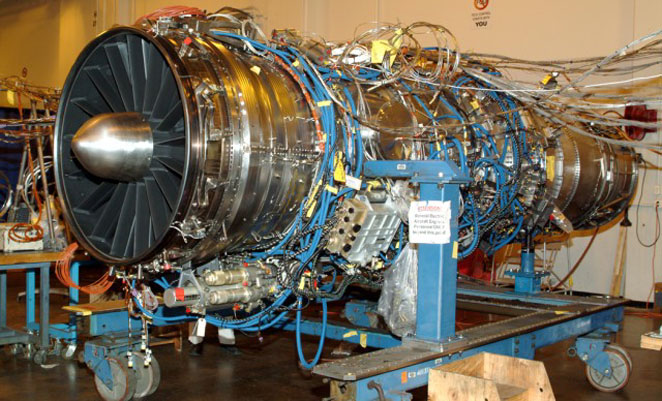
Wednesday, 13 July 2011

American Teamwork: Ground-Up Innovation From the Manufacturing Floor

GE
July 12, 2011

It’s well documented that successful companies—especially large ones—encourage their employees to think outside the proverbial box and contribute to improving the efficiency of the manufacturing process. Great ideas are not just born in the research lab but also on the factory floor.

GE has long challenged employees at its American manufacturing plants to contribute ideas – a modern variation of the simple suggestion box – solving day-to-day problems by promoting teamwork among its 100,000-plus industrial staffers, and innovation from the ground up.

In that spirit, at GE Transportation’s 2,000-employee Erie, Pa., plant, a handrail assembly project team took a fresh look at the injury-prone process of manufacturing handrails for locomotives. They eliminated more than a mile of weld-wire, and the grinding and hammering of 25-pound sledgehammers along with it.

“Rather than trying to address the mountain of issues associated with the complex assembly process, the team re-imagined the entire design,” Rick Hersey, one of the team members, explained.

The new process uses slipcovers and bolts to connect siderails and handrails, reducing cycle time by more than 70 percent while reducing noise, physical strain and difficulty. Not only did the new process improve workplace safety, but it also paid for itself—in just 10 days. (The team even won a cost savings award at the recent International Ergo Cup Competition at the 2011 Applied Ergonomics Conference—or “the Super Bowl of ergonomics,” as team manager Mike Formaini calls it.)
To read more click here...

Monday, 20 June 2011

GE Uses DOE Advanced Light Sources to Develop Revolutionary Battery Technology

DOE Office of Science
June 14, 2011

The story of American manufacturing over the past two decades has too often been a tale of outsourcing, off-shoring, and downsizing—not least in Upstate New York, which has probably seen more than its fair share of factory shutdowns and job losses in recent years. Today, however, General Electric is bucking the trend, putting the finishing touches on a new manufacturing facility in Schenectady. The plant, which will begin operations toward the end of the year, is eventually expected to create more than 300 jobs. It will produce a new advanced line of heavy duty batteries, which GE plans to sell to telecoms, utilities, data centers, and other industrial and transportation customers worldwide.

The new batteries, based on sodium metal halide technology, boast three times the energy density and charging power of the lead-acid batteries they are designed to replace, according to the company. GE engineers also say the batteries have long cycle life, withstanding thousands upon thousands of charge and discharge cycles, for expected lifetimes of up to twenty years, and can operate in a wide range of temperature environments.

To help achieve these breakthroughs, GE researchers relied on two of the Nation's most advanced and sophisticated scientific user facilities, the National Synchrotron Light Source (NSLS) at the U.S. Department of Energy's (DOE) Brookhaven National Laboratory on Long Island and the Advanced Photon Source (APS) at DOE's Argonne National Laboratory outside Chicago. NSLS enabled GE researchers to understand in detail the internal chemistry of an actual commercial battery while charging and discharging in real time. Additional studies of battery cross-sections at APS helped engineers further understand the system.

The data gathered from the two light sources helped GE's engineers to fine-tune battery design to maximize performance and improve reliability, creating what they say will be a world-leading technology.
To read more click here...

Thursday, 9 June 2011

GE Technology Turns Waste Wood into Useful Energy at Italian Biomass Plant

GE Press Release
June 8, 2011

As Italy strives to increase its renewable energy production to 17 percent by 2020, GE’s  alternative energy technology can help companies in the country support this initiative. At POWER-GEN Europe, GE is showcasing the Clean CycleTM power generation system, its new acquisition in the field of small Organic Rankine Cycles (ORC), which recently received GE’s ecomagination approval.

One example of GE’s technology being highlighted at POWER-GEN Europe is the new Boscaro biomass generation plant in Vigliano Biellese, Italy, designed and built by the company Ingeco of Silea, Italy.

The plant, which is owned by F.lli Boscaro, an Italian pruning and composting company, features two Clean Cycle 125-kilowatts (kW) waste heat power generation systems together with a superheated water biomass boiler and related equipment and services. The success of the project is based on advantages from the boiler and ORC system. The moving-grate boiler is designed and built to operate with a wide range of biomasses, such as the wood waste, foliage and branch wood resulting from maintenance of gardens and parks.

“The biomass boiler and GE’s innovative Clean Cycle power generation systems have allowed us to solve our wood wastes disposal challenge by converting the waste into a free fuel, with zero emissions, that we can now use to heat our buildings and to produce electricity which is sold to the grid,” said Fabrizio Boscaro, owner of the plant. “Our government promotes the development and construction of small power plants such as ours that are geographically distributed, rather than large plants. By using our local biomass resources to harness our own energy sources, we are doing our part to help Italy meet its renewable energy goals.”

Wednesday, 8 June 2011

GE Combines Natural Gas, Wind, and Solar

Technology Review
June 7, 2011
GE has announced the first power plant to integrate wind and solar power with natural gas—a 530-megawatt plant that will start operating in Turkey in 2015. The power plant is made practicalby a flexible, high-efficiency natural-gas system the company announced two weeks ago and a solar thermal power system created by eSolar, a Burbank, California-based startup that GE recently invested in.

Such hybrid plants may become the dominant type of new power plant in some parts of the world, GE says. The new technology is aimed at countries that use 50 hertz electricity (the United States uses 60 hertz). In particular, it could make it easier for China and the European Union to meet their renewable energy targets.

Adding solar power to natural gas plants isn't a new idea, but it hasn't been economical without government subsidies. GE says that because of its new turbines and related equipment, these hybrid plants can, for utilities with the right combination of sunlight and natural gas prices, be competitive even without government support.

Tuesday, 31 May 2011

A Gas Power Plant to Make Renewables More Practical

Technology Review
May 27, 2011

General Electric announced on Thursday that it's designed a gas-fired combined-cycle power plant that can start up rapidly. The goal is to help electricity grids adapt to the variability of renewable energy.

With a small but growing proportion of electricity in Europe being supplied by wind and solar power, grid operators need new ways to deal with fluctuations in supply. The supply from solar drops dramatically at night, while wind installations only provide power when the wind is blowing. GE's new plant can ramp up electricity generation at a rate of more than 50 megawatts a minute twice the rate of current industry benchmarks. The plant can start from scratch in less than 30 minutes.

GE is testing a pilot plant at its facility in Greenville, South Carolina, but the plant won't come into operation any earlier than 2015.

The plant will have a base load fuel efficiency of 61 percent, higher than other gas combined-cycle power plants. A base load power plant is one that's dedicated to providing a continuous supply of energy. Nuclear and coal plants commonly provide base load power. Such plants offer relatively cheap energy, but they can take hours or days to start up, which isn't fast enough to meet fluctuations in supply from renewables.

Wednesday, 11 May 2011

GE Aviation Study Shows Millions in Savings for Airlines, Reduced Flight Time for Travelers

GE News Center
May 10, 2011


Airlines could save at least $65.6 million annually while slashing carbon emissions and cutting flight times by implementing new flight paths at 46 mid-size airports across the U.S., according to study results released today by GE Aviation. The findings of the study, Highways in the Sky, come at a critical time in the debate on the future of our aging national air traffic control infrastructure, where additional investment is increasingly measured against proven benefits to the economy, environment and the everyday traveler. Steve Fulton, technical fellow with GE Aviation highlighted the results today at the NextGen Ahead Air Transportation Modernization conference in Washington, DC.

GE’s Highways in the Sky study illustrates the potential for significant economic and environmental benefit of near-term deployment of Required Navigation Performance (RNP) landing approaches. Although the study focused on 46 mid-sized U.S. airports, the data and analysis supports accelerated deployment of RNP at any airport. GE’s study of the 46 airports concludes that deployment of RNP instrument arrivals would annually save...

Additional Information:

Tuesday, 10 May 2011

The Human Body, Searchable in 3-D

Technology Review
May 9, 2011


The first online 3-D interactive search tool of the human body was released today. It allows a user to view and navigate the human anatomy, male or female, down to the finest detail—from the muscles and deep muscles to the nerves, arteries, vessels, and bones. This new tool, called BodyMaps, was developed by Healthline Networks, a company that provides medical information to consumers online, and GE Healthyimagination, a Web-based platform that shares and promotes projects that focus on consumer health, such as apps or healthy how-to videos.

BodyMaps is a consumer tool developed to educate the user on health conditions or medical ailments. At the center of the BodyMaps page is a 3-D image of the body; at left is textual information about the body section being shown. As a user mouses over the text, the section of the body in the image is highlighted, and vice versa if a user mouses over the image. At the bottom is a scrubber that lets the user rotate the body 360 degrees. The page also features videos, tips on staying healthy, information on symptoms and conditions, and a definition of the section in view.

Monday, 9 May 2011

GE and EADS to Print Parts for Airplanes

Technology Review
May 7, 2011

GE is starting a new lab at its global research headquarters in Niskayuna, New York, that's devoted to turning three-dimensional printing technology into a viable means of manufacturing functional parts for a range of its businesses, including those involving health care and aerospace. The company aims to take advantage of the technology's potential to make parts that are lighter, perform better, and cost less than parts made with conventional manufacturing techniques.

Technology for printing three-dimensional objects has existed for decades, but its applications have been largely limited to novelty items and specialized custom fabrication, such as the making of personalized prosthetics. But the technology has now improved to the point that these printers can make intricate objects out of durable materials , including ceramics and metals such as titanium and aluminum, with resolution on the scale of tens of micrometers.

Related Information:

How It Works: The Next-Gen Wind Turbine

Popsci.com
April 26, 2011


There’s enough wind energy along our coastlines to power the country four times over, and the race is on to build the best offshore turbines to capture it. Manufacturers worldwide are experimenting with two techniques: ever-longer blades to harness more gusts, and simplified drivetrains (including new generators) that slash the need for costly repairs at sea. GE’s upcoming machine, slated to go online in 2012, will combine both into one package.
To read more click here...

Friday, 6 May 2011

GE and Rolls in funds offer on F-35

The Financial Times
May 6, 2011

General Electric and Rolls-Royce have offered to pay for part of the development costs of their alternate engine for the F-35 combat jet in a last-ditch effort to save the programme after the Pentagon moved to shut it down in March.

The commitment could cost more than $100m but may bolster flagging political support for the project and give the pair a chance to finish their engine and compete against Pratt & Whitney, maker of the main engine, in a multi-billion dollar market.

“We believe so strongly in our engine and the need for competition in defence procurement that we have committed to self-fund F136 development costs,” Jeff Immelt, chief executive of GE, said.
To read more click here...

Tuesday, 3 May 2011

GE targets Latin America for growth

The Financial Times
May 2, 2011

Revenues at General Electric’s Latin American operations surged 30 per cent in the first quarter of this year from the same period in 2010 and should continue to climb as the rapidly growing region rushes to improve its creaking infrastructure, the US industrial group has told the Financial Times.
 
Emerging market countries, and especially Brazil, which is preparing to host the soccer World Cup in 2014 and the Olympic Games two years later, are increasingly being seen as a strategic base for GE as it looks to slim down its financial businesses and focus more on industrial projects.  

Monday, 18 April 2011

GE Aviation Breaks Ground for New $51 Million Research & Development Center in Ohio's Aerospace Hub

Business Wire
April 14, 2011

GE Aviation broke ground today on its new Electrical Power Integrated Systems Research and Development Center (EPISCENTER) on the University of Dayton campus in Dayton, Ohio. The $51 million center will be built on about eight acres on the University of Dayton’s campus on River Park Drive.

“GE’s new R & D center will be the southern anchor to the Ohio Aerospace Hub of Innovation and Opportunity,” said Lorraine Bolsinger, president and CEO of GE Aviation Systems. “This location and future facility will help all stakeholders in attracting high caliber engineering talent. The center will be a catalyst for new contracts and products resulting in job growth at the EPISCENTER and at GE locations such as Vandalia.”