Blogger Themes

Showing posts with label Environment. Show all posts

Friday, 26 October 2012

Abu Dhabi Scientists Create Desert Rainstorms: Report

Engineerblogger
Oct 26, 2012
Credit: AP

Desert dwellers wishing to transform their arid surroundings into a profitable, crop-sustaining oasis have reportedly gotten one step closer to making that dream a reality, as Abu Dhabi scientists now claim to have created more than 50 artificial rainstorms from clear skies during peak summer months in 2010.

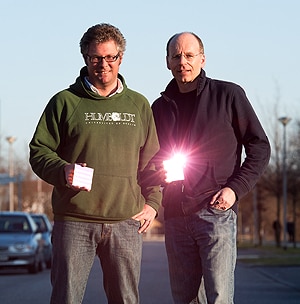
According to Arabian Business, the storms were part of a top secret, Swiss-backed project, commissioned by Sheikh Khalifa bin Zayed Al Nahyan, president of the UAE and leader of Abu Dhabi. Called "Weathertec," the climate project -- said to be worth a staggering $11 million -- utilized ionizers resembling giant lampshades to generate fields of negatively charged particles, which create cloud formation, throughout the country's Al Ain region, the Telegraph is reporting.

"We are currently operating our innovative rainfall enhancement technology, Weathertec, in the region of Al Ain in Abu Dhabid," Helmut Fluhrer, the founder of Metro Systems International, the Swiss company in charge of the project, is quoted as saying. "We started in June 2010 and have achieved a number of rainfalls."

Monitored by the Max Planck Institute for Technology, a leading tank for the study of atmosphere physics, the fake storms are said to have baffled Abu Dhabi residents by also producing hail, wind gales and even lightning.

"There are many applications," Professor Hartmut Grassl, a former institute director, is quoted by the Daily Mail as saying. "One is getting water into a dry area. Maybe this is a most important point for mankind."

Source: Huffington Post

Related Information:

Tuesday, 3 July 2012

Sustainable energy solution developed by rubbish collection

Engineerblogger
July 3, 2012


The Pyroformer overcomes many of the problems other renewable energy solutions have generated

As fuel prices continue to increase, researchers from the European Bioenergy Research Institute (EBRI) at Aston University, have developed an innovative bioenergy solution that uses waste products to generate cost-effective heat and power and that could reduce the world’s reliance on fossil fuels.

The market opportunities of the equipment – a Pyroformer, developed by Professor Andreas Hornung, of EBRI – also offer business benefits to the West Midlands region. It is anticipated that 35 jobs will be directly safeguarded or created and over 1,000 indirect jobs created in the West Midlands by 2022 as a result. This would see an increase in the turnover of the West Midlands’ regional bioenergy industry and will result in an increase in Net Regional GVA of £105 million by the same date.

The Pyroformer overcomes many of the problems other renewable energy solutions have generated. Tests have shown that unlike other bioenergy plants, the Pyroformer has no negative environmental or food security impacts. It can use multiple waste sources and therefore does not require the destruction of rainforests or the use of agricultural land for the growth of specialist bioenergy crops. In fact biochar - one of its by-products - can even be used as a fertiliser to increase crop yields.

As well as generating heat and power, the Pyroformer also dramatically reduces the amount of material sent to landfill.

Professor Andreas Hornung, Head of the European Bioenergy Research Institute at Aston University, said: “This Pyroformer is the first of its kind in the UK and the first industrial scale plant is now up and running at Harper Adams University College before it is permanently installed on the Aston campus later this year. We are delighted with the tests taking place at Harper Adams which are demonstrating that this really is a low carbon, renewable and sustainable energy source.

“However, this is about more than just energy provision. We believe this bioenergy technology could be a key stimulator of growth and jobs in the region and the reaction of the business community so far has been very enthusiastic. If you are looking for a clean energy source that ensures energy security without damaging people or planet, we already have the solution.”

The Pyroformer is capable of processing up to 100 kg/h of biomass feed and when coupled with a gasifier it will have an output of 400 kWeI – this is the equivalent to providing power for 800 homes[1]. It is currently being tested at Harper Adams University College in Shropshire before moving to its permanent home at EBRI’s new £16.5m ERDF funded laboratories later this year. This facility will showcase the Pyroformer to industry and demonstrate how real-life solutions for tackling biomass based residues and waste can be achieved, with both environmental and financial benefits for households, businesses and local authorities.

Source: Aston University (European Bioenergy Research Institute (EBRI))

Additional Information: 
  • [1] 800 homes based on a consumption of approximately 3000 kwH per home.

Sunday, 24 June 2012

Energy: Novel Power Plants Could Clean Up Coal

Engineerblogger
June 24, 2012


Cleaner coal: This pilot plant in Italy uses pressurized oxygen to help reduce emissions from burning coal. Credit: Unity Power Alliance

A pair of new technologies could reduce the cost of capturing carbon dioxide from coal plants and help utilities comply with existing and proposed environmental regulations, including requirements to reduce greenhouse-gas emissions. Both involve burning coal in the presence of pure oxygen rather than air, which is mostly nitrogen. Major companies including Toshiba, Shaw, and Itea have announced plans to build demonstration plants for the technologies in coming months.

The basic idea of burning fossil fuels in pure oxygen isn't new. The drawback is that it's more expensive than conventional coal plant technology, because it requires additional equipment to separate oxygen and nitrogen. The new technologies attempt to offset at least some of this cost by improving efficiency and reducing capital costs in other areas of a coal plant. Among other things, they simplify the after-treatment required to meet U.S. Environmental Protection Agency regulations.

One of the new technologies, which involves pressurizing the oxygen, is being developed by a partnership between ThermoEnergy, based in Worcester, Massachusetts, and the major Italian engineering firm Itea. A version of it has been demonstrated at a small plant in Singapore that can generate about 15 megawatts of heat (enough for about five megawatts of electricity).

The technology simplifies the clean-up of flue gases; for example, some pollutants are captured in a glass form that results from high-temperature combustion. It also has the ability to quickly change power output, going from 10 percent to 100 percent of its generating capacity in 30 minutes, says Robert Marrs, ThermoEnergy's VP of business development. Conventional coal plants take several hours to do that. More flexible power production could accommodate changes in supply from variable sources of power like wind turbines and solar panels.

Marrs says that these advantages, along with the technology's higher efficiency at converting the energy in coal into electricity, could make it roughly as cost-effective as retrofitting a coal plant with new technology to meet current EPA regulations, while producing a stream of carbon dioxide that's easy to capture. The technology also reduces net energy consumption at coal plants, because the water produced by combustion is captured and can be recycled. This makes it attractive for use in drought-prone areas, such as some parts of China.

The other technology, being developed by the startup Net Power along with Toshiba, the power producer Exelon, and the engineering firm Shaw, is more radical, and it's designed to make coal plants significantly more efficient than they are today—over 50 percent efficient, versus about 30 percent. The most efficient power plants today use a pair of turbines: a gas turbine and a steam turbine that runs off the gas turbine's exhaust heat. The new technology makes use of the exhaust by directing part of the carbon dioxide in the exhaust stream back into the gas turbine, doing away with the steam turbine altogether. That helps offset the cost of the oxygen separation equipment. The carbon dioxide that isn't redirected to the turbine is relatively pure compared to exhaust from a conventional plant, and it is already highly pressurized, making it suitable for sequestering underground. The technology was originally conceived to work with gasified coal, but the company is planning to demonstrate it first with natural gas, which is simpler because it doesn't require a gasifier. The company says the technology will cost about the same as conventional natural gas plants. Shaw is funding a 25-megawatt demonstration power plant that is scheduled to be completed by mid-2014. Net Power plants to sell the carbon dioxide to oil companies to help improve oil production.

The technologies may be "plausible on paper," says Ahmed Ghoniem, a professor of mechanical engineering at MIT, but questions remain "until things get demonstrated." (Ghoniem has consulted for ThermoEnergy.) The economics are still a matter of speculation. For one thing, it is "an open question" how much money the technologies could save over conventional pollution control techniques, he says. As a rule, "any time you add carbon dioxide capture, you increase costs," he points out. "The question is by how much." Selling the carbon dioxide to enhance oil recovery can help justify the extra costs, he says, and retrofitting old power plants might help create an initial market. But he says the new technologies won't become widespread unless a price on carbon dioxide emissions is widely adopted.

Ghoniem adds that even if the technology for capturing carbon proves economical, it's still necessary to demonstrate that it's feasible and safe to permanently sequester carbon underground. The challenges of doing that were highlighted by a recent study suggesting that earthquakes could cause carbon dioxide to leak out.

 Source: Technology Review

Wednesday, 30 May 2012

Planning for uncertainty in power generation

Engineerblogger
May 30, 2012


Renewable energy sources such as wind and solar power help to diversify the nation's energy mix, but they also bring new uncertainty to the power supply. Two UC Davis researchers are working with a national team of experts, funded by the U.S. Department of Energy, to help power utilities make sound plans in the face of that uncertainty.

"The goal is to be able to plan to generate power in the face of the uncertainty caused by a 30-percent penetration of renewables in the power supply," said David Woodruff, a professor in the UC Davis Graduate School of Management.

Woodruff and Roger Wets, a distinguished research professor in the UC Davis Department of Mathematics, are collaborating on the $3 million, two-year project with partners at Iowa State University, Sandia National Laboratories, Alstom, and the Independent System Operator (ISO)-New England. Woodruff and Wets are leading experts in the field of optimization under uncertainty.

The team plans to develop tools that can be implemented commercially by power utilities and regional system operators such as ISO-New England.

Wind and solar power bring big advantages in reducing carbon emissions, but power generation can drop suddenly as clouds form or wind dies down. To compensate, power system managers keep extra capacity from coal- and gas-fired plants in reserve. Coal-fired electricity is relatively cheap, but slow to come online. Gas plants can ramp up fast, but are more expensive. That means that the cost of power can fluctuate over a few hours or even minutes.

One option is to pass costs directly to consumers through a "smart grid" and other devices. For example, a "smart" air conditioning unit could be programmed to cut off when the cost of power goes beyond a pre-set level. But although consumers might plan to be thrifty, when the mercury rises they may well hit the override switch.

"It's hard to predict what consumers will do when you expose them to these prices," Woodruff said.

Woodruff, Wets and colleagues are pursuing a second option, using large-scale computational models to find optimal strategies to hedge against fluctuations in regional power supply.

The project is funded through the Green Electricity Network Integration program of the U.S. Department of Energy's Advanced Research Projects Agency-Energy.

Source: UC Davis

New materials could slash energy costs for CO2 capture

Engineerblogger
May 30, 2012


Artist Kelly Harvey evoked images of the sea and a coral reef to hint at the diversity of structures in Rice's zeolite database.

A detailed analysis of more than 4 million absorbent minerals has determined that new materials could help electricity producers slash as much as 30 percent of the “parasitic energy” costs associated with removing carbon dioxide from power plant emissions.

The research by scientists at Rice University, the University of California, Berkeley, Lawrence Berkeley National Laboratory (LBNL) and the Electric Power Research Institute (EPRI) was published online this week in the journal Nature Materials.

Coal- and natural-gas-fired power plants account for about half of the carbon dioxide (CO2) that humans add to the atmosphere each year, but current technology for capturing that CO2 and storing it underground can gobble up as much as one-third of the steam the plant could otherwise use to make electricity.

In the new study, researchers found that commonly used industrial minerals called zeolites could significantly improve the energy efficiency of “carbon capture” technology.

“It looks like we can beat the current state-of-the-art technology by about 30 percent, and not just with one or two zeolites,” said study co-author Michael Deem, Rice’s John W. Cox Professor of Bioengineering and professor of physics and astronomy. “Our analysis showed that dozens of zeolites are more efficient than the amine absorbents currently used for CO2 capture.”

Commercial power plants do not capture CO2 on a large scale, but the technology has been tested at pilot plants. At test plants, flue gases are funneled through a bath of ammonia-like chemicals called amines. The amines are then boiled to release the captured CO2, and additional energy is required to compress the CO2 so it can be pumped underground. The “parasitic energy” costs associated with current technology is high; up to one-third of the steam that could be used to generate electricity is siphoned off to boil the amines and liquefy the CO2.

Deem said the new study is the first to compare the “parasitic energy” costs for a whole class of carbon-capture materials. The study found dozens of zeolites that could remove CO2 from flue gas for a lower energy cost than amines could.

Zeolites are common minerals made mostly of silicon and oxygen. About 40 exist in nature, and there are about 160 man-made types. All zeolites are highly porous — like microscopic Swiss cheese — and the pore sizes and shapes vary depending upon how the silicon and oxygen atoms are arranged. The pores act like tiny reaction vessels that capture, sort and spur chemical reactions of various kinds, depending upon the size and shape of the pores. The chemical industry uses zeolites to refine gasoline and to make laundry detergent and many other products.

In 2007, Deem and colleagues used computers to calculate millions of atomic formulations for zeolites, and they have continued to add information to the resulting catalog, which contains about 4 million zeolite structures.

In the new study, the zeolite database was examined with a new computer model designed to identify candidates for CO2 capture. The new model was created by a team led by co-author Berend Smit, UC Berkeley’s Chancellor’s Professor in the departments of chemical and biomolecular engineering and of chemistry and a faculty senior scientist at LBNL. Smit and his UC Berkeley group worked with study co-author Abhoyjit Bhown, a technical executive at EPRI, to establish the best criteria for a good carbon capture material. Focusing on the energy costs of capture, release and compression, they created a formula to calculate the energy consumption for any materials in the zeolite database.

In this zeolite structure, the arrangement of oxygen atoms (red) and silicon atoms (tan) influences the regions in the pores (colored surface) where CO2 can be captured.

Running the painstaking calculations to compare the CO2-capture abilities of each zeolite would have taken approximately five years with standard central processing units (CPUs), so Smit and his colleagues at UC-Berkeley and LBNL created a new way to run the calculations on graphics processing units, or GPUs — the processors used in PC graphics cards. Deem said the GPU technique cut the compute time to about one month, which made the project feasible.

Smit said, “Our database of carbon capture materials is going to be coupled to a model of a full plant design, so if we have a new material, we can immediately see whether this material makes sense for an actual design.”

Study co-authors include graduate students Li-Chiang Lin and Joseph Swisher, both of UC Berkeley; Adam Berger of the EPRI; Richard Martin, Chris Rycroft and Maciej Haranczyk, all of LBNL’s Computational Research Division; and postdoctoral fellows Jihan Kim and Kuldeep Jariwala of LBNL’s Materials Science Division. This research was supported by the Department of Energy, the Advanced Research Projects Agency–Energy and EPRI’s Office of Technology Innovation.

Source: Rice University

Tuesday, 29 May 2012

Study takes novel 'back-casting' approach to transform cities for healthier lives

Engineerblogger
May 30, 2012


Researchers at four of the country’s leading universities, led by the University of Birmingham, are embarking on a low carbon engineering project that could transform the way cities are built, as well as the way we live in them, by taking a novel ‘back-casting’ approach to their study.

The study will create visions of an alternative urban future with drastically reduced CO2 emissions then develop realistic and radical engineering solutions to achieve them in a socially acceptable way. Research will closely link people’s social aspirations and wellbeing with the engineering of cities.

The UK government is committed to meeting its 2050 climate change target to reduce greenhouse gas emissions by 80 per cent from 1990 levels.

Professor Chris Rogers at the University of Birmingham’s School of Civil Engineering, said: ‘Engineering of our cities has traditionally been a ‘top-down’ exercise, mainly because it’s so very difficult to create a ‘bottom-up’ approach: solutions are created and society must either learn to work and live with them or choose to resist them.

‘Our research is novel in that we start by imagining the future that we want for our cities, for example, what does a city like Birmingham look like with an 80 per cent carbon reduction? We then work backwards to find out what combinations of engineering solutions, behavioural changes and technological developments are needed to make these alternative futures possible, while at the same time ensuring that the planet can still provide us with the resources we need. The ambition of our research programme is necessary to deal with the global challenges that we face.’

Professor Rogers’ research experience encompasses the Mapping the Underworld project to create a prototype multi-sensor device to detect and map the pipes that lie beneath our cities’ streets without the need for excavation. Such technical advances will make utility service provision and streetworks more sustainable.

As the world undergoes the largest wave of urban growth in history, research that can provide visions of an alternative economically viable future for low carbon, sustainable development is crucial.

In 2008, for the first time in history, more than half the world’s population was living in towns and cities. The UK was the first country in the world in which this happened. By the time of the 2001 census almost 80 per cent of the UK population was living in cities, today this figure has risen to 90 per cent.

By using focus groups, case studies, a city analysis methodology and other approaches in pioneering futures research, the researchers will create a roadmap that aims to drive future engineering thinking for decades to come. Its goal is to influence policy and be used by urban designers in the UK with the potential to be applied anywhere in the world.

The study has been made possible by a £6 million programme grant from the Engineering and Physical Sciences Research Council (EPSRC). Programme grants are flexible grants made available to world-leading research teams aiming to address major research challenges.

Lancaster University, University College London and the University of Southampton are part of the five-year multidisciplinary research team. Commercial partners include power and gas company E-ON, global engineering consultancy Halcrow, international engineering and construction company Costain, and the UK’s rail operator Network Rail.

Source:  Birmingham University


Additional Information:

Friday, 11 May 2012

New Cement-Making Method Could Slash Carbon Emissions

Engineerblogger
May 11, 2012


Rock splitter: Two large, Fresnel lenses concentrate sunlight to heat limestone up to 900 °C. A smaller lens concentrates light onto a small solar cell that generates enough electricity to break apart limestone, forming lime for cement, along with oxygen and graphite. Credit: Stuart Licht

Researchers at George Washington University have bolted together an ungainly contraption that they say efficiently uses the energy in sunlight to power a novel chemical process to make lime, the key ingredient in cement, without emitting carbon dioxide. The device puts to work about half of the energy in sunlight (solar panels, in comparison, convert just 15 percent of the energy in sunlight into electricity).

Cement production alone emits 5 to 6 percent of total man-made greenhouse gases, and most of that comes from producing lime. Some of the greenhouse-gas emissions from conventional cement production come from using fossil fuels to heat up limestone to high temperatures—about 1,500 ⁰C. Replacing fossil fuels with renewable energy is straightforward, but not necessarily economical. The new work focuses on a harder problem. About 60 percent of the carbon-dioxide emissions from cement production is inherent to the process. Lime is made by heating up limestone—that is, calcium carbonate—until it releases carbon dioxide.

The new process changes the chemistry. Rather than emitting carbon dioxide, it converts the gas, using a combination of heat and electrolysis to produce oxygen and either carbon or carbon monoxide, depending on the temperatures employed. Both carbon and carbon monoxide are useful products that might otherwise have been made using fossil fuels.

To make the electrolysis practical, the researchers mixed solid calcium carbonate with liquid lithium carbonate, which is molten at the temperatures that are optimal for the process—about 900 ⁰C. The liquid form is conducive to electrolysis. The elevated temperatures lower the amount of electricity needed to electrolyze, and cause the lime to precipitate out of the mixture, making it easy to collect. (At lower temperatures, the lime is more soluble, so it doesn't precipitate.)

To demonstrate the process, the researchers built a device that includes three Fresnel lenses for concentrating sunlight. Two of those heat up the mixture of lithium carbonate and limestone. Those are the largest lenses. Their relative size reflects the fact that most of the energy needed for the process goes to heating up the mixture. The third, smaller lens focuses light on a high-efficiency solar cell, which provides the relatively small amount of electricity needed to electrolyze the hot carbonate mixture.

The device is just a proof of concept, not ready for commercialization. It's small, and it works only when it's sunny—and intermittent operation isn't ideal for an industrial process. The researchers propose using molten salt to store heat, a system used in some solar thermal power plants. That would allow the process to run day and night. The electricity could come from using the heat to generate steam to spin a turbine, as in a solar thermal power plant, or from any other source of electricity.

Stuart Licht, the professor of chemistry at George Washington University who led the work, estimates that the process, if it can be scaled up, could be cheaper than conventional lime production. He says it's more efficient than solar panels because it uses parts of the solar spectrum that solar cells can't efficiently convert into electricity.

The process still requires a lot of energy, says C12 Energy CEO Kurt House, who has developed low-carbon concrete production processes. "It comes down to how you want to use solar energy," he says. "If the efficiency is as good as they say it is, then I agree, this is very, very interesting. But I'm skeptical."

Source: Technology Review

Wednesday, 9 May 2012

Creating energy from light and air – new research on biofuel cells

Engineerblogger
May 8, 2012


An artistic representation of submicron lipid vesicles filled with fluorescent molecules. The vesicles contain enzymes which convert oxygen to water and transport protons outside the vesicles in the process. The proton transport changes the pH inside the vesicles, which is seen by a change in fluorescence.  Credit: Image reproduced by permission of Lars J C Jeuken and The Royal Society of Chemistry.

Researchers from the University of Leeds are studying how to make electricity from electrodes coated in bacteria, and other living cells, using light or hydrogen as the fuel.

The aim of the research long-term is to develop more efficient biofuel cells, seen as the future of electronics. Because biofuel cells are powered by readily available biological materials, they have the potential to be used indefinitely when electricity is required at places where is it not possible to replace a battery or recharge them.

Most biofuel cells create electricity using enzymes that process glucose, but the Leeds research will focus on bacterial enzymes that can harness light or hydrogen gas to create energy. The work is funded by a £1.42m grant from the European Research Council.

Lead researcher, Dr Lars Jeuken, from the University's Faculty of Biological Sciences, says: "Technology that creates an electrical signal from a biochemical reaction is already in commercial use, for example in blood glucose biosensors. However, developing an efficient biofuel cell that can create sufficient electricity for general use has proved much more difficult. This is mainly because the systems developed to date have only limited control of how inorganic materials and biological molecules interact.

"Our research combines state of-the-art surface physics, colloid and organic chemistry, membrane biology and electrochemistry to develop electrodes with complete control of the biochemical interactions needed to create electricity. We now want to apply this to membrane proteins to generate energy from light and hydrogen."

In their simplest form, biofuel cells have two electrodes, one which removes electrons from a fuel - for instance glucose or hydrogen - whilst the other donates electrons to molecules of oxygen, making water. When these are connected by a wire, they form a circuit, resulting in an electrical current.

Dr Jeuken and his team have extensive experience in making electrodes that directly interact with enzymes located in the membranes that surround cells. This new project will begin by applying this technique to two specific groups of enzymes, one which harnesses light and the other, hydrogen. These are found in membranes of chloroplast - the parts of cells which conduct photosynthesis - or bacterial cells, both of which have promising applications in biofuel cells. The final part of the project will aim to connect electrodes to the membranes of living bacterial cells.

"Not only will this help scientists understand the role of different enzymes in making energy, but how best to capture and use this energy in electrical applications," says Dr Jeuken.

Dr Jeuken's research will also contribute to a new Interdisciplinary Centre for Microbial Fuel Cells (ICMFC), set up jointly between the Universities of Leeds, Sheffield and York. The Centre will bring together chemists from York, biophysicists such as Dr Jeuken from Leeds and engineers from Sheffield, to work together on improving the performance of microbial fuel cells, using a combination of synthetic biology and nanoengineering.

Source: University of Leeds

Additional Information:

Thursday, 3 May 2012

Bioalchemy: turning sludge into clear water

Engineerblogger
May 3, 2012


Credit: Youris.com


Biological treatment plus ozone can reduce the amount of sludge coming from wastewater treatment plants by a factor of ten.

The process was developed by the Water Research Institute (WRI) of the Italian National Research Council and tested and scaled-up as part the EU-funded Innowatech project

We know that biological processes offer the cheapest way to treat industrial wastewater. But pollutants from industries such as leather, textiles and pharmaceuticals are not easily broken down by microbes.

WRI scientists have developed an innovative technology where the microbial biomass, which breaks down wastes, grows mainly as granules; the process is known as SBBGR (Sequencing Batch Biofilter Granular Reactor). The granules are trapped in pores between plastic-support material in a reactor and the microbes are stressed so less sludge is produced. This is because the microbes are not given suitable conditions to proliferate, so fewer microbes and less waste results.

Removing one kilo of wastewater through a biological system, produces half a kilo of sludge, which then needs to be disposed of, according to Antonio Lopez, project coordinator at WRI. “With this technology, you produce only 50 grams of sludge.” A treatment plant using this technology could be ten times smaller than usual.

But there can be complicating factors such as what goes into the reactor and biomass concentration, comments Christoph Brepols, wastewater expert at Erftverband, the Erft river water association, in Germany. If the sludge production is decreased by ten times, he believes, this would not necessarily mean that the bioreactor volume can be decreased by the same ratio.

Integrating ozone with the reactor allows effluents from leather and textile processing to be treated. Ozone is a costly but powerful oxidiser and can break down most organic compounds. In the new system, ozone does not completely break down the pollutants but transforms them into more biodegradable compounds. This means less ozone is needed, reducing treatment costs.

“Tannery wastewater is a sort of benchmark in the sector of industrial wastewater,” says Lopez, because its composition is complex and difficult to treat. At a pilot scale facility for treating tannery wastewater, the final effluent from the process looked like tap water, the WRI researchers reported. In Italy alone, leather processing has a turnover of around €5 billion, around 1,500 firms are involved, and about 20,000 workers employed.

Mark van Loosdrecht, environmental biotechnologist at Delft University of Technology, expressed concerns about the use of ozone. Using ozone is technically feasible, but it increases energy usage and treatment costs, so the net benefit for ecosystems is not very clear.

Granular sludge reactors will find their niche, along with other technologies, as there is no “one size fits all” solution to wastewater treatment, noted Brepols.

Sludge output in Europe is on the rise; 5.5 million tonnes of dry solids came from plants in 1992, increasing to 10 million by 2007. It’s expensive business. Each tonne of dry solids costs between 350 and 750 euros to dispose of, so new technology is vital.

Source: Youris.com (European Research Media Center)

First “microsubmarines” designed to help clean up oil spills

Engineerblogger
May 3, 2012


The simple nanomachine-enabled oil collection method is based on modifying microtube engines with a superhydrophobic layer able to adsorb oil by means of its strong adhesion to a long chain of self-assembled monolayers (SAMs) of alkanethiols created on the rough gold outer surface of the device. Credit: American Chemical Society

Scientists are reporting development and successful testing of the first self-propelled “microsubmarines” designed to pick up droplets of oil from contaminated waters and transport them to collection facilities. The report concludes that these tiny machines could play an important role in cleaning up oil spills, like the 2010 Deepwater Horizon incident in the Gulf of Mexico. It appears in the journal ACS Nano.

Joseph Wang and colleagues explain that different versions of microengines have been developed, including devices that could transport medications through the bloodstream to diseased parts of the body. But no one has ever shown that these devices — which are about 10 times smaller than the width of a human hair — could help clean up oil spills. There is an urgent need for better ways of separating oil from water in the oceans and inside factories to avoid releasing oil-contaminated water to the environment. Wang’s team developed so-called microsubmarines, which require very little fuel and move ultrafast, to see whether these small engines could help clean up oil.

Tests showed that the cone-shaped microsubmarines can collect droplets of olive oil and motor oil in water and transport them through the water. The microsubs have a special surface coating, which makes them “superhydrophobic,” or extremely water-repellent and oil-absorbent. “These results demonstrate the potential of the superhydrophobic-modified microsubmarines for facile, rapid and highly efficient collection of oils in oil-contaminated water samples,” say the researchers.

The authors acknowledge funding from the National Science Foundation, NATO Science for Peace and Security Program, Spanish MICINN, Beatriu de Pinós (Government of Catalonia) and University of Alcalá (Madrid).

Source: American Chemical Society(ACS)

Additional Information:

Wednesday, 2 May 2012

Squid and zebrafish cells inspire camouflaging smart materials

Engineerblogger
May 2, 2012

Example of triple disk artificial chromatophore showing 'on' state

Researchers from the University of Bristol have created artificial muscles that can be transformed at the flick of a switch to mimic the remarkable camouflaging abilities of organisms such as squid and zebrafish. They demonstrate two individual transforming mechanisms that they believe could be used in ‘smart clothing’ to trigger camouflaging tricks similar to those seen in nature.

The study, by Dr Jonathan Rossiter, Senior Lecturer in the Department of Engineering Mathematics and Dr Andrew Conn, Lecturer in the Department of Mechanical Engineering, is published in IOP Publishing’s journal Bioinspiration and Biomimetics, and is accompanied by a video(view below) showing the camouflaging in action.

“We have taken inspiration from nature's designs and exploited the same methods to turn our artificial muscles into striking visual effects,” said lead author of the study Dr Jonathan Rossiter.


The common cuttlefish is able to actively camouflage against the seabed

The soft, stretchy, artificial muscles are based on specialist cells called chromatophores that are found in amphibians, fish, reptiles and cephalopods, and contain pigments of colours that are responsible for the animals’ remarkable colour-changing effects.

The colour changes in these organisms can be triggered by changes in mood, temperature, stress or something visible in the environment, and can be used for camouflage, communication or attracting a mate.

Two types of artificial chromatophores were created in the study: the first based on a mechanism adopted by a squid and the second based on a rather different mechanism adopted by zebrafish.

A typical colour-changing cell in a squid has a central sac containing granules of pigment. The sac is surrounded by a series of muscles and when the cell is ready to change colour, the brain sends a signal to the muscles and they contract. The contracting muscles make the central sacs expand, generating the optical effect which makes the squid look like it is changing colour.

The fast expansion of these muscles was mimicked using dielectric elastomers (DEs) – smart materials, usually made of a polymer, which are connected to an electric circuit and expand when a voltage is applied. They return to their original shape when they are short circuited.

In contrast, the cells in the zebrafish contain a small reservoir of black pigmented fluid that, when activated, travels to the skin surface and spreads out, much like the spilling of black ink. The natural dark spots on the surface of the zebrafish therefore appear to get bigger and the desired optical effect is achieved. The changes are usually driven by hormones.

The zebrafish cells were mimicked using two glass microscope slides sandwiching a silicone layer. Two pumps, made from flexible DEs, were positioned on both sides of the slide and were connected to the central system with silicone tubes; one pumping opaque white spirit, the other a mixture of black ink and water.

“Our artificial chromatophores are both scalable and adaptable and can be made into an artificial compliant skin which can stretch and deform, yet still operate effectively. This means they can be used in many environments where conventional 'hard' technologies would be dangerous, for example at the physical interface with humans, such as smart clothing,” continued Rossiter.


Source:  Bristol University

Additional Information:

Thursday, 26 April 2012

Defects make catalysts perfect: process which converts carbon dioxide into methanol could make it possible to recycle greenhouse gas

Engineerblogger
April 26, 2012


Defect as a recipe for success: The images of the high-resolution transmission electron microscope show the arrangement of the individual atoms in a copper particle. The arrows indicate stacking faults and twin boundaries. In the detailed image, the stacking fault can be recognized by the fact that the atoms (white dots) deviate from the blue line from a certain position. How strongly is indicated by the red arrow on the yellow line in the lower part of the image. The defects in the crystal structure are also noticeable on the surface of the particles and increase the activity of the catalyst.

There is now one less mystery in chemical production plants. For many decades industry has been producing methanol on a large scale from a mixture of carbon dioxide and carbon monoxide, as well as hydrogen. An international team, including chemists from the Fritz Haber Institute of the Max Planck Society in Berlin, has now clarified why the catalyst used in this process - copper and zinc oxide particles and a small portion of aluminium oxide - works so well. They also discovered why this reaction accelerator has to be produced in the tried and tested way. The researchers established that defects in an as yet unknown combination with mixing of copper and zinc oxide at the catalyst’s surface are the reason why the catalysts are so active. These findings could make a contribution to further improving the catalyst, and also help researchers develop catalysts that convert pure carbon dioxide efficiently. These could be used to recycle the greenhouse gas that is produced when fossil fuels burn.

Recycling could provide an elegant way of, for example, solving the problem of the carbon dioxide emission from coal-fired power stations. It is not only the fact that the gas would then no longer heat up the climate; methanol could be used to replace at least part of fossil raw materials, but above all could be used to store regenerative energy. “A changeover to green energies is not possible without energy storage systems,” says Robert Schlögl, Director at the Fritz Haber Institute of the Max Planck Society. This is because the electricity generated by wind turbines and solar installations varies strongly and does not follow demand. The findings of the chemists at the Fritz Haber Institute and their team of researchers could contribute to the development of catalysts that efficiently convert carbon dioxide produced in the combustion of coal, gas or oil with hydrogen into methanol or other chemical energy storage systems.

The Berlin-based Max Planck researchers were joined by scientists from the Helmholtz Zentrum Berlin für Materialien und Energie (HZB), the SLAC National Accelerator Laboratory in Menlo Park, California, Stanford University and Südchemie AG in carrying out the work. The researchers studied the catalyst which industry is already using to produce 50 million tonnes of methanol annually. However, industry uses a mixture of carbon dioxide and carbon monoxide for the process, which is produced especially for this purpose from natural gas or coal. “Only when we understand why this catalyst works so well and why it must be produced in the tried and tested way will we be able to optimise it and further develop it for the conversion of pure carbon dioxide,” says Malte Behrens, who played a crucial role in clarifying the catalyst’s mystery.

Where do the molecules team up?

The industrial catalyst is composed of innumerable nanoparticles, some made of copper, some of zinc oxide and a small proportion of aluminium oxide; together they form a type of nanosponge. Malte Behrens and his colleagues have now identified the sites in the aggregate where carbon dioxide and carbon monoxide molecules combine with their hydrogen partners via various intermediate steps. Using images from a high-resolution transmission electron microscope (HRTEM) and neutron diffraction, which provides information on the crystal structure, the scientists discovered defects in the arrangement of the copper atoms in the nanoparticles. They subsequently employed quantum chemical computations to prove that some of the intermediate products preferred to adsorb at these defects. This means: The defects increase the catalyst’s activity, as its exact task is to promote the formation of these intermediate products.

In addition, the scientists discovered why the zinc oxide plays an important role in the mixture. They investigated the nanosponge with the synchrotron radiation from the Bessy II electron storage ring at the Helmholtz-Zentrum Berlin für Materialien und Energie using equipment which the Max Planck researchers had developed especially for the investigation of catalysts. They used the X-ray portion of this extremely intense radiation to follow what was happening chemically on the surface of the reaction accelerator when it came into contact with the reaction partners. In these analyses, and also on HRTEM images, they ascertained that zinc oxide also creeps over parts of the copper particles, and that some atoms in the copper surface are even replaced by zinc. This also makes the catalyst very active: calculations showed that some intermediate products of the reaction - in this case those containing oxygen - are more likely to bond to the zinc than to the copper.

It had long been assumed that the copper was the only catalytically active component. The catalysis research therefore concentrated on increasing its surface, as more molecules find room for the chemical transformation on the larger surface. For a long time, chemists assumed that the zinc oxide’s only role was as a spacer; it was to prevent the copper particles fusing with each other in the heat of the reaction. The zinc oxide particles also fulfil this role, but it has been known for some years that zinc oxide also exerts another influence. This is because, although similar sponge-like structures from copper and metals other than zinc also have a large surface, they come nowhere near to achieving the activity of the copper-zinc-aluminium system. “Different effects of the zinc oxide were discussed,” says Malte Behrens. “Our investigations are now helping to finally explain its role.”

Search for catalysts no longer trial and error

Since the scientists now know which structural details characterise the tried and tested catalyst for methanol synthesis, they now understand why it is so difficult to prepare the reaction accelerator. The catalyst is produced from solutions of copper and zinc salts in several steps. Chemists first produce a precursor of the catalyst by precipitating both metals as carbonates. “The pH value and the temperature at which the precursor is produced decide on the activity of the catalyst,” says Malte Behrens. “The catalyst has a chemical memory.” Now the chemist can also explain what the catalyst remembers: Only in the tried and tested process does the copper crystallise with small defects, and the zinc creep over and into the copper.

These results are not only relevant because they can assist in improving the methanol synthesis and trim it for the recycling of emissions. “Our work also shows that we will only really understand catalysts when we look at them in all their complexity,” says Robert Schlögl. Researchers have often studied the catalytic process of methanol synthesis, but always on idealised model systems. These are easier to investigate and to describe theoretically. However, it is precisely the decisive details, such as defects, that do not exist in them. Moreover, the findings represent a paradigm change in catalysis research. “Until now, new catalysts have usually been found using the trial and error method,” says Robert Schlögl. “Our work shows that we can understand catalysts and their manufacture in detail. This allows us to develop catalysts in the future in a rational way, namely on the drawing board, as well.”

Source: Max Planck Society

Additional Information:

Wednesday, 25 April 2012

Texas A&M engineers develop fire-resistant, environmentally friendly coating

Engineerblogger
April 25, 2012


Cotton fabric after a vertical flame test, where a flame touches the fabric for 12 seconds. Credit: Texas A&M

A thin polymer coating developed by materials engineers at Texas A&M University could keep cotton clothing and polyurethane-foam-based furniture from going up in flames.

And the coating is environmentally friendly, too.

Dr. Jaime Grunlan, an associate professor in the Department of Mechanical Engineering, works with polymer nanocomposites that have properties similar to those of metals and ceramics — conducting electricity, for instance — while maintaining properties of polymers, such as low density.

In 2010, Grunlan’s development of a flame-resistant polymer coating got him some attention, as he fielded calls from the United States military, the cotton industry, mattress manufacturers and the Federal Aviation Administration, and from companies around the world.

New advancements in the area, however, should garner even more attention.

“We can now make cotton fabric that doesn’t burn at all,” Grunlan says.

Grunlan's technology — which has been reported in Science News, Chemical and Engineering News, Nature and Advanced Materials — involves covering every microscopic fiber in a fabric with a thin composite coating of two polymers that exhibit an intumescent effect, producing a protective carbon foam coating when exposed to high temperatures.

The thin films are about one-tenth of a micron thick, or about one-thousandth the thickness of a human hair, and are created with the layer-by-layer assembly technique in which the coating is deposited onto the surface of the fiber being coated. This layer-by-layer process allows Grunlan to control the thickness of the coating down to the nanometer level.

Grunlan says the technology will be suitable for clothing, including children's clothing; lab coats; and medical clothing for both doctors and patients. It can even be used in military camps, where a fire in a single tent can wipe out an entire camp.

But the technology's applications go far beyond just clothing and fabric. The coating could be used in foams, such as those found in sofas, mattresses, theatre and auditorium seats, airplane seat cushions, and building insulation.

Foam cut through the middle after being exposed to fire from a butane torch. Credit: Texas A&M

On polyurethane foam, a coating of chitosan (a natural material extracted from shrimp and lobster shells) and clay is deposited to eliminate melt dripping during burning. The nanocomposite mixture coats the interior walls of foam. The result is that when burned, the treated foam keeps its shape instead of puddling at high temperatures like untreated polyurethane foam does. This quality eliminates the “melt-dripping” effect that further spreads fires.

"It's like we're building a nano-brick wall within each cell of the foam," Grunlan says.

That brick wall keeps the foam from being destroyed. And the coating is so thin that it adds only 4 to 5 weight-percent to the foam and does not negatively alter its color, texture or flexibility.

"A lot of anti-flammables degrade fabric and foam properties," Grunlan says.

But with Grunlan's technique, each thread can be individually coated, in the case of cotton fabric. In fact, his coating could potentially strengthen fabric. The researchers are also looking at ways to make the coating softer and more durable to washing.

Current flame-retardant materials rely on brominated compounds, many of which have been banned due to concerns over their potential toxicity. The Texas A&M researchers were searching for an alternative to these toxic chemicals, and had previously been using a commonly known clay and a commercial synthetic polymer to make their coatings. But in order to make the coatings more sustainable, Grunlan switched to chitosan.

“Based on initial results,” he says, “I really think this is going to become a widely adopted, environmentally benign alternative to current flame retardant treatments.

"Anywhere you want to make fabric or foam anti-flammable, you can use this technology," he says.

Source: Texas A&M University

Friday, 20 April 2012

Researcher's waste-to-energy technology moves from the lab to the marketplace

Engineerblogger
April 20, 2012


Ruihong Zhang, a UC Davis professor of biological and agricultural engineering, has been working on her anaerobic digester technology for the past decade. (Karin Higgins/UC Davis photo)


Technology invented by a University of California, Davis, researcher that converts solid waste into renewable energy is debuting today as the first commercially available, high-solid anaerobic digestion system in the United States.

Ruihong Zhang, a UC Davis professor of biological and agricultural engineering, has been working on her anaerobic digester technology for the past decade, bringing it from the laboratory to the pilot stage in 2006. When Clean World Partners, a Sacramento-based startup that licensed the technology from UC Davis, unveils the biodigester today at a Sacramento, Calif., packaging company, it will mark the first time her research has reached the market.

“I applaud Professor Zhang for this tremendous accomplishment," said UC Davis Chancellor Linda P.B. Katehi. "Scientists like Professor Zhang are helping UC Davis address the most pressing global problems of our time. Her work brings us a giant step closer to the sustainable future we all hope for.”

The anaerobic digestion system is located at American River Packaging. It will convert 7.5 tons per day of food waste from regional food producers, including Campbell’s Soup Company, and a half ton each day of unrecyclable corrugated material from ARP into natural gas. The system will generate roughly 1,300 kWh of renewable energy per day, meeting about 37 percent of ARP’s electricity needs and preventing an estimated 2,900 tons of waste from entering landfills each year. The project has created about 22 jobs.

“This kind of project and technology is actually changing how societies treat and view waste as a resource, which, overall, leads to a better world, a cleaner environment and new jobs,” said Zhang.

Anaerobic digestion relies on bacteria to break down biodegradable waste material in the absence of oxygen. Zhang’s system turns that waste into such valuable byproducts as renewable energy, compost, water, and natural fertilizer. While anaerobic digestion is not a new technology in itself, operational and material-handling limitations had prevented its commercial adoption.

Unlike most other digesters that primarily treat liquid waste, such as manure from dairy farms and municipal wastewater, Zhang’s high-rate digester technology can convert both liquid and solid waste, including food waste, yard waste, plant residues, paper and cardboard.

Zhang also sought to overcome two key barriers to the widespread use of anaerobic digesters: time and money. The new technology makes such waste conversion systems replicable, with many components prefabricated, reducing the time it takes to build them. For example, the Clean World Partners system at ARP went from bare ground to energy production within 90 days and cost about $2 million to $3 million.

Zhang’s system also turns waste into energy in half the time of other digesters and produces more gases that can be turned into clean energy. These efficiency improvements are expected to drive down cost and maximize the amount of energy produced and the volume of waste diverted from the landfill.

Clean World Partners formed in 2009 to commercialize Zhang’s anaerobic digestion technology and bring it to a wider market. The company plans to open a second waste conversion facility using Zhang’s technology at Sacramento County’s south area transfer station in June.

“Ruihong’s contributions continue to be critical to our success as a key adviser,” said Clean World Partners CEO Michele Wong, a UC Davis alumna. “We are proud to work with UC Davis and Ruihong to commercialize these technologies.”

The anaerobic digestion facility was first developed and tested as a pilot plant at UC Davis. The university is currently working with Clean World Partners to bring a full-scale biodigester to campus. Though still in the planning stages, that biodigester is expected to help UC Davis West Village, the nation’s largest planned zero-net-energy community achieve its goal of generating as much power as it consumes in the course of a year.

Major public funding for Zhang’s biodigester research came from the Department of Energy’s Community Renewable Energy Development project, the California Energy Commission’s Public Interest Energy Research program, and CalRecycle.

Metal oxides hold the key to cheap, green energy

Engineerblogger
April 20, 2012


Louis Piper

Harnessing the energy of sunlight can be as simple as tuning the optical and electronic properties of metal oxides at the atomic level by making an artificial crystal or super-lattice ‘sandwich,’ says a Binghamton University researcher in a new study published in the journal Physical Review B.

“Metal oxides are cheap, abundant and ‘green,’” said Louis Piper, assistant professor of physics at Binghamton University. “And as the study proved, quite versatile. With the right touch, metal oxides can be tailored to meet all sorts of needs, which is good news for technological applications, specifically in energy generation and flat screen displays.”

Here’s how it works: semiconductors are an important class of materials in between metals and insulators. They are defined by the size of their band gap, which represents the energy required to excite an electron from the occupied shell to an unoccupied shell where it can conduct electricity. Visible light covers a range of 1 (infrared) to 3 (ultraviolet) electron volts. For transparent conductors, a large band gap is required, whereas for artificial photosynthesis, a band gap corresponding to green light is needed. Metal oxides provide a means of tailoring the band gap.

But whilst metal oxides are very good at electron conduction, they are very poor “hole” conductors. Holes refer to absence of electrons, and can conduct positive charge. To maximize their technologically potential, especially for artificial photosynthesis and invisible electronics, hole conducting metal oxides are required.

Knowing this, Piper has begun studying layered metal oxides systems, which can be combined to selectively ‘dope’ (replace a small number of one type of atom inthe material), or ’tune’ (control the size of the band gap). Recent work revealed that a super-lattice of two hole-conducting copper oxides could cover the entire solar spectrum. The goal is to improve the performance whilst using environmentally benign and cheap metal alternatives.

For instance, indium oxide is one of the most widely used oxides used in the production of coatings for flat screen displays and solar cells. It can conduct electrons really well and is transparent. But it is also rare and very expensive. Piper’s current research is aimed towards using much cheaper tin oxide layers to get electron and hole conduction with optical transparency.

But according to Piper, his research shows that one glove will not fit all purposes.

“It’s going to be a case of some serious detective work,” said Piper. “We’re working in a world where physics and chemistry overlap. And we’ve reached the theoretical limit of our calculations and fundamental processes. Now we need to audit those calculations and see where we’re missing things. I believe we will find those missing pieces by playing around with metal oxides.”

By reinforcing metal oxides’ ‘good bits’ and downplaying the rough spots, Piper is convinced that the development of new and exciting types of metal oxides that can be tailored for specific applications are well within our reach.

“We’re talking battery storage, fuel cells, touch screen technology and all types of computer switches,” said Piper “We’re in the middle of a very important gold rush and its very exciting to be part of that race to strike it rich. But first we have to figure out what we don’t know before we can figure out what we do. One thing’s for sure: metal oxides hold the key. And I believe that we at Binghamton University can contribute to these efforts by doing good science and taking a morally conscious approach.”


Additional Information:

Wednesday, 18 April 2012

Honda to Reuse Rare Earth Metals Contained in Used Parts

Engineerblogger
April 18, 2012


Flow of the reuse of rare earth metals Honda is striving to achieve.  Credit: Honda 


Honda Motor Co., Ltd. and the Japan Metals & Chemicals Co., Ltd. today jointly announced the establishment of the world's first process to extract rare earth metals from various used parts in Honda products, in an actual mass-production process at a recycling plant, not an experimental process. Honda will pursue the recycling of precious resources by utilizing the newly established process for the recycling of rare earth metals.

As part of this effort, before the end of this month, Honda and Japan Metals & Chemicals will begin extracting rare earth metals from used nickel-metal hydride batteries collected from Honda hybrid vehicles at Honda dealers inside and outside of Japan. The new operation will be the first in the world to extract rare earth metals as part of a mass-production process at a recycling plant.

Honda had been applying a heat treatment to used nickel-metal hydride batteries and recycling nickel-containing scrap as a raw material of stainless steel. However, the successful stabilization of the extraction process at the plant of Japan Metals & Chemicals Co., Ltd. made possible the extraction of rare earth metals in a mass-production process with purity as high as that of newly mined and refined metals.

The newly established process enables the extraction of as much as above 80% of rare earth metals contained in used nickel-metal hydride batteries. Honda will strive to reuse extracted rare earth metals not only for nickel-metal hydride batteries, but also to a wide range of Honda products. Moreover, Honda will further expand the recycling of rare earth metals in the future as the newly established process enables the extraction of rare earth metals from a variety of used parts in addition to nickel-metal hydride batteries.

Giving consideration to the recycling of resources used for its products, Honda has long been committed to the 3R (reduce, reuse, recycle) approach. For instance, Honda was the first Japanese automaker to begin sales of recycled parts and to collect/recycle oil filters and replaced bumpers. Honda will continue strengthening its network which links to the reuse and recycling of resources.

Source: Honda Motors

Breakthrough in solar cell efficiency

Engineerblogger
April 18, 2012


(L-R) Professor Tim Schmidt and his research partner Dr Klaus Lips at the Helmholtz Centre for Materials and Energy have made a breakthrough in solar cell technology.

Low cost solar cells suitable for rooftop panels could reach a record-breaking 40 percent efficiency following an early stage breakthrough by a University of Sydney researcher and his German partners.

With Australian Solar Institute support, Professor Tim Schmidt from the University's School of Chemistry, together with the Helmholtz Centre for Materials and Energy, has developed a "turbo for solar cells", called photochemical upconversion that allows energy, normally lost in solar cells, to be turned into electricity.

The finding has been published in the Energy & Environmental Science journal.

Professor Tim Schmidt said using the upconversion technique, a process which harvests the part of the solar spectrum currently unused by solar cells, eliminates the need for costly redevelopment of solar cells.

"We are able to boost efficiency by forcing two energy-poor red photons in the cell to join and make one energy-rich yellow photon that can capture light, which is then turned into electricity," Professor Schmidt said.

"We now have a benchmark for the performance of an upconverting solar cell. We need to improve this several times, but the pathway is now clear."

Australian Solar Institute Executive Director Mark Twidell said this is a great example of successful collaboration between leading Australian and German solar researchers.

"Together, Australia and Germany can accelerate the pace of commercialisation of solar technologies and drive down the cost of solar electricity," Mr Twidell said.

"That's why the Australian Solar Institute is supporting collaboration between the two countries through the Australia-Germany Collaborative Solar Research and Development Program."

The Australian Solar Institute is a $150 million commitment by the Australian government to support the development of photovoltaic and concentrating solar power technologies in Australia.

Source: University of Sydney

Additional Information:

In the paper "Improving the light-harvesting of amorphous silicon solar cells with photochemical upconversion" in the Energy & Environmental Science journal.

Tuesday, 17 April 2012

New nanoparticle technology cuts water use, energy costs

Engineerblogger
April 17, 2012


In order to cut down on the enormous quantities of water required to operate steam generators at large power stations in the United States, scientists have begun to look for new technologies that could improve their efficiency and reduce the demand for water.  Credit: ANL


Nuclear and coal power plants are some of the thirstiest machines on earth. The turbines that spin inside of them to generate electricity require tons and tons of steam, and all of that water has to come from somewhere.

Recent studies have estimated that roughly two-fifths of the nation’s freshwater withdrawals and three percent of overall freshwater consumption goes to supplying the steam generators at large power stations in the United States. In order to cut down on the enormous quantities of water required to operate these plants, scientists have begun to look for new technologies that could improve their efficiency and reduce the demand for water.

As part of a larger consortium involving partners from several energy companies, universities, and government agencies, researchers at the U.S. Department of Energy’s Argonne National Laboratory are developing a special class of nanoparticles that partially melt as steam evaporates from a plant’s cooling towers, absorbing a significant percentage of the diffused heat in the system.

In order to operate, electrical plants use a cycle that uses partially condensed high-temperature steam to turn a large turbine. During generation, a significant quantity of this steam is lost due to evaporation. “In every cycle, there’s a significant amount of water that we can’t recapture,” said Argonne materials scientist Dileep Singh, who is working to develop the specialized nanoparticles.

The nanoparticles are based on what is known as a “core-shell” configuration, in which a solid outer coat protects an inner layer that can melt above a certain temperature. Once dispersed in the plant’s water supply, the nanoparticles are able to absorb heat during the thermal cycle. After partially melting, the particles travel to the cooling tower where they resolidify. The system is closed and designed to ensure against leakage of the plant’s water or steam into the environment.

At the molecular level, Singh and his colleagues are especially concerned with the surface of the nanoparticles, as the chemistry at the boundary between the metal and the water determines how much heat the particles can take up. “We’re experimenting with looking at the bonding between the particles and the water molecules,” he said.

“What we really want to know is how much heat we can pick up given a constant amount of water to cool the system,” he added. “Environmentally responsible energy growth involves worrying about how you manage your water resources.”

The vast quantities of water that are needed to operate these facilities will necessitate the mass production of the nanoparticles once they are commercially developed, a fact that could potentially complicate the research and development process, said Argonne associate division director Thomas Ewing. “As we begin lab testing, we need to keep in mind the costs and issues associated with making this work in a real live power plant,” he said. “There are lots of tradeoffs to take into account.”

According to Ewing, Argonne is working with the Electric Power Research Institute and other partners to move this basic technology quickly through the developmental pipeline. Initial plans call for the demonstration of proof of concept to commence this year and full-scale commercial deployment to begin in four years. “It’s practically unheard of for industry to seek to deploy a new technology so quickly,” Ewing said. “However, water consumption is a major issue that limits the expansion of power. If we want to solve the energy crisis, we’ll have to move boldly.”

Source: Argonne National Laboratory (ANL)

Diesel Technologies Drastically Cut Emissions in Real-World Conditions

Engineerblogger
April 17, 2012


Diesel truck with sampling equipment attached. Credit: NCSU


New research from North Carolina State University shows that federal requirements governing diesel engines of new tractor trailer trucks have resulted in major cuts in emissions of particulate matter (PM) and nitrogen oxides (NOx) – pollutants that have significant human health and environmental impacts.

“These requirements for new emission control technologies have increased costs for truck owners and operators, and we wanted to know whether there was any real benefit,” says Dr. Chris Frey, professor of civil, construction and environmental engineering at NC State and co-author of a paper describing the research. “We found that there is a huge reduction in both PM and NOx emissions.”

Frey and Ph.D. student Gurdas Sandhu used a portable emissions measurement system to sample exhaust from diesel trucks while the trucks were in use on roads and highways. The emission requirements apply to new trucks, meaning that trucks purchased in 2010 and trucks purchased in 1999 were subject to different emission requirements.

Frey and Sandhu found that a truck in compliance with 1999 standards emitted 110 grams of NOx per gallon of fuel used, and 0.22 grams of PM per gallon of fuel used. NOx is a significant contributor to low-level ozone, which adversely impacts respiratory health. PM also adversely impacts respiratory health and, because it is largely made up of black carbon, also contributes to global climate change.

Trucks in compliance with newer standards had far lower emissions. For example, a 2010 truck emitted 2 grams of NOx per gallon of fuel – a decrease of 98 percent. The PM emissions were 95 percent lower.

The NOx reductions stem from the implementation of exhaust gas recirculation and selective catalytic reduction technologies. The PM reductions are the result of installing diesel particulate filters into the tail pipes of diesel trucks.

“While these technologies are a significant investment for truck owners, this study shows that they are achieving a remarkable drop in emissions of contaminants that have meaningful health and environmental consequences,” Frey says.

The paper, “Real-World Measurement and Evaluation of Heavy Duty Truck Duty Cycles, Fuels, and Emission Control Technologies,” is forthcoming from Transportation Research Record, the journal of the Transportation Research Board (TRB). Sandhu is lead author of the paper. The research was supported by the North Carolina Department of Transportation and the National Science Foundation.

Source: North Carolina State University (NCSU)

Additional Information:

Wednesday, 11 April 2012

Hybrid copper-gold nanoparticles convert CO2: May reduce greenhouse gas emissions

Engineerblogger
April 11, 2012


Researchers have combined gold nanoparticles (in light red) with copper nanoparticles (in light green) to form hybrid nanoparticles (dark red), which they turned into powder (foreground) to catalyze carbon dioxide reduction.


Copper — the stuff of pennies and tea kettles — is also one of the few metals that can turn carbon dioxide into hydrocarbon fuels with relatively little energy. When fashioned into an electrode and stimulated with voltage, copper acts as a strong catalyst, setting off an electrochemical reaction with carbon dioxide that reduces the greenhouse gas to methane or methanol.

Various researchers around the world have studied copper’s potential as an energy-efficient means of recycling carbon dioxide emissions in powerplants: Instead of being released into the atmosphere, carbon dioxide would be circulated through a copper catalyst and turned into methane — which could then power the rest of the plant. Such a self-energizing system could vastly reduce greenhouse gas emissions from coal-fired and natural-gas-powered plants.

But copper is temperamental: easily oxidized, as when an old penny turns green. As a result, the metal is unstable, which can significantly slow its reaction with carbon dioxide and produce unwanted byproducts such as carbon monoxide and formic acid.

Now researchers at MIT have come up with a solution that may further reduce the energy needed for copper to convert carbon dioxide, while also making the metal much more stable. The group has engineered tiny nanoparticles of copper mixed with gold, which is resistant to corrosion and oxidation. The researchers observed that just a touch of gold makes copper much more stable. In experiments, they coated electrodes with the hybrid nanoparticles and found that much less energy was needed for these engineered nanoparticles to react with carbon dioxide, compared to nanoparticles of pure copper.

A paper detailing the results will appear in the journal Chemical Communications; the research was funded by the National Science Foundation. Co-author Kimberly Hamad-Schifferli of MIT says the findings point to a potentially energy-efficient means of reducing carbon dioxide emissions from powerplants.

“You normally have to put a lot of energy into converting carbon dioxide into something useful,” says Hamad-Schifferli, an associate professor of mechanical engineering and biological engineering. “We demonstrated hybrid copper-gold nanoparticles are much more stable, and have the potential to lower the energy you need for the reaction.”

Going small

The team chose to engineer particles at the nanoscale in order to “get more bang for their buck,” Hamad-Schifferli says: The smaller the particles, the larger the surface area available for interaction with carbon dioxide molecules. “You could have more sites for the CO2 to come and stick down and get turned into something else,” she says.

Hamad-Schifferli worked with Yang Shao-Horn, the Gail E. Kendall Associate Professor of Mechanical Engineering at MIT, postdoc Zichuan Xu and Erica Lai ’14. The team settled on gold as a suitable metal to combine with copper mainly because of its known properties. (Researchers have previously combined gold and copper at much larger scales, noting that the combination prevented copper from oxidizing.)

To make the nanoparticles, Hamad-Schifferli and her colleagues mixed salts containing gold into a solution of copper salts. They heated the solution, creating nanoparticles that fused copper with gold. Xu then put the nanoparticles through a series of reactions, turning the solution into a powder that was used to coat a small electrode.

To test the nanoparticles’ reactivity, Xu placed the electrode in a beaker of solution and bubbled carbon dioxide into it. He applied a small voltage to the electrode, and measured the resulting current in the solution. The team reasoned that the resulting current would indicate how efficiently the nanoparticles were reacting with the gas: If CO2 molecules were reacting with sites on the electrode — and then releasing to allow other CO2 molecules to react with the same sites — the current would appear as a certain potential was reached, indicating regular “turnover.” If the molecules monopolized sites on the electrode, the reaction would slow down, delaying the appearance of the current at the same potential.

The team ultimately found that the potential applied to reach a steady current was much smaller for hybrid copper-gold nanoparticles than for pure copper and gold — an indication that the amount of energy required to run the reaction was much lower than that required when using nanoparticles made of pure copper.

Going forward, Hamad-Schifferli says she hopes to look more closely at the structure of the gold-copper nanoparticles to find an optimal configuration for converting carbon dioxide. So far, the team has demonstrated the effectiveness of nanoparticles composed of one-third gold and two-thirds copper, as well as two-thirds gold and one-third copper.

Hamad-Schifferli acknowledges that coating industrial-scale electrodes partly with gold can get expensive. However, she says, the energy savings and the reuse potential for such electrodes may balance the initial costs.

“It’s a tradeoff,” Hamad-Schifferli says. “Gold is obviously more expensive than copper. But if it helps you get a product that’s more attractive like methane instead of carbon dioxide, and at a lower energy consumption, then it may be worth it. If you could reuse it over and over again, and the durability is higher because of the gold, that’s a check in the plus column.”

Source: MIT News