Blogger Themes

Showing posts with label Europe. Show all posts

Monday, 11 February 2013

Quality control at the point of a finger

Engineerblogger
Feb 11, 2013


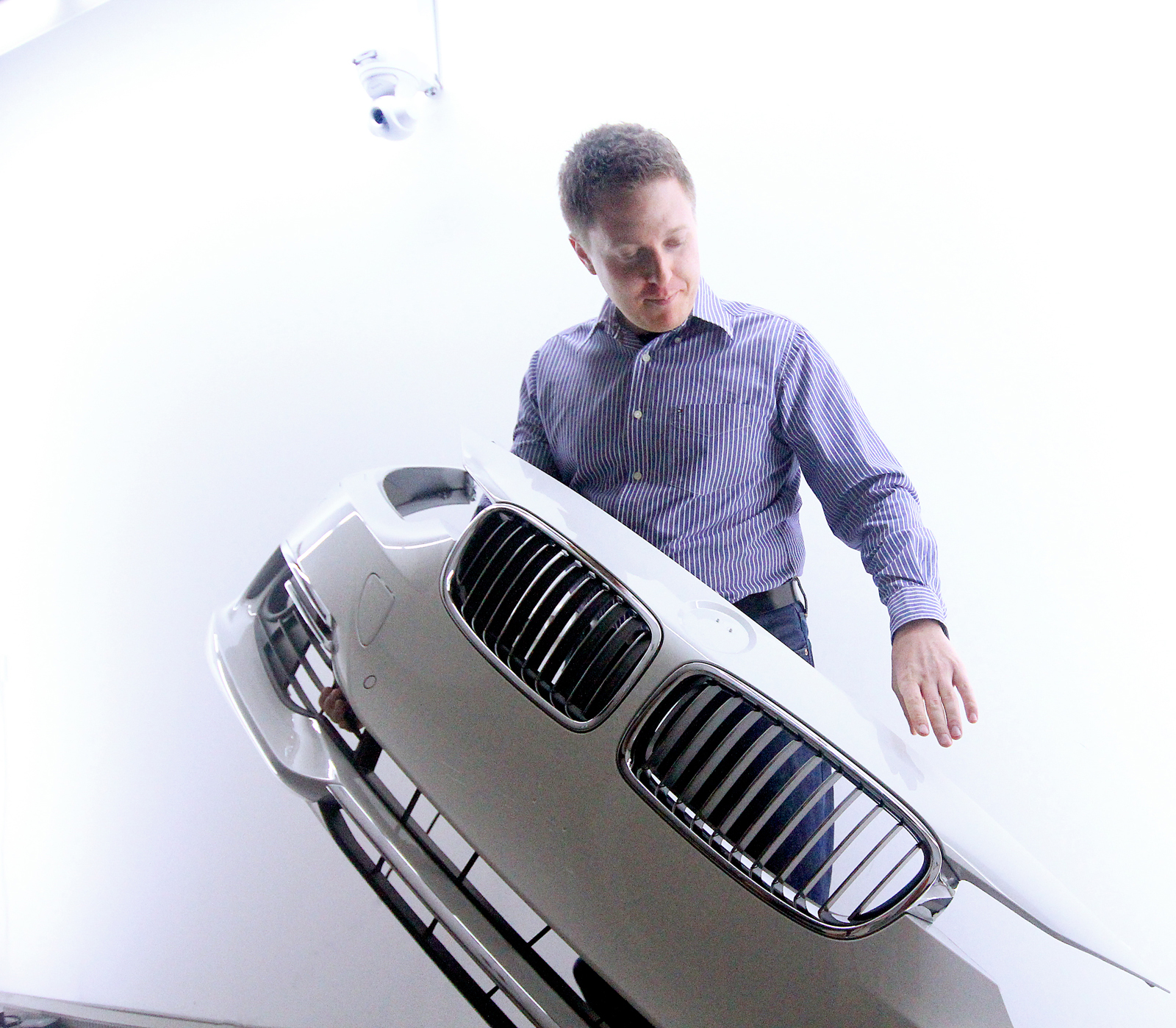
A point of the finger is all it takes to send the defect in the paint to the QS inspection system, store it and document it.
© Fraunhofer IOSB


For production operations, quality assurance over the process chain is indispensable: it is the only way to detect problems at an early stage and lower additional costs. Fraunhofer researchers developed an efficient type of quality control: With a pointing gesture, employees can input any detected defects to car body parts into the inspection system, and document them there. The non-contact gesture-detection process will be on display at the 2013 Hannover Messe from 8 to 12 April.

With utter meticulousness, the quality control inspector examines a car bumper for defects in the paint work – ultimately, only impeccable body parts get sent to final assembly. If he finds a defect in the paint, just a point of the finger is all it takes to send the defect to the QS inspection system, store it and document it. The employee obtains visual feedback through a monitor that displays a 3D reconstruction of the bumper. At first glance, it might seem completely futuristic, though soon enough, it could become an everyday part of quality assurance: Researchers at the Fraunhofer Institute for Optronics, System Technologies and Image Exploitation IOSB in Karlsruhe engineered the intelligent gesture control system on behalf of the BMW Group. In the future, it should supersede today’s time-consuming test procedures. “Previously, the inspector had to note all defects that were detected, leave his workstation, go to the PC terminal, operate multiple input screens and then label the position of the defect and the defect type. That approach is laborious, time-intensive and prone to error,” asserts Alexander Schick, scientist at IOSB. The gesture control system, by contrast, improves the inspector’s working conditions considerably, and triggering substantial time savings – the employee can remain at his workstation and interact directly with the test object. “If the bumper is fine, then he swipes over it from left to right. In the event of damage, he points to the location of the defect,” says Schick.

3D tracking records people and objects in real time

This non-contact gesture-detection system is based on 3D data. Hence, the entire workstation must first be reconstructed in 3D. That includes the individual as well as the object with which he is working. “What does the inspector look like? Where is he situated? How does he move? What is he doing? Where is the object? – all of these data are required so that the pointing gesture can properly link to the bumper,” ex-
plains the researcher. In order to enable gesture control, the experts apply 3D-body tracking, which records the individual’s posture in real time. Even the car body parts are “tracked.” When it comes to this, the hardware requirements are minimal: A standard PC and two Microsoft Kinect systems – consisting of camera and 3D sensors – suffice in order to realize the reconstruction. Schick and his team developed the corresponding algorithms, which fuse multiple 2D and 3D images together, specifically for this kind of application, and adapted them to the standards of the BMW Group.

“The breeding ground for this technology is our Smart Control Room, where people can interact with the room quite naturally. They can use pointing gestures to operate remote displays – without any additional equipment. The room recognizes what actions are taking place at that moment, and offers the appropriate information and tools. Since gesture detection does not depend on display screens, this means we can im-
plement applications that use no monitors, like the gesture interaction here with real objects,” explains Schick. “It makes no difference what kind of object we are dealing with. Instead of a bumper, we could also track a different part.”

The technology can be subsequently integrated into existing production systems at little expense. Scientists could incorporate their effective process into the BMW Group’s system through a specialized interface module. The gesture detection system will be presented at the 2013 Hannover Messe, from 8 to 12 April, at the Fraunhofer joint exhibition booth in Hall 2, Booth D18.

Plans call for the installation of a prototype model at the BMW plant in Landshut in January 2013. Working in cooperation with quality control inspectors, the system will be fine-tuned onsite before it gets deployed to production in the future.

Source: Fraunhofer-Gesellschaft

Saturday, 12 January 2013

Good vibrations: Scientists recently developed a new microvibration excitation device

Engineerblogger
Jan 12, 2013


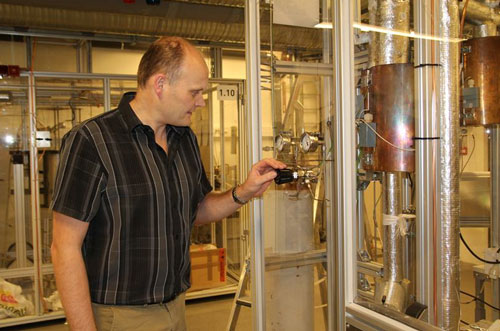
NPL scientists recently developed a new microvibration excitation device, which is currently under test at the European Space Agency (ESA) space test centre at ESTEC in Noordwijk, Holland.


The NPL excitation unit mounted on the ESA
Reaction Wheel Characterization Facility
 
The 'little shaker' device was produced as part of a technology research project for ESA to develop a prototype universal reference excitation unit which can be used to validate the performance of all kind of microvibration test facilities, traceable to ISO17025 levels of confidence and which can be deployed to perform inter facility comparison measurements.

The device is about the size of a shoe-box and generates small forces and torques (µN/µNm to single digit N/Nm range) at relatively low frequency (0.05 Hz to 10 Hz) in a controlled manner via reaction force against a moving mass. It can create force and torque along or about a single axis, and be repositioned in any orientation, to allow six-degree-of-freedom forces to be generated. The device is unique because there are currently no comparable means of producing highly repeatable forces and torques of this low magnitude in such a small, compact and portable mechanism.

Testing at the ESTEC space test center involved placing the device on Reaction Wheel Characterization Facility platform, activating it to create sinusoidal forces and moments in various orientations, and comparing the generated forces with those measured by the ESTEC facility.

Preliminary results are excellent and ESA now has a prototype device it can take to other facilities that will produce an identical drive signal, to allow comparisons of measurement results between facilities.

NPL was a natural partner for ESA on this project due to previous successful collaborations with challenging micro-thrust measurements. Additionally, NPL's role as the UK's National Measurement Institute provides confidence and experience in measurements traceable to primary standards and will be critical in allowing ESA to accredit their microvibration facility to the ISO 17025 standard in the future.

Source: NPL

Additional Information:

Sunday, 28 October 2012

Targeted dissolution: the new generation of implants

Engineerblogger
Oct 27, 2012


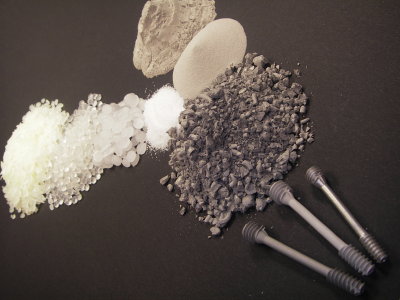
Metal powder injection molding: Top right the metal powders and polymer components left, center: the mixed Granualt. Below: component precursors, and the final Mg-Ca-bone screw to the right. [Photo:HZG/M. Wolff]


Is a paradigm shift imminent in the field of implant materials? Scientists at the Helmholtz Zentrum Geesthacht are engaged in research on biodegradable magnesium biomaterials which can be used as bone replacements in medical applications. They will present their research results from the 1st to 3rd November at the annual congress of the DGBM (German society for Biomaterials) in Hamburg.


When autumn arrives it brings wind and rain, leaves fall from the trees and settle on the ground. If someone slips on them, a bone can easily be broken. When a nail or a plate is required for the fixation of such a bone fracture, it is nowadays usually made of titanium, as this material is stable and well-tolerated by the human body. However, this foreign body must often be removed after the bone has healed, as there is otherwise a danger of inflammation or even bone loss.

According to Prof. Dr. Regine Willumeit, the head of the ‘Structural Research on Macromolecules’ department at the Helmholtz-Zentrum Geesthacht: “The aim of modern implant research is to develop a material which can be used in the body like a real replacement material. A biomaterial which at first supports the bone but then disappears of its own accord after the bone has recovered”.

Magnesium is excellently suited to this purpose. This element is naturally present in the human body and has the advantage that it can biodegrade in a pre-determined manner. It must, thereby, be both light and strong but also well-tolerated by the body. Research scientists at the Helmholtz-Zentrum in Geesthacht are therefore focussing their attention on this particular biomaterial.

The Helmholtz-Zentrum in Geesthacht has shown great expertise for many years in the research and production of prototypes for metallic biodegradable magnesium alloy implants. Material researchers are, for example, engaged in investigations into innovative magnesium-calcium alloys. These reveal material properties similar to those in bone; they are firm and at the same time elastic. Calcium appears to be well suited as an alloy as it would be able to degrade into non-toxic products in the body in the same way as magnesium. The degradation products would even be able to stimulate bone growth.

As Prof. Dr. Regine Willumeit explains: “ We are developing alloys in Geesthacht which have extremely promising properties for use in orthopaedic and traumatological applications. The colleagues at the Magnesium Innovations Center, MagIC, at the HZG, provide us with the starting material, we examine the factors which determine the degradation of the magnesium under physiological conditions”.

Scientists are not only engaged in research into the degradation process of the material itself. Tests are carried out in the Geesthacht laboratories in cell culture on the effects of the degradation on surrounding cells, for example. The scientists involved in this fundamental research into innovative implant materials have comprehensive analysis and test methods at their disposal.

As stable as bone, yet with good biodegradability


Would spare the second operation for removal of screws and plates: implant material of biodegradable magnesium [Photo: Istock 21545233]

The development of production processes is still causing researchers headaches. However, they have also made great progress in this area. The scientist Martin Wolff, from the powder technology department, has, for the first time, succeeded in producing magnesium-calcium bone screws by means of the metal powder injection molding process (MIM). 

As he explains: “The challenge in the case of magnesium lies in the high affinity of this material for oxygen. However, even small amounts of oxygen lead to dramatic changes in the mechanical properties of the component. Calcium, as an alloy partner, captures the oxygen in the production process during the so-called sintering procedure, and the material thus becomes firmer. This non-toxic alloying element has proved successful in achieving better results, at least in experiments. However, numerous further investigations now lie ahead, e.g. in cell culture and in the organism, before this material can be utilized as an implant material.

The Helmholtz researchers from Geesthacht will present their results at the Annual Congress of the Deutsche Gesellschaft für Biomaterialien, DGBM (German Society for Biomaterials), which is to be held at the Chamber of Commerce in Hamburg from 1st to 3rd of November 2012. The main focus this year will be on “Degradable Implants and Biomaterials”. The Congress will be led by Prof. Dr. Regine Willumeit.

Source:  Helmholtz Zentrum Geesthacht


Additional Information:
 
  • Poster Rapid Fire Presentation

New format for the presentation of research results. The scientist’s own research field and results must be clearly presented in only five minutes.
  • Metal powder injection moulding MIM

MIM uses injection moulding technology for the shaping process, which is also widely used in the field of plastics. The starting material is a fine metal powder which is mixed with a so-called binder. This mixture is fused at approx. 100 degrees centigrade. The binder is then chemically removed from the injection moulded part so that only the metal remains. The powder is compacted to the desired firm and dense body by means of a sintering process. 


Sunday, 9 September 2012

Using magnetism to understand superconductivity

Engineerblogger
Sept 10, 2012

 
© Brookhaven National Laboratory

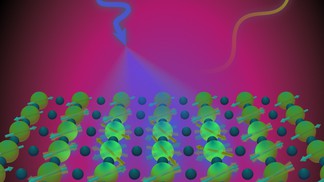
EPFL research in atomic scale magnetism could play a role in the development of new materials that could permit lossless electricity transmission.

Might it one day be possible to transmit electricity from an offshore wind turbine to land-based users without any loss of current? Materials known as “high temperature” superconductors (even though they must be maintained at -140°C!), which can conduct electricity without any losses, were supposed to make this dream a reality. But over the past twenty-five years, scientists have not been able to make any progress in this area. Research being done in collaboration between Brookhaven National Laboratory (BNL) and EPFL’s Laboratory for Quantum Magnetism (LQM) could change that. Their study of magnetism at extremely small scales could give physicists a tool to use in their search for new superconducting materials.

Studying a superthin layer

There are some ceramics that are excellent insulators at room temperature but that become perfect conductors when submersed in liquid nitrogen. However, this phenomenon, known as “high temperature” superconductivity, is not at all well understood by physicists. They theorize that at these temperatures, the collective quantum magnetic properties of the atoms in the material might come into play. But studying the magnetic properties of these materials at this minuscule scale would require years of effort.

Mark Dean, John Hill and Ivan Bozovic from Brookhaven National Laboratory (BNL), Thorsten Schmitt from Switzerland’s Paul Scherrer Institut (PSI), and Bastien Dalla Piazza and Henrik Ronnow from EPFL have unveiled the phenomena at work at this atomic scale. Using a unique device, the Brookhaven team created a layer just a single atom thick. Then, despite the material’s extreme thinness, the PSI scientists were able to use an ultrasensitive instrument to measure the magnetic dynamics of the atoms. And then EPFL provided the final piece of the puzzle, with mathematical models to analyze the measurements.

A long-awaited research tool


“We now have a kind of flashlight that will show us what direction we should take in our search,” explains Ronnow. Without understanding how these superconducting properties occurred at these temperatures, researchers were probing in the dark, using trial and error, to explore promising new materials. By combining these results with other recent work done by LQM researcher Nikolai Tsyrulin, the EPFL team has provided a new method to help physicists in their search for new superconductors. It’s a long-awaited step forward in the field; the Nobel Prize recognizing the discovery of high temperature superconductivity was awarded more than 25 years ago.

Promises for the future

Electrical resistance in traditional power lines leads to energy losses on the order of 3% in the electricity grid. At the scale of an entire country, this translates into several thousand gigawatts, which, in Switzerland’s case, would be the equivalent of the electricity consumption of a city the size of Geneva. “The energy challenges we face are significant; being able to use superconductivity won’t solve all of them, but it would nonetheless enable huge energy savings,” Ronnow adds.

Source: EPFL

Additional Information: 

Related Article:

Manufacturing crack-resistant lightweight components

Enginerblogger
Sept 9, 2012


In this test, the material sample is heated to welding temperature to determine its critical conditions for the formation of cold cracking.  © Chair of Joining and Welding Technology at the Brandenburg University of Technology

Cars, roof structures and bridges should become increasingly lighter, with the same stability, and thus save energy and materials. New high-strength steel is superbly suited for the needed lightweight design, because it can also withstand extremely heavy stresses. Yet these materials also betray a disadvantage: with increasing strength their susceptibility to cold cracking rises when welded. These miniscule fractures might form as the welded joints cool off – typically at temperatures below 200°C. In a worst case scenario, the welding seams would crack. For this reason, many industrial sectors are reluctant to employ these promising high-strength steel.

Scientists at the Fraunhofer Institute for Mechanics of Materials IWM in Freiburg, in conjunction with the Chair of Joining and Welding Technology LFT at Brandenburg University of Technology Cottbus (BTU) developed a new process for making cold cracking more predictable. “We are able to compute the probability of cold cracking as early as the design stage of a component, and immediately run through corrective measures as well,” explains Frank Schweizer of the IWM. Because whether such cold cracking occurs, and how quickly, depends on how high the concentration of hydrogen in the steel is, how the residual stress turns out, and how its microstructure is configured. Predicting the probability of cracking has been difficult until now. Manufacturers used to conduct expensive testing, for example by applying an increasingly higher tensile stress to a sample component, and then analyse what stress level would cause cracking. Not only are these tests time-consuming and cost-intensive, the findings can-
not be applied to subsequent components on a one-to-one basis – because the geometry of the component has a decisive influence on crack formation. Even currently available computer simulations failed to deliver the desired predictive accuracy for real components.

Lowering production costs, shortening development phases

The new approach could markedly reduce such costly methods in the future – and thus lower production costs while shortening development phases. The experts at LFT set up a special test, in order to precisely determine the cracking criterion on samples of highstrength steel. Beside typical influencing factors like hydrogen content, residual stresses and material structures that can be adjusted in at the same time, they also take into account the temperature gradients that emerge in the welding process.

The experts at IWM feed a computer simulation with this criterion in order to analyze the threat of cold cracking in random components and geometries. “This way, we can locate the areas on a welding seam at risk of cold cracking, for each point and at any time in the simulated welding process,” explains Frank Schweizer. The researchers can also get a preliminary look at the effects of any countermeasures, and make the necessary adjustments. To do so, they transfert the results back into the simulation, in order to fine-tune them there.

In the future, with the aid of this process, manufacturers of vehicles and machines could be able to define non-critical welding parameters and limiting conditions for their materials in advance – and thus establish a substantially more efficient and safer production process. This is especially relevant to materials that are difficult to weld, with very narrow processing windows regarding welding parameters or the pre- and post-heating temperatures. Fraunhofer IWM and LFT, in cooperation with Robert Bosch GmbH and ThyssenKrupp Steel Europe AG, are currently testing their new process on laser beam-welded demonstration models made of high-strength steels.

Thursday, 19 July 2012

The Artificial Finger: New ultracapacitor delivers a jolt of energy at a constant voltage

Engineerblogger
June 19, 2012


To touch something is to understand it – emotionally and cognitive. It´s one of our important six senses, which we use and need in our daily lives. But accidents or illnesses can disrupt us from our sense of touch

To touch something is to understand it – emotionally and cognitive. It´s one of our important six senses, which we use and need in our daily lives. But accidents or illnesses can disrupt us from our sense of touch.

Now European researchers of the projects NanoBioTact and NanoBioTouch delve deep into the mysteries of touch and have developed the first sensitive artificial finger.
The main scientific aims of the projects are to radically improve understanding of the human mechano-transduction system and tissue engineered nanobiosensors. Therefore an international and multi disciplinary team of 13 scientific institutes, universities and companies put their knowledge together. “There are many potential applications of biometric tactile sensoring, for example in prosthetic limbs where you´ve got neuro-coupling which allows the limb to sense objects and also to feed back to the brain, to control the limb. Another area would be in robotics where you might want the capability to have sense the grip of objects, or intelligent haptic exploration of surfaces for example”, says Prof. Michael Adams, the coordinator of NanoBioTact.

The scientists have already developed a prototype of the first sensitive artificial finger. It works with an array of pressure sensors that mimic the spatial resolution, sensitivity and dynamics of human neural tactile sensors and can be directly connected to the central nervous system. Combined with an artificial skin that mimics a human fingerprint, the device´s sensitivity to vibrations is improved. Depending on the quality of a textured surface, the biomimetic finger vibrates in different ways, when it slides across the surface. Thereby it produces different signals and once it will get used by patients, they could recognise if the surface is smooth or scratchy. “The sensors are working very much like the sensors are doing on your own finger”, says physicist Dr. Michael Ward from the School of Mechanical Engineering at the University of Birmingham.

Putting the biomimetic finger on artificial limbs would take prostheses to the next level. “Compared to the hand prostheses which are currently on the market, an integrated sense of touch would be a major improvement. It would be a truly modern and biometric device which would give the patient the feeling as if it belonged to his own body”, says Dr. Lucia Beccai from the Centre for Micro-Robotics at the Italian Institute for Technology. But till the artificial finger will be available on large scale a lot of tests will have to be done. Nevertheless with the combination of computer and cognitive sciences, nano- and biotechnology the projects NanoBioTact and NanoBioTouch have already brought us a big step closer to artificial limbs with sensitive fingers!

Source: Youris

Tuesday, 10 July 2012

Keeping electric vehicle batteries cool

Engineerblogger
July 10, 2012


Heat can damage the batteries of electric vehicles – even just driving fast on the freeway in summer temperatures can overheat the battery. An innovative new coolant conducts heat away from the battery three times more effectively than water, keeping the battery temperature within an acceptable range even in extreme driving situations.


Batteries provide the “fuel” that drives electric cars – in effect, the vehicles’ lifeblood. If batteries are to have a long service life, overheating must be avoided. A battery’s “comfort zone” lies between 20°C and 35°C. But even a Sunday drive in the midday heat of summer can push a battery’s temperature well beyond that range. The damage caused can be serious: operating a battery at a temperature of 45°C instead of 35°C halves its service life. And batteries are expensive – a new one can cost as much as half the price of the entire vehicle. That is why it is so important to keep them cool. Thus far, conventional cooling systems have not reached their full potential: either the batteries are not cooled at all – which is the case with ones that are simply exchanged for a fully charged battery at the “service station” – or they are air cooled. But air can absorb only very little heat and is also a poor conductor of it. What’s more, air cooling requires big spaces between the battery’s cells to allow sufficient fresh air to circulate between them. Water-cooling systems are still in their infancy. Though their thermal capacity exceeds that of air-cooling systems and they are better at conducting away heat, their downside is the limited supply of water in the system compared with the essentially limitless amount of air that can flow through a battery.
More space under the hood

In future, another option will be available for keeping batteries cool – a coolant by the name of CryoSolplus. It is a dispersion that mixes water and paraffin along with stabilizing tensides and a dash of the anti-freeze agent glycol. The advantage is that CryoSolplus can absorb three times as much heat as water, and functions better as a buffer in extreme situations such as trips on the freeway at the height of summer. This means that the holding tank for the coolant can be much smaller than those of watercooling systems – saving both weight and space under the hood. In addition, CryoSolplus is good at conducting away heat, moving it very quickly from the battery cells into the coolant. With additional costs of just 50 to 100 euros, the new cooling system is only marginally more expensive than water cooling. The coolant was developed by researchers at the Fraunhofer Institute for Environmental, Safety and Energy Technology UMSICHT in Oberhausen.

As CryoSolplus absorbs heat, the solid paraffin droplets within it melt, storing the heat in the process. When the solution cools, the droplets revert to their solid form. Scientists call such substances phase change materials or PCMs. “The main problem we had to overcome during development was to make the dispersion stable,” explains Dipl.-Ing. Tobias Kappels, a scientist at UMSICHT. The individual solid droplets of paraffin had to be prevented from agglomerating or – as they are lighter than water – collecting on the surface of the dispersion. They need to be evenly distributed throughout the water. Tensides serve to stabilize the dispersion, depositing themselves on the paraffin droplets and forming a type of protective coating. “To find out which tensides are best suited to this purpose, we examined the dispersion in three different stress situations: How long can it be stored without deteriorating? How well does it withstand mechanical stresses such as being pumped through pipes? And how stable is it when exposed to thermal stresses, for instance when the paraffin particles freeze and then thaw again?” says Kappels. Other properties of the dispersion that the researchers are optimizing include its heat capacity, its ability to transfer heat and its flow capability. The scientists’ next task will be to carry out field tests, trying out the coolant in an experimental vehicle.


Source: Fraunhofer-Gesellschaft

Tuesday, 3 July 2012

Researcher offers new insights into power-generating windows

Engineerblogger
July 2, 2012


(beeld: Eric Verdult, Kennis in Beeld)

On 5 July Jan Willem Wiegman is graduating from TU Delft with his research into power-generating windows. The Applied Physics Master’s student calculated how much electricity can be generated using so-called luminescent solar concentrators. These are windows which have been fitted with a thin film of material that absorbs sunlight and directs it to narrow solar cells at the perimeter of the window. Wiegman shows the relationship between the colour of the material used and the maximum amount of power that can be generated. Such power-generating windows offer potential as a cheap source of solar energy. Wiegman’s research article, which he wrote together with his supervisor at TU Delft, Erik van der Kolk, has been published in the journal Solar Energy Materials and Solar Cells("Building integrated thin film luminescent solar concentrators: Detailed efficiency characterization and light transport modelling").

Windows and glazed facades of office blocks and houses can be used to generate electricity if they are used as luminescent solar concentrators. This entails applying a thin layer (for example a foil or coating) of luminescent material to the windows, with narrow solar cells at the perimeters. The luminescent layer absorbs sunlight and guides it to the solar cells at the perimeter, where it is converted into electricity. This enables a large surface area of sunlight to be concentrated on a narrow strip of solar cells.

The new stained glass

Luminescent solar concentrators are capable of generating dozens of watts per square metre. The exact amount of power produced by the windows depends on the colour and quality of the light-emitting layer and the performance of the solar cells. Wiegman’s research shows for the first time the relationship between the colour of the film or coating and the maximum amount of power.

A transparent film produces a maximum of 20 watts per square metre, which is an efficiency of 2%. To power your computer you would need a window measuring 4 square metres. The efficiency increases if the film is able to absorb more light particles. This can be achieved by using a foil that absorbs light particles from a certain part of the solar spectrum. A foil that mainly absorbs the blue, violet and green light particles will give the window a red colour. Another option is to use a foil that absorbs all the colours of the solar spectrum equally. This would give the window a grey tint. Both the red and the grey film have an efficiency of 9%, which is comparable to the efficiency of flexible solar cells.

Wiegman’s research has also shown the importance of a smooth film surface for the efficient transport of light particles to the perimeter of the window as they are then not impeded by scattering between the film and the window surface.

The research into power-generating windows is in keeping with the European ambition to make buildings as energy neutral as possible. Luminescent solar concentrators are a good way of producing cheap solar energy.

Source: TU Delft

Additional Information:

  • Visit the research website for more information about research into luminescent materials

Sunday, 24 June 2012

Science: Breaking the limits of classical physics

Engineerblogger
June 24, 2012


In the quantum optical laboratories at the Niels Bohr
Institute, researchers have conducted experiments that show
that light breaks with the classical physical principles. The
studies show that light can have both an electrical and a
magnetic field, but not at the same time. That is to say, light
has quantum mechanical properties.

With simple arguments, researchers show that nature is complicated! Researchers from the Niels Bohr Institute have made a simple experiment that demonstrates that nature violates common sense – the world is different than most people believe. The experiment illustrates that light does not behave according to the principles of classical physics, but that light has quantum mechanical properties. The new method could be used to study whether other systems behave quantum mechanically. The results have been published in the scientific journal, Physical Review Letters.

In physics there are two categories: classical physics and quantum physics. In classical physics, objects, e.g. a car or a ball, have a position and a velocity. This is how we classically look at our everyday world. In the quantum world objects can also have a position and a velocity, but not at the same time. At the atomic level, quantum mechanics says that nature behaves quite differently than you might think. It is not just that we do not know the position and the velocity, rather, these two things simply do not exist simultaneously. But how do we know that they do not exist simultaneously? And where is the border of these two worlds? Researchers have found a new way to answer these questions.

Light on quantum mechanics

“Our goal is to use quantum mechanics in a new way. It is therefore important for us to know that a ‘system’ really behaves in a way that has no classical explanation. To this end, we first examined light,” explains Eran Kot, PhD-student in the research group, Quantum Optics at the Niels Bohr Institute at the University of Copenhagen.

Based on a series of experiments in the quantum optics laboratories, they examined the state of light. In classical physics, light possesses both an electric and a magnetic field.

“What our study demonstrated was that light can have both an electric and a magnetic field, but not at the same time. We thus provide a simple proof that an experiment breaks the classical principles. That is to say, we showed light possesses quantum properties, and we can expand this to other systems as well” says Eran Kot.

Classical and non-classical mechanics

The aim of the research is both to fundamentally understand the world, but there is also a practical challenge in being able to exploit quantum mechanics in larger contexts. For light it is no great surprise that it behaves quantum mechanically, but the methods that have been developed can also be used to study other systems.

“We are endeavoring to develop future quantum computers and we therefore need to understand the borders for when something behaves quantum mechanically and when it is classical mechanics,” says professor of quantum physics Anders S. Sørensen, explaining that quantum computing must necessarily be comprised of systems with non-classical properties.

Source: University of Copenhagen

Thursday, 21 June 2012

Stars, Jets and Batteries – multi-faceted magnetic phenomenon confirmed in the laboratory for the first time

Engineerblogger
June 21, 2012


Magnetic instabilities play a crucial role in the emergence of black holes, they regulate the rotation rate of collapsing stars and influence the behavior of cosmic jets. In order to improve understanding of the underlying mechanisms, laboratory experiments on earth are necessary. At the Helmholtz- Zentrum Dresden-Rossendorf (HZDR), confirmation of such a magnetic instability – the Tayler instability – was successfully achieved for the first time in collaboration with the Leibniz Institute for Astrophysics in Potsdam (AIP). The findings should be able to facilitate construction of large liquid-metal batteries, which are under discussion as cheap storage facilities for renewable energy.

The Tayler instability is being discussed by astrophysicists in reference to, among other things, the emergence of neutron-stars. Neutron stars, according to the theory, would have to rotate much faster than they actually do. The mysterious braking-effect has meanwhile been attributed to the influence of the Tayler instability, which reduces the rotation rate from 1,000 rps down to approximately 10 to 100 rps. Structures similar in appearance to the double-helix of DNA have been occasionally observed in cosmic jets, i.e. streams of matter, which emanate vertically out of the rotating accretion discs near black holes.

Liquid Metal Batteries – Energy Storage Facilities for the Future?

The Tayler instability also affects large-scale liquid metal batteries, which, in the future, could be used for renewable energy storage.

The magnetic phenomenon, observed for the first time in the laboratory at the Helmholtz-Zentrum Dresden-Rossendorf, was predicted in theory by R.J. Tayler in 1973. The Tayler instability always appears when a sufficiently strong current flows through an electrically conductive liquid. Starting from a certain magnitude, the interaction of the current with its own magnetic field creates a vortical flow structure. Ever since their involvement with liquid-metal batteries, HZDR scientists have been aware of the fact that this phenomenon can take effect not only in space but on earth as well. The future use of such batteries for renewable energy storage would be more complicated than originally thought due to the emergence of the Tayler instability during charging and discharging.

American scientists have developed the first prototypes and assume that the system could be easily scaled up. The HZDR physicist Dr. Frank Stefani is skeptical: “We have calculated that, starting at a certain current density and battery dimension, the Tayler instability emerges inevitably and leads to a powerful fluid flow within the metal layers. This stirs the liquid layers, and eventually a short circuit occurs.” In the current edition of the “Physical Review Letters”, the team directed by Stefani – together with colleagues from AIP led by Prof. Günther Rüdiger – reported on the first successful experiment to prove the Tayler instability in a liquid metal. Here a liquid alloy at room temperature consisting of indium, gallium and tin is deployed, through which a current as high as 8,000 amps is sent. In order to exclude other causes for the observed instability such as irregularities in conductivity, the researchers intentionally omitted the implementation of velocity sensors; instead, they used 14 highly-sensitive magnetic field sensors. The data collected indicate the growth rate and critical streaming effects of the Tayler instability, and these data remarkably correspond to the numerical predictions.

How liquid batteries work

Working principle of a liquid metal battery (pictures: Tom Weier, HZDR)

In the context of the smaller American prototypes the Tayler instability does not occur at all, but liquid batteries have to be quite large in order to make them economically feasible. Frank Stefani explains: “I believe that liquid-metal batteries with a base area measured in square meters are entirely possible. They can be manufactured quite easily in that one simply pours the liquids into a large container. They then independently organize their own layer structure and can be recharged and discharged as often as necessary. This makes them economically viable. Such a system can easily cope with highly fluctuating loads.” Liquid-metal batteries could thus always release excessive-supply current when the sun is not shining or the wind turbines are standing still.

The basic principle behind a liquid-metal battery is quite simple: since liquid metals are conductive, they can serve directly as anodes and cathodes. When one pours two suitable metals into a container so that the heavy metal is below and the lighter metal above, and then separates the two metals with a layer of molten salt, the arrangement becomes a galvanic cell. The metals have a tendency to form an alloy, but the molten salt in the middle prevents them from direct mixing. Therefore, the atoms of one metal are forced to release electrons. The ions thus formed wander through the molten salt. Arriving at the site of the other metal, these ions accept electrons and alloy with the second metal. During the charging process, this process is reversed and the alloy is broken up into its original components. In order to avoid the Tayler instability within big batteries – meaning a short circuit – Stefani suggests an internal tube through which the electrical current can be guided in reverse direction. This allows the capacity of the batteries to be considerably increased.

Cosmic magnetic fields in a laboratory experiment

Lab simulation of the Tayler instability: magnetic field sensors detecting the magnetic fields. The Tayler instability occurs whenever the electrical current sent through a liquid metal is high enough. (picture: AIP/HZDR)

Rossendorf researchers together with colleagues from Riga were equally successful in 1999 in their first-time-ever experimental proof of the homogenous dynamo-effect, which is responsible for the creation of the magnetic fields in both the earth and the sun. In a joint project with the Leibniz-Institut für Astrophysik Potsdam, it was possible in 2006 to recreate the so-called magneto-rotational instability in the laboratory, which enables the growth of stars and black holes. In the context of the future project DRESDYN, the researchers are currently preparing two large experiments with liquid sodium, with which the dynamo-effect is to be examined under the influence of precession, on the one hand, and a combination of magnetic instabilities on the other.
 
Source: The Institute of Fluid Dynamics at Helmholtz-Zentrum Dresden-Rossendorf

Additional Information:

Publications
  • Frank Stefani et al.: How to circumvent the size limitation of liquid metal batteries due to the Tayler instability, in: Energy Conversion and Management 52 (2011), 2982-2986, DOI: 10.1016/j.enconman.2011.03.003

Monday, 18 June 2012

Nanotecnology: Thinner than a pencil trace

Engineerblogger
June 19, 2012


Jari Kinaret

Energy-efficient, high-speed electronics on a nanoscale and screens for mobile telephones and computers that are so thin they can be rolled up. Just a couple of examples of what the super-material graphene could give us.But is European industry up to making these visions a reality?

​Seldom has a Nobel Prize in physics sparked the imagination of gadget nerds to such an extent. When Andrej Geim and Konstantin Novoselov at the University of Manchester were rewarded in 2010 for their graphene experiments, it was remarkably easy to provide examples of future applications, mainly in the form of consumer electronics with a level of performance that up to now was virtually inconceivable.

It's not just the IT sector that is watering at the mouth at the thought of graphene. Even in the energy, medical and material technology sectors there are high hopes of using these spectacular properties. Perhaps talk of a future carbon-based technical revolution was no exaggeration.
Even if graphene has not attracted a great deal of attention in the media recently, the research world has been working feverishly behind the scenes. Last year, around 6,000 scientific articles were published worldwide in which the focus was on graphene. About six months ago, new research results were published that reinforced more than ever the idea of graphene as a potential replacement for silicon in the electronics of the future.

"As late as last autumn this was still a long-term goal bearing in mind the major challenges that are involved," explains Professor Jari Kinaret, Head of the Nanoscience Area of Advance at Chalmers. "Then a pioneering publication appeared from Manchester showing that graphene could be combined with other similar two-dimensional materials in a sandwich structure."
"The power consumption of a transistor built using this principle would be just one millionth or so compared to previous prototypes."

Jari Kinaret also heads Graphene Coordinated Action, an initiative to reinforce and bring together graphene research within the EU.
In line with the growing interest in graphene throughout the world, the EU is at risk of losing ground – particularly in applied research.

"Integrating the whole chain, from basic research to product, is something that we are by tradition not particularly skilled at in Europe compared with the Asians or the Americans," explains Jari Kinaret. He presents a pie graph on the computer to illustrate his point.
The first graph shows that to date academic research into graphene has been split fairly evenly split between the USA, Asia and Europe. However, the pie graph showing patent applications from each region is strikingly similar to the size relationship between Jupiter, Saturn and Mars.

"Something is wrong here and we're going to fix it," states Jari Kinaret.
The idea is that the research groups that are currently working independently of each other will be linked in a network and will be able to benefit from each other's results.
This planned European gathering of strengths, however, presupposes more funding, which is on the horizon in the form of "scientific flagships" – the EU Commission designation for the high-profile research initiatives with ten-year funding due to be launched next year.

Last year, Graphene Coordinated Action was named as one of the six pilot projects with a chance of being raised to flagship status. This would mean a budget of around SEK 10 billion throughout the whole period.
The downside is that only two flagships will be launched, leaving four pilots standing.
"If we are selected, it would mean a substantial increase in grants for European graphene research – up to 50 per cent more than at present," states Jari Kinaret.

"If we are unsuccessful, then hopefully we will at least retain our present financial framework."
Jari Kinaret has recently submitted the project's final report to the Commission. He is optimistic about their chances.
"One of our obvious strengths is the level of scientific excellence. Nobel Prize Winners Geim and Novoselov are members of our strategy committee along with a further two Nobel Prize Winners. That's hard to beat."
Alongside aspects bordering on science fiction, there is a very tangible side to graphene.
The fact is that now and then most people produce a little graphene –inadvertently of course. And some even eat graphene.

The link between nanoscience and daily life is the lead pencil. From its tip, a layer of soft graphite is transferred onto the surface of the paper when we draw and write. (At the same time, some of us chew the other end as we think).
If we were to study a strongly magnified pencil trace, a layer of graphite would be seen that is perhaps 100 atom layers thick. However, the outer edge of the trace becomes thinner and increasingly transparent and at some point the layer becomes so thin it comprises just one single layer of carbon atoms.
That's where it is – the graphene. It is also the background to the motto adopted by
Graphene Coordinated Action: The future in a pencil trace.
At the stroke of a pencil, the future of this planned research initiative will be decided towards the end of this year when the secret EU Commission jury will decide which of the two pilots will share the billions available for research.


ABOUT GRAPHENE
Graphene is a form of graphite, i.e. carbon, which comprises one single cohesive layer of atoms. It is super-thin, super-strong and transparent. It can be bent and stretched and it has a singular capacity to conduct both electricity and heat.
The existence of graphene has been known for a long time although in 2004 Geim and Novoselov succeeded in producing flakes of material in an entirely new way – by breaking it away from the graphite with the aid of standard household tape.
Graphene nowadays is also produced using other methods.
The centre of Swedish graphene research is Chalmers.


SOON ON TOUCH SCREENS AND IN MOBILE PHONES
The emphasis in Graphene Coordinated Action is on applied research. Ultimately, there is the potential somewhere on the horizon to build up a European industry around graphene and similar two-dimensional materials – both as components and finished products. Consequently, several large companies are included in the network, including mobile phone manufacturer Nokia.
"As graphene is both transparent and conductive, it is obviously of interest for use in the touchscreens and displays of the future. But graphene could also be used in battery technology or as reinforcement in the shell of mobile telephones," states Claudio Marinelli at the Nokia Research Department in Cambridge, England.
At Nokia, research has been conducted for a couple of years on potential applications for graphene within mobile communication. Claudio Marinelli estimates that by 2015 at the latest Nokia will be using graphene in one application or another in its telephones.
"Even when it comes to identification and other data transfer via the screen, technology based on graphene is conceivable," he says.
Farther down the line, he believes that the bendability and flexibility of graphene could become part of mobile communication and be used in products that at present we might find a little difficult to imagine.
"We believe that graphene technology will have a major impact on our business area. That is why it was an obvious move for us to be involved in this research project."

Source: Chalmers University of Technology

Green Energy: The Great German Energy Experiment

Technology Review
June 19, 2012
 
These wind turbines under construction in Görmin, Germany, are among more than 22,000 installed in that country. Credit: Sean Gallup | Getty

Germany has decided to pursue ambitious greenhouse-gas reductions—while closing down its nuclear plants. Can a heavily industrialized country power its economy with wind turbines and solar panels?

Along a rural road in the western German state of North Rhine–Westphalia lives a farmer named Norbert Leurs. An affable 36-year-old with callused hands, he has two young children and until recently pursued an unremarkable line of work: raising potatoes and pigs. But his newest businesses point to an extraordinary shift in the energy policies of Europe's largest economy. In 2003, a small wind company erected a 70-meter turbine, one of some 22,000 in hundreds of wind farms dotting the German countryside, on a piece of Leurs's potato patch. Leurs gets a 6 percent cut of the electricity sales, which comes to about $9,500 a year. He's considering adding two or three more turbines, each twice as tall as the first.

The profits from those turbines are modest next to what he stands to make on solar panels. In 2005 Leurs learned that the government was requiring the local utility to pay high prices for rooftop solar power. He took out loans, and in stages over the next seven years, he covered his piggery, barn, and house with solar panels—never mind that the skies are often gray and his roofs aren't all optimally oriented. From the resulting 690-kilowatt installation he now collects $280,000 a year, and he expects over $2 million in profits after he pays off his loans.

Stories like Leurs's help explain how Germany was able to produce 20 percent of its electricity from renewable sources in 2011, up from 6 percent in 2000. Germany has guaranteed high prices for wind, solar, biomass, and hydroelectric power, tacking the costs onto electric bills. And players like Leurs and the small power company that built his turbine have installed off-the-shelf technology and locked in profits. For them, it has been remarkably easy being green.

What's coming next won't be so easy. In 2010, the German government declared that it would undertake what has popularly come to be called an Energiewende—an energy turn, or energy revolution. This switch from fossil fuels to renewable energy is the most ambitious ever attempted by a heavily industrialized country: it aims to cut greenhouse-gas emissions 40 percent from 1990 levels by 2020, and 80 percent by midcentury. The goal was challenging, but it was made somewhat easier by the fact that Germany already generated more than 20 percent of its electricity from nuclear power, which produces almost no greenhouse gases. Then last year, responding to public concern over the post-tsunami nuclear disaster in Fukushima, Japan, Chancellor Angela Merkel ordered the eight oldest German nuclear plants shut down right away. A few months later, the government finalized a plan to shut the remaining nine by 2022. Now the Energiewende includes a turn away from Germany's biggest source of low-­carbon electricity.

Germany has set itself up for a grand experiment that could have repercussions for all of Europe, which depends heavily on German economic strength. The country must build and use renewable energy technologies at unprecedented scales, at enormous but uncertain cost, while reducing energy use. And it must pull it all off without undercutting industry, which relies on reasonably priced, reliable power. "In a sense, the Energiewende is a political statement without a technical solution," says Stephan Reimelt, CEO of GE Energy Germany. "Germany is forcing itself toward innovation. What this generates is a large industrial laboratory at a size which has never been done before. We will have to try a lot of different technologies to get there."

The major players in the German energy industry are pursuing several strategies at once. To help replace nuclear power, they are racing to install huge wind farms far off the German coast in the North Sea; new transmission infrastructure is being planned to get the power to Germany's industrial regions. At the same time, companies such as Siemens, GE, and RWE, Germany's biggest power producer, are looking for ways to keep factories humming during lulls in wind and solar power. They are searching for cheap, large-scale forms of power storage and hoping that computers can intelligently coördinate what could be millions of distributed power sources.
To read more click here...

Sunday, 17 June 2012

Green Fuel from Carbon Dioxide: Freiburg Research Team Develops Method for Sustainable Use of CO2

Engineerblogger
June 16, 2012


Doctoral candidate Elias Frei controls the temperature in the reactor of the catalyst test device. Source: FMF

It is beyond dispute that carbon dioxide (CO2) has an effect on global warming as a greenhouse gas, but we still pump tons and tons of CO2 into the atmosphere every day. A research team at the Freiburg Materials Research Center (FMF) led by the chemist Prof. Dr. Ingo Krossing has now developed a new system for producing methanol that uses CO2 and hydrogen. Methanol can, for example, be used as an environmentally friendly alternative for gasoline. The goal of the scientists is to harness the power of CO2 on a large scale and integrate it into the utilization cycle as a sustainable form of energy production.

In order to produce methanol, Krossing’s doctoral candidates combine the carbon dioxide with hydrogen in a high pressure environment, a process known as hydrogenolysis. Doctoral candidate Elias Frei has already been conducting research on methanol for several years. “Our goal is to develop new catalyst systems and methods for accelerating the chemical reaction even more,” explains Frei. The researchers at FMF use the metal oxides copper, zinc, and zirconium dioxide as catalysts, enabling the reaction to happen at lower temperatures. In this way, the gases don’t have to be heated as much. Together the catalysts form a so-called mixed system of surface-rich porous solid matter with defined properties. If the catalysts consist of nanoparticles, their activity is increased even more.

Frei and his colleague Dr. Marina Artamonova are also testing techniques in which the catalysts are impregnated with ionic liquids, salts in a liquid state that cover the catalyst like a thin film. They help to fix CO2 and hydrogen to the catalyst and remove the products methanol and water from it. This conversion leads to the production of pure methanol, which is used as a component in the chemical industry and as a fuel. When used as an alternative to gasoline it is less dangerous and less harmful to the environment than conventional fuels. In around two years, the researchers aim to be able to produce methanol on a mass scale according to this technique. Then the CO2 will be filtered out of the waste gas stream of a combined heat and power plant and used to produce methanol. When methanol is burned in a motor, CO2 is released again. If the same molecule were used twice, it would theoretically be possible to use 50 percent less CO2 to create the same amount of energy. The amount of methanol that could be converted from 10 percent of the yearly CO2 emissions in Germany would cover the country’s yearly fuel needs.

Methanol is also used as a chemical means of hydrogen storage and could thus also be used to power the fuel cells of automobiles in the future. “There is enough energy out there, but it needs to be stored,” says Frei. “As a sustainable means of energy storage, methanol has potential in a wide range of areas. We want to use that potential, because the storage and conversion of energy are important topics for the future.”

Source:  University of Freiburg

Monday, 11 June 2012

Scientists create plastic that emits light when pulled

Engineerblogger
June 11, 2012

The plastic that emits light when pulled. Photo: Bart van Overbeeke.

Scientists at TU/e for the first time succeeded in creating a plastic that emits light when pulled. The researchers can make the plastic emit red, yellow, blue and green light. The results were published online in Nature Chemistry.

The researchers incorporate an additional element in the plastic molecules, a molecular ring called dioxetane. When the plastic is pulled hard enough, the ring breaks open and emits light.

The plastic only gives light as long as it is pulled. When the plastic is completely torn apart, a flash of light is seen because a lot of molecular rings break at the same time.

Tensile strength
The research has mainly been driven by fundamental scientific questions. The researchers were looking for possibilities of mechanical forces to unlock new types of chemistry, says Professor of Supramolecular Polymer Chemistry Rint Sijbesma.

However, he does see a very suitable application of the invention. The transmitted light makes it possible to very accurately see where, when and how polymers break. In this way the collapse behaviour of polymers can be studied in detail.

Luminous rods are different
The principle is quite different, by the way, from that of the luminous rods that are used at concerts, et cetera. When these rods are bend and broken inside, two liquids mix, creating a new chemical substance. This material starts to fall apart spontaneously, at the same time emitting light.

Source:  Eindhoven University of Technology  

Saturday, 9 June 2012

A solar sandwich to power future buildings

Engineerblogger
June 9, 2012


© Silly Little Man / Flickr under creative commons license

All in one: A new electricity generating building component is being developed at EPFL

Most modern buildings are composed of several layers of materials, each with its own important function: the concrete core supports its weight; the insulation regulates its heat exchange; the facade contributes to its aesthetics. Now, engineers at EPFL are developing a single building block that does all of that, and produces electricity. This new component will provide a sleek alternative to traditional construction materials, and will be lighter, safer, and more energy efficient.

“We use a composite sandwich construction to make this multi-functional building element,” explains Thomas Keller of the Composite Construction Laboratory (CCLab). The sandwich comprises a dense foam interior encased between layers of glass-fibre reinforced polymer. “We started working on these composite materials over 10 years ago and used them in 2009 for the roof of the Main Entrance Building at the Novartis Campus in Basel, Switzerland,” he says.

That was before trying to add electricity generation to the mix. “Now our goal is to encapsulate a thin flexible sheet of photovoltaic cells beneath a translucent layer of glass fiber reinforced polymer,” he continues. If they succeed, this material could contribute to making solar panels more attractive to architects by offering them more flexibility than traditional construction materials based on reinforced concrete, rigid solar panels, and glass.

The solar cell technology comes from Flexcell, an EPFL startup that became famous for its flexible sheets of photovoltaic cells, as thin as a sheet of paper. Despite lower efficiencies than conventional photovoltaic cells, their light weight, small volume, and low production costs make them ideal for encapsulation into building elements. And the ease of fitting curved surfaces with them will open new avenues in sustainable architectural design.

On top of that there are the other, already demonstrated advantages of these lightweight sandwich components. Prefabrication means that they can be assembled in a factory under ideal conditions before being transported to the construction site, increasing the quality and the safety of the buildings and shortening construction times. And since they are modular, individual elements are easy to repair or to replace if they fail.

Perfecting the ingredients

The glass fiber reinforced polymer (GFRP) plays a double role in this sandwich. A layer of GFRP a few millimeters thick encases the foam core, giving the building block its remarkable stability. Another layer of it encapsulates and protects the solar cells, drawing on an interesting optical property of the GFRP: when applied thinly, it is almost as transparent as glass, with an optical transmittance only four percent lower. Currently, a PhD student at the CCLab is perfecting this layer’s thickness to find the best compromise between structural stability and optical translucence.

“Besides the optical issues,” says Keller, “we are dealing with temperature related issues. Heating the resin leads to a loss of efficiency in light transmission. Beyond a certain critical temperature, the material could degrade and fail to recover its original state when it cools down.” But so far it has withstood temperatures beyond those expected even in the hotter parts of the world, without showing signs of degradation.

Not yet two years in to the project, the scientists involved are optimistic. Solar electricity generation is here to stay, and considering the widespread use of curved concrete surfaces in contemporary architecture, there could be great potential for this new solar sandwich.

Source:  Ecole Polytechnique Federale de Lausanne

Related Links:

Artificial muscle as shock absorber

Engineerblogger
June 8, 2012


This image shows the lattice-shaped electrode in the foreground, and the elastomer in the background. © Ursula Raapke


Engineers are working on intelligent materials that can diminish vibrations and extract power from the environment. These electro-active elastomers could dampen annoying vibrations in a car, for example, or supply wireless power to sensors in otherwise inaccessible places.

It is not very fun to ride a bicycle on a street plastered with cobblestones. At least the bike has a saddle seat filled with silicone. That lessens the shocks and bumps, and counteracts some of the annoying vibrations. In a professional‘s eyes, the material in the saddle is an “elastomer” – a material that is yielding and malleable, like a rubber band. Engineers at the Fraunhofer Institute for Structural Durability and System Reliability LBF in Darmstadt are now working on the next generation: They are designing components made of elastomers that actively respond to unwanted vibrations, and dampen them more effectively than ever before.

Elastomers have been used in engineering for decades, such as shock absorbers in mechanical engineering or in the bearings for vehicle engines. Until now, they have had a purely passive effect on vibrations or impact collisions. It would be more effective if the elastomers were to respond proactively and counteract vibrations. In the same way a tennis player slows down the ball on a drop shot by pulling back on her racket, an active elastomer draws out the energy from the vibration in a targeted manner by swinging in precise push-pull mode. Theoretically, this would make the vibration dissipate completely.

Elastomers vibrate under alternating current

There are already materials that are good for this purpose. “They are called ‘electroactive elastomers’,” explains LBF scientist William Kaal. “They are elastic substances that change their form when exposed to an electrical field.” The trick: apply an alternating current, and the material starts to vibrate. If there are smart electronics controlling the elastomers, making them vibrate precisely in push-pull mode, then unwanted vibrations in equipment or an engine will dissipate for the most part. To demonstrate that the principle works, the Darmstadt-based researchers created a model. Smaller than a pack of cigarettes, it is comprised of 40 thin elastomer electrode layers. The experts call it a “stack actuator.” “The challenge was the design of the electrodes with which we apply the electric field to the elastomer layers,” as Kaal‘s colleague Jan Hansmann clarifies. Usually, electrodes are made out of metal. However, metals are relatively rigid, which impedes the deformation of the elastomer. Fraunhofer experts deliver an elegant solution to the problem: “We put microscopic-sized holes in the electrodes,” says Hansmann. “If an electric voltage deforms the elastomer, then the elastomer can disperse into these holes.” The result is an actuator that can rise or fall a few tenths of a centimeter upon command – several times a second, in fact. To demonstrate these capabilities, William Kaal attaches a small mechanical oscillator to the device. When he turns it on, the oscillator begins shaking powerfully – the actuator has hit its resonance frequency perfectly. On the other hand, the instrument can actively absorb vibrations: If the oscillator is tapped by hand, it quickly settles down when the actuator vibrates in push-pull mode.

The LBF engineers believe one potential application for their stack actuator can be found in vehicle construction. “An engine‘s vibrations can be really disruptive,” says William Kaal. “The vibrations are channeled through the chassis into the car‘s interior, where the passengers start to feel them.” Of course, engines are installed meticulously, and yet: “Active elastomers may help further reduce vibrations in the car,” Kaal asserts.

When vibrations turn into power

The function of the stack actuator can also be reversed: rather than produce vibrations, the device can also absorb vibrations from its surroundings to produce energy. The principle works, and researchers have proven it. As they placed an electromagnetic oscillator on their stack actuator, it converted the vibrations into power. “That would be of interest, for example, if you wanted to monitor inaccessible sites where there are vibrations but no power connections,” Jan Hansmann believes – as he cites an example: the temperature and vibration sensors that monitor bridges for their condition.

The stack actuator technology has been largely perfected: “The manufacturing process can be readily automated. That is important for industrial mass production,” thinks Kaal. Nevertheless, endurance tests still have to show what the long-term viability of the intelligent actuators is like. Ultimately, they must be able to withstand harsh environments of the kind found in the engine compartment of a car.

Source:  Fraunhofer-Gesellschaft

Compact and flexible thermal storage

Engineerblogger
June 8, 2012


These zeolite pellets can bind steam within their pores, generating heat.  © Fraunhofer IGB

Biogas plants, combined heat and power plants don’t just generate electricity, they also produce heat. However, unlike the electricity they yield, the heat generally dissipates unused. A new technology is set to change this: It will allow the heat to be stored lossfree in the smallest of spaces for lengthy periods of time, for use as and when required.

There’s a growing trend towards generating electricity from biogas. But these systems would be considerably more effective if better use could be made of the heat that is produced in the process. Roughly half of the total energy content of the fuel is released as heat, which typically dissipates into the atmosphere unused. Large quantities of heat likewise escape from combined heat and power plants, not to mention many industrial installations. The root of the problem lies in the fact that the heat is not generally used at the time it is generated – and options for storing it are limited. Traditionally, water tanks have been used for this purpose, but they can only absorb a finite quantity of heat. And of course, the heat can only be stored for short periods of time, because although the water tanks are insulated, the water gradually loses its heat to the surrounding atmosphere.

Working together with industrial partners such as ZeoSys GmbH in Berlin, scientists from the Fraunhofer Institute for Interfacial Engineering and Biotechnology IGB in Stuttgart are currently developing a new type of thermal storage system. This new system can store three to four times the amount of heat that water can, so it only requires storage containers around a quarter the size of water tanks. Moreover, it is able to store the heat loss-free over lengthy periods of time and can even operate at temperatures well in excess of 100 degrees Celsius. The new system contains zeolite pellets, from the Greek zeō, meaning ‘boil’ and lithos, meaning ‘stone’. Normally this material is used as an ion exchanger, for example to soften water. Because zeolites are porous, they have a huge surface area: A single gram of these pellets boasts a surface area of up to 1000 square meters. When the material comes into contact with water vapor, it binds the steam within its pores by means of a physicochemical reaction, which generates heat. The water is in reverse removed from the material by the application of heat and the energy is stored, but not as a result of the material becoming palpably warm – as when water tanks are used. What is stored is the potential to adsorb water and in the process release heat; the term ‘sorptive thermal storage’ is frequently used to describe these systems. And provided the dried zeolite material is prevented from coming into contact with water, it can store the heat for an unlimited amount of time.

Mobile test facility with a storage volume of 750 liters

Although the basic principle has been widely understood for some time, it had never before been translated into a broad-based technical application for storage systems. “We took the principle and confirmed it was technically feasible,” says Mike Blicker, group manager, heat and sorption systems in the IGB. Initially, the researchers used a 1.5- and then a 15-liter reactor to demonstrate that the process really does work. Blicker explains: “First we developed the process engineering, then we looked around to see how we could physically implement the thermal storage principle – i.e. how a storage device has to be constructed, and at which locations heat exchangers, pumps and valves are needed.” The institute’s development partners were responsible for the material testing side of the project, investigating which of the various zeolites would be best suited for the purpose, how big the zeolite pellets needed to be, and whether or not the material would remain stable even after numerous storage cycles. They proved that heat could be stored and discharged many thousands of times without the system showing significant signs of wear and tear. The researchers subsequently up-scaled their operations to the current test facility, which has a storage volume of 750 liters and is mounted in a transportable container, along with all the additional equipment it requires. Its mobility allows the scientists to test the system in a variety of locations under realistic conditions.

The next stage of their work will be to reduce production costs, further optimize the system and adapt it for a variety of applications. Ultimately, the goal is to be able to store heat both in industrial installations and in small combined heat and power plants such as those used in larger residential buildings. To start with, priority will be given to industrial applications. “It would be ideal if we were able to devise a modular system that would allow us to construct each storage device to suit the individual requirement,” says Blicker. The Fraunhofer researchers will be using a model system to demonstrate the principles of sorptive thermal storage at ACHEMA 2012 in Frankfurt from June 18 through 22.

Source: Fraunhofer-Gesellschaft

Sunday, 27 May 2012

Nanotechnology for for a sustainable process industry: Metal-free catalysts

Engineerblogger
May 27, 2012


Magnus Rønning, a professor in the Department of Chemical Engineering at the Norwegian University of Science and Technology, is head of a new EU funded effort to find metal-free catalysts.

The EU has awarded 4 million Euros to a new research project that will develop carbon materials to replace precious metals needed in catalysis. The research will help make the production of chemicals and commodities greener, while enabling the European process industry to keep its worldwide competitive edge. The project is called FREECATS - Doped carbon nanostructures as metal-free catalysts. Nine European research institutions and technology enterprises are working on the project, coordinated by the Norwegian University of Science and Technology (NTNU). Professor Magnus Rønning from the Catalysis group at the university's Department of Chemical Engineering is leading the effort, which started on 1 April 2012 and will last for three years.

A more sustainable process industry

Catalysis is one of the major consumers of precious metals, such as platinum. Catalysts affect the speed of chemical reactions, and are frequently used in the process industry. Platinum group metals are not generally found naturally in Europe. Metal-free catalysts that are based on carbon will lead to a significant reduction in the high demand for platinum group metals in Europe.

"Metal-free materials with catalysis properties that are equally as good as precious metals do not exist naturally, so FREECATS is aimed at developing new materials. Using nanotechnology, with atoms as building blocks, we can build carbon structures capable of binding or transforming substances in desired ways," says Magnus Rønning.

Carbon-based catalysis also offers environmental benefits. "Catalysts often contribute to parallel chemical reactions that may compete with the main reaction. Metal-free catalysts have a higher selectivity; they are more reliable in performing the reactions we want. This reduces the risk of reactions creating unwanted waste products that may be harmful to the environment," says Rønning.

Focus on fuel cell technology, olefin production and water purification

FREECATS has chosen to focus on three applications where metal-free catalysts can replace metal-based catalysts: fuel cell technology, the production of light olefins, and water purification.

Catalysts are used in fuel cells to initiate the process by which energy from fuel is converted to electricity in contact with oxygen. The energy produced by fuel cells emits low levels of greenhouse gases, but the method is expensive at present, partly because of costly materials.

Catalysts are used in the production of polyolefin materials to convert propane and ethane to light olefins. The demand for olefins is increasing globally. The existing use of platinum-based catalysts in production is not sustainable, because they are characterized by low selectivity and they are short-lived, costly and polluting.
Organic compounds in water can be oxidized or mineralized into harmless substances by means of catalysis. The method is used to remove bacteria, solvents, chemicals or fertilizers in waste water from industry and agriculture. Metal-free catalysts work just as well for water purification as metal-based catalysts, but they can make the process less expensive.

Source: The Norwegian University of Science and Technology

Microreactors to produce explosive materials

Engineerblogger
May 27, 2012


Microreactors can e.g. be used to produce explosive materials much more safely. © Fraunhofer ICT

The larger the reaction vessel, the quicker products can be made – or so you might think. Microreactors show just how wrong that assumption is: in fact, they can be used to produce explosive materials – nitroglycerine, for instance – around ten times faster than in conventional vessels, and much more safely as well. At the ACHEMA trade fair, held June 18-22 in Frankfurt, researchers will demonstrate microreactors they use for a very broad range of chemical processes.

If the task is to tunnel through a mountain, workers turn to explosives: the 15-kilometer-long Gotthard Tunnel, for instance, was created by blasting through the rock with explosive gelatin made largely out of the nitroglycerine – better-known as dynamite. Producing these explosives calls for extreme caution. After all, no one wants a demonstration of explosive force in the lab. Because the production process generates heat, it must proceed slowly: drop for drop, the reagents are added to the agitating vessel that holds the initial substance. A mixture that heats up too suddenly can cause an explosion. The heat generated cannot be permitted to exceed the heat dissipated.

Researchers at the Fraunhofer Institute for Chemical Technology ICT in Pfinztal have developed a method for safer production of nitroglycerine: a microreactor process, tailored to this specific reaction. What makes the process safer are the tiny quantities involved. If the quantities are smaller, less heat is generated. And because the surface is very expansive compared to the volume involved, the system is very easy to cool. Another benefit: the tiny reactor produces the explosive material considerably faster than in agitating vessels. Unlike a large agitating vessel filled before the slow reaction proceeds, the microreactor works continuously: the base materials flow through tiny channels into the reaction chamber in “assembly-line fashion“. There, they react with one another for several seconds before flowing through other channels into a second microreactor for processing – meaning purification. This is because the interim product still contains impurities that need to be removed for safety reasons. Purification in the microreactor functions perfectly: the product produced meets pharmaceutical specifications and in a modified form can even be used in nitro capsules for patients with heart disease. “This marks the first use of microreactors in a process not only for synthesis of a material but also for its subsequent processing,“ observes Dr. Stefan Löbbecke, deputy division director at ICT. The microreactor process is already successfully in use in industry.

When developing a microreactor, researchers match the reactors to the reaction desired: how large may the channels be to ensure that the heat generated can be dissipated effectively? Where do researchers need to build impediments into the channels to ensure that the fluids are well blended and the reaction proceeds as planned? Another important parameter is the speed with which the liquids flow through the channels: on the one hand, they need enough time to react with one another, while on the other the reaction should come to an end as soon as the product is formed. Otherwise, the result might be too many unwanted by-products.

While microreactors suggest themselves for explosive materials, this is not the only conceivable application: researchers at ICT build reactors for every chemical reaction conceivable – and each is tailored to the particular reaction involved. Just one of numerous other examples is a microreactor that produces polymers for OLEDs. OLEDs are organic light-emitting diodes that are particularly common in displays and monitors. The polymers of which the OLEDs are made light up in colors. Still, when they are produced – synthesized – imperfections easily arise that rob the polymers of some of their luminosity. “Through precise process management, we are able to minimize the number of these imperfections,“ Löbbecke points out. To accomplish this, researchers first analyzed the reaction in minute detail: When do the polymers form? When do the imperfections arise? How fast does the process need to be? “As it turns out, many of the reaction protocol that people are familiar with from batch processes are unnecessary. Often, the base materials don‘t need to boil for hours at a time; in many cases all it takes is a few seconds,“ the researcher has found. Long periods spent boiling can cause the products to decompose or generate unwanted byproducts.

To develop and perfect a microreactor for a new reaction, the researchers study the ongoing reaction in real time – peering into the reactor itself, so to speak. Various analytical procedures are helpful in this regard: some, such as spectroscopic techniques, reveal which kinds of products are created in the reactor – and thus how researchers can systematically increase yields of the desired product, possibly even preventing by products from forming in the first place. Other analytical methods, such as calorimetry, provide scientists with information about the heat released over the course of a reaction. This measurement method tells them how quickly and completely the reaction is proceeding. It also provides an indication of how the process conditions need to be selected to ensure that the reaction proceeds safely. Researchers will be presenting a variety of microreactors, microreactor processes and process-analytical techniques at the ACHEMA trade fair from June 18-22 in Frankfurt.

Source: Fraunhofer-Gesellschaft