Blogger Themes

Sunday, 28 October 2012

Targeted dissolution: the new generation of implants

Engineerblogger
Oct 27, 2012


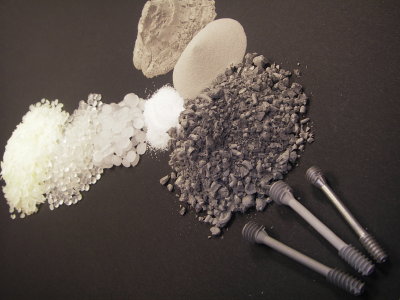
Metal powder injection molding: Top right the metal powders and polymer components left, center: the mixed Granualt. Below: component precursors, and the final Mg-Ca-bone screw to the right. [Photo:HZG/M. Wolff]


Is a paradigm shift imminent in the field of implant materials? Scientists at the Helmholtz Zentrum Geesthacht are engaged in research on biodegradable magnesium biomaterials which can be used as bone replacements in medical applications. They will present their research results from the 1st to 3rd November at the annual congress of the DGBM (German society for Biomaterials) in Hamburg.


When autumn arrives it brings wind and rain, leaves fall from the trees and settle on the ground. If someone slips on them, a bone can easily be broken. When a nail or a plate is required for the fixation of such a bone fracture, it is nowadays usually made of titanium, as this material is stable and well-tolerated by the human body. However, this foreign body must often be removed after the bone has healed, as there is otherwise a danger of inflammation or even bone loss.

According to Prof. Dr. Regine Willumeit, the head of the ‘Structural Research on Macromolecules’ department at the Helmholtz-Zentrum Geesthacht: “The aim of modern implant research is to develop a material which can be used in the body like a real replacement material. A biomaterial which at first supports the bone but then disappears of its own accord after the bone has recovered”.

Magnesium is excellently suited to this purpose. This element is naturally present in the human body and has the advantage that it can biodegrade in a pre-determined manner. It must, thereby, be both light and strong but also well-tolerated by the body. Research scientists at the Helmholtz-Zentrum in Geesthacht are therefore focussing their attention on this particular biomaterial.

The Helmholtz-Zentrum in Geesthacht has shown great expertise for many years in the research and production of prototypes for metallic biodegradable magnesium alloy implants. Material researchers are, for example, engaged in investigations into innovative magnesium-calcium alloys. These reveal material properties similar to those in bone; they are firm and at the same time elastic. Calcium appears to be well suited as an alloy as it would be able to degrade into non-toxic products in the body in the same way as magnesium. The degradation products would even be able to stimulate bone growth.

As Prof. Dr. Regine Willumeit explains: “ We are developing alloys in Geesthacht which have extremely promising properties for use in orthopaedic and traumatological applications. The colleagues at the Magnesium Innovations Center, MagIC, at the HZG, provide us with the starting material, we examine the factors which determine the degradation of the magnesium under physiological conditions”.

Scientists are not only engaged in research into the degradation process of the material itself. Tests are carried out in the Geesthacht laboratories in cell culture on the effects of the degradation on surrounding cells, for example. The scientists involved in this fundamental research into innovative implant materials have comprehensive analysis and test methods at their disposal.

As stable as bone, yet with good biodegradability


Would spare the second operation for removal of screws and plates: implant material of biodegradable magnesium [Photo: Istock 21545233]

The development of production processes is still causing researchers headaches. However, they have also made great progress in this area. The scientist Martin Wolff, from the powder technology department, has, for the first time, succeeded in producing magnesium-calcium bone screws by means of the metal powder injection molding process (MIM). 

As he explains: “The challenge in the case of magnesium lies in the high affinity of this material for oxygen. However, even small amounts of oxygen lead to dramatic changes in the mechanical properties of the component. Calcium, as an alloy partner, captures the oxygen in the production process during the so-called sintering procedure, and the material thus becomes firmer. This non-toxic alloying element has proved successful in achieving better results, at least in experiments. However, numerous further investigations now lie ahead, e.g. in cell culture and in the organism, before this material can be utilized as an implant material.

The Helmholtz researchers from Geesthacht will present their results at the Annual Congress of the Deutsche Gesellschaft für Biomaterialien, DGBM (German Society for Biomaterials), which is to be held at the Chamber of Commerce in Hamburg from 1st to 3rd of November 2012. The main focus this year will be on “Degradable Implants and Biomaterials”. The Congress will be led by Prof. Dr. Regine Willumeit.

Source:  Helmholtz Zentrum Geesthacht


Additional Information:
 
  • Poster Rapid Fire Presentation

New format for the presentation of research results. The scientist’s own research field and results must be clearly presented in only five minutes.
  • Metal powder injection moulding MIM

MIM uses injection moulding technology for the shaping process, which is also widely used in the field of plastics. The starting material is a fine metal powder which is mixed with a so-called binder. This mixture is fused at approx. 100 degrees centigrade. The binder is then chemically removed from the injection moulded part so that only the metal remains. The powder is compacted to the desired firm and dense body by means of a sintering process. 


Friday, 26 October 2012

Reclaiming rare earths: Laboratory improving process to recycle rare-earth materials

Engineerblogger
Oct 26, 2012
 
Rare-earth magnet scraps are melted in a furnace with magnesium.
Scientists at the Ames Laboratory are improving the process to reclaim
rare-earth materials.

Recycling keeps paper, plastics, and even jeans out of landfills. Could recycling rare-earth magnets do the same? Perhaps, if the recycling process can be improved.

Scientists at the U.S. Department of Energy’s (DOE) Ames Laboratory are working to more effectively remove the neodymium, a rare earth element, from the mix of other materials in a magnet. Initial results show recycled materials maintain the properties that make rare-earth magnets useful.

The current rare earth recycling research builds on Ames Laboratory’s decades of rare-earth processing experience. In the 1990s, Ames Lab scientists developed a process that uses molten magnesium to remove rare earths from neodymium-iron-boron magnet scrap. Back then, the goal was to produce a mixture of magnesium and neodymium because the neodymium added important strength to the alloy, rather than separate out high-purity rare earths because, at the time, rare earth prices were low.

But rare earth prices increased ten-fold between 2009 and 2011 and supplies are in question. Therefore, the goal of today’s rare-earth recycling research takes the process one step farther.

“Now the goal is to make new magnet alloys from recycled rare earths. And we want those new alloys to be similar to alloys made from unprocessed rare-earth materials,” said Ryan Ott, the Ames Laboratory scientist leading the research. “It appears that the processing technique works well. It effectively removes rare earths from commercial magnets.”

Ott’s research team also includes Ames Laboratory scientist Larry Jones and is funded through a work for others agreement with the Korea Institute of Industrial Technology. The research group is developing and testing the technique in Ames Lab’s Materials Preparation Center, with a suite of materials science tools supported by the DOE Office of Science.

“We start with sintered, uncoated magnets that contain three rare earths: neodymium, praseodymium and dysprosium,” said Ott. “Then we break up the magnets in an automated mortar and pestle until the pieces are 2-4 millimeters long.

Next, the tiny magnet pieces go into a mesh screen box, which is placed in a stainless-steel crucible. Technicians then add chunks of solid magnesium.

A radio frequency furnace heats the material. The magnesium begins to melt, while the magnet chunks remain solid.

“What happens then is that all three rare earths leave the magnetic material by diffusion and enter the molten magnesium,” said Ott. “The iron and boron that made up the original magnet are left behind.”

The molten magnesium and rare-earth mixture is cast into an ingot and cooled. Then they boil off the magnesium, leaving just the rare earth materials behind.

“We’ve found that the properties of the recycled rare earths compare very favorably to ones from unprocessed materials,” said Ott. “We’re continuing to identify the ideal processing conditions.”

The next step is optimizing the extraction process. Then the team plans to demonstrate it on a larger scale.

“We want to help bridge the gap between the fundamental science and using this science in manufacturing,” said Ott. “And Ames Lab can process big enough amounts of material to show that our rare-earth recycling process works on a large scale.”

Source: Ames Laboratory

Electron 'sniper' targets graphene

Engineerblogger
Oct 26, 2012


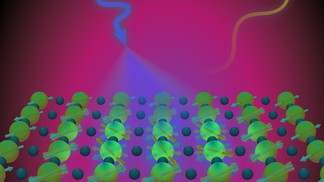
Credit: Oxford University

Because of its intriguing properties graphene could be the ideal material for building new kinds of electronic devices such as sensors, screens, or even quantum computers.

One of the keys to exploiting graphene's potential is being able to create atomic-scale defects – where carbon atoms in its flat, honeycomb-like structure are rearranged or 'knocked out' – as these influence its electrical, chemical, magnetic, and mechanical properties.

A team led by Oxford University scientists report in Nature Communications a new approach to a new approach to engineering graphene's atomic structure with unprecedented precision.

'Current approaches for producing defects in graphene are either like a 'shotgun' where the entire sample is sprayed with high energy ions or electrons to cause widespread defects, or a chemistry approach where many regions of the graphene are chemically reacted,' said Jamie Warner from Oxford University's Department of Materials, a member of the team.

'Both methods lack any form of control in terms of spatial precision and also the defect type, but to date are the only reported methods known for defect creation.'

The new method replaces the 'shotgun' with something more like a sniper rifle: a minutely-controlled beam of electrons fired from an electron microscope.

'The shotgun approach is restricted to micron scale precision, which is roughly an area of 10,000,000 square nanometres, we demonstrated a precision to within 100 square nanometres, which is about four orders of magnitude better,' explains Alex Robertson of Oxford University's Department of Materials, another member of the team.

Yet it isn’t just about the accuracy of a single 'shot'; the researchers also show that by controlling the length of time graphene is exposed to their focused beam of electrons they can control the size and type of defect created.

'Our study reveals for the first time that only a few types of defects are actually stable in graphene, with several defects being quenched by surface atoms or relaxing back to pristine by bond rotations,' Jamie tells me.

The ability to create just the right kind of stable defects in graphene's crystal structure is going to be vital if its properties are to be harnessed for applications such as mobile phones and flexible displays.

'Defect sites in graphene are much more chemically reactive, so we can use defects as a site for chemical functionalisation of the graphene. So we can attach certain molecules, such as biomolecules, to the graphene to act as a sensor,' Alex tells me.

'Defects in graphene can also give rise to localized electron spin, an attribute that has important future use in quantum nanotechnology and quantum computers.'

At the moment scaling up the team's technique into a manufacturing process to create graphene-based technologies is still a way off. Currently electron microscopes are the only systems that can achieve the necessary exquisite control of an electron beam.

But, Alex says, it is always possible that a scalable electron beam lithography type technique may be developed in the future that could allow for defect patterning in graphene.And it's worth remembering that it wasn't so long ago that the technology needed to etch millions of transistors onto a tiny slice of silicon seemed like an impossible dream.

Source: Oxford University

Additional Information:

Abu Dhabi Scientists Create Desert Rainstorms: Report

Engineerblogger
Oct 26, 2012
Credit: AP

Desert dwellers wishing to transform their arid surroundings into a profitable, crop-sustaining oasis have reportedly gotten one step closer to making that dream a reality, as Abu Dhabi scientists now claim to have created more than 50 artificial rainstorms from clear skies during peak summer months in 2010.

According to Arabian Business, the storms were part of a top secret, Swiss-backed project, commissioned by Sheikh Khalifa bin Zayed Al Nahyan, president of the UAE and leader of Abu Dhabi. Called "Weathertec," the climate project -- said to be worth a staggering $11 million -- utilized ionizers resembling giant lampshades to generate fields of negatively charged particles, which create cloud formation, throughout the country's Al Ain region, the Telegraph is reporting.

"We are currently operating our innovative rainfall enhancement technology, Weathertec, in the region of Al Ain in Abu Dhabid," Helmut Fluhrer, the founder of Metro Systems International, the Swiss company in charge of the project, is quoted as saying. "We started in June 2010 and have achieved a number of rainfalls."

Monitored by the Max Planck Institute for Technology, a leading tank for the study of atmosphere physics, the fake storms are said to have baffled Abu Dhabi residents by also producing hail, wind gales and even lightning.

"There are many applications," Professor Hartmut Grassl, a former institute director, is quoted by the Daily Mail as saying. "One is getting water into a dry area. Maybe this is a most important point for mankind."

Source: Huffington Post

Related Information:

Sunday, 9 September 2012

Using magnetism to understand superconductivity

Engineerblogger
Sept 10, 2012

 
© Brookhaven National Laboratory

EPFL research in atomic scale magnetism could play a role in the development of new materials that could permit lossless electricity transmission.

Might it one day be possible to transmit electricity from an offshore wind turbine to land-based users without any loss of current? Materials known as “high temperature” superconductors (even though they must be maintained at -140°C!), which can conduct electricity without any losses, were supposed to make this dream a reality. But over the past twenty-five years, scientists have not been able to make any progress in this area. Research being done in collaboration between Brookhaven National Laboratory (BNL) and EPFL’s Laboratory for Quantum Magnetism (LQM) could change that. Their study of magnetism at extremely small scales could give physicists a tool to use in their search for new superconducting materials.

Studying a superthin layer

There are some ceramics that are excellent insulators at room temperature but that become perfect conductors when submersed in liquid nitrogen. However, this phenomenon, known as “high temperature” superconductivity, is not at all well understood by physicists. They theorize that at these temperatures, the collective quantum magnetic properties of the atoms in the material might come into play. But studying the magnetic properties of these materials at this minuscule scale would require years of effort.

Mark Dean, John Hill and Ivan Bozovic from Brookhaven National Laboratory (BNL), Thorsten Schmitt from Switzerland’s Paul Scherrer Institut (PSI), and Bastien Dalla Piazza and Henrik Ronnow from EPFL have unveiled the phenomena at work at this atomic scale. Using a unique device, the Brookhaven team created a layer just a single atom thick. Then, despite the material’s extreme thinness, the PSI scientists were able to use an ultrasensitive instrument to measure the magnetic dynamics of the atoms. And then EPFL provided the final piece of the puzzle, with mathematical models to analyze the measurements.

A long-awaited research tool


“We now have a kind of flashlight that will show us what direction we should take in our search,” explains Ronnow. Without understanding how these superconducting properties occurred at these temperatures, researchers were probing in the dark, using trial and error, to explore promising new materials. By combining these results with other recent work done by LQM researcher Nikolai Tsyrulin, the EPFL team has provided a new method to help physicists in their search for new superconductors. It’s a long-awaited step forward in the field; the Nobel Prize recognizing the discovery of high temperature superconductivity was awarded more than 25 years ago.

Promises for the future

Electrical resistance in traditional power lines leads to energy losses on the order of 3% in the electricity grid. At the scale of an entire country, this translates into several thousand gigawatts, which, in Switzerland’s case, would be the equivalent of the electricity consumption of a city the size of Geneva. “The energy challenges we face are significant; being able to use superconductivity won’t solve all of them, but it would nonetheless enable huge energy savings,” Ronnow adds.

Source: EPFL

Additional Information: 

Related Article:

Honda Develops New Technology to Weld Together Steel and Aluminum and Achieves World's First Application to the Frame of a Mass-production Vehicle

Engineerblogger
Sept. 9, 2012


Front Subframe


Honda Motor Company announced that it has newly developed a technology for the continuous welding of the dissimilar metals of steel and aluminum and applied it for the first time in the world to the subframe of a mass-production vehicle, a key component of a vehicle body frame. Honda will adopt this technology first to the North American version of the all-new 2013 Accord, which will go on sale in the United States on September 19, 2012, and will expand application sequentially to other models.


Conceptual diagram of FSW of dissimilar metals

Striving to reduce vehicle weight in order to increase fuel economy, Honda focused on Friction Stir Welding (FSW) and developed a new technology for the continuous welding of steel and aluminum. This technology generates a new and stable metallic bonding between steel and aluminum by moving a rotating tool on the top of the aluminum which is lapped over the steel with high pressure. As a result, the welding strength becomes equal to or beyond conventional Metal Inert Gas (MIG) welding*1.

This new technology contributes to an improvement in fuel economy by reducing body weight by 25% compared to a conventional steel subframe. In addition, electricity consumption during the welding process is reduced by approximately 50%. It also enabled a change in the structure of the subframe and the mounting point of suspension, which increased the rigidity of the mounting point by 20% and also contributed to the vehicle’s dynamic performance.

Furthermore, Honda established a new method to apply this technology to mass-production vehicles. Conventionally, FSW required use of large equipment, but Honda developed a FSW continuous welding system applied to a highly versatile industrial robot. This system also can be used for aluminum-to-aluminum welding and thus, the welding system with the same specifications can be used for production of a full-aluminum subframe.

Honda also developed a non-destructive inspection system*2 using a highly-sensitive infrared camera and laser beam, which enables an in-line inspection of the bonding location for every unit.

*1 A welding technique most commonly used for welding of identical materials such as steel-to-steel or aluminum-to-aluminum
*2A system that evaluates quality without actually destructing the parts


Source: Honda

Could ancient Egyptians hold the key to 3D printed ceramics?

Engineerblogger
Sept 3, 2012


Video: Professor Stephen Hoskins shares more about the latest 3D printing methods in ceramics in this insightful interview.
A 7,000 year old technique, known as Egyptian Paste (also known as Faience), could offer a potential process and material for use in the latest 3D printing techniques of ceramics, according to researchers at UWE Bristol.

Professor Stephen Hoskins, Director of UWE's Centre for Fine Print Research and David Huson, Research Fellow, have received funding from the Arts and Humanities Research Council (AHRC to undertake a major investigation into a self-glazing 3D printed ceramic, inspired by ancient Egyptian Faience ceramic techniques. The process they aim to develop would enable ceramic artists, designers and craftspeople to print 3D objects in a ceramic material which can be glazed and vitrified in one firing.

The researchers believe that it possible to create a contemporary 3D printable, once-fired, self-glazing, non-plastic ceramic material that exhibits the characteristics and quality of Egyptian Faience.

Faience was first used in the 5th Millennium BC and was the first glazed ceramic material invented by man. Faience was not made from clay (but instead composed of quartz and alkali fluxes) and is distinct from Italian Faience or Majolica, which is a tin, glazed earthenware. (The earliest Faience is invariably blue or green, exhibiting the full range of shades between them, and the colouring material was usually copper). It is the self-glazing properties of Faience that are of interest for this research project.

Current research in the field of 3D printing concentrates on creating functional materials to form physical models. The materials currently used in the 3D printing process, in which layers are added to build up a 3D form, are commonly: UV polymer resins, hot melted 'abs' plastic and inkjet binder or laser sintered, powder materials. These techniques have previously been known as rapid prototyping (RP). With the advent of better materials and equipment some RP of real materials is now possible. These processes are increasingly being referred to as solid 'free-form fabrication' (SFF) or additive layer manufacture. The UWE research team have focused previously on producing a functional, printable clay body.

This three-year research project will investigate three methods of glazing used by the ancient Egyptians: 'application glazing', similar to modern glazing methods; 'efflorescent glazing' which uses water-soluble salts; and 'cementation glazing', a technique where the object is buried in a glazing powder in a protective casing, then fired.These techniques will be used as a basis for developing contemporary printable alternatives

Professor Hoskins explains, “It is fascinating to think that some of these ancient processes, in fact the very first glazed ceramics every created by humans, could have relevance to the advanced printing technology of today. We hope to create a self-glazing 3D printed ceramic which only requires one firing from conception to completion rather than the usual two. This would be a radical step-forward in the development of 3D printing technologies. As part of the project we will undertake case studies of craft, design and fine art practitioners to contribute to the project, so that our work reflects the knowledge and understanding of artists and reflects the way in which artists work.”

The project includes funding for a three-year full-time PhD bursary to research a further method used by the Egyptians, investigating coloured 'frit', a substance used in glazing and enamels. This student will research this method, investigating the use of coloured frits and oxides to try and create as full a colour range as possible. Once developed, this body will be used to create a ceramic extrusion paste that can be printed with a low-cost 3D printer. A programme of work will be undertaken to determine the best rates of deposition, the inclusion of flocculants and methods of drying through heat whilst printing.

This project offers the theoretical possibility of a printed, single fired, glazed ceramic object - something that is impossible with current technology.

Source: University of the West of England